


zu sechst
in a group of six
Describes a group consisting of six people.
EXAMPLE
Wir waren zu sechst im Urlaub und haben uns ein großes Ferienhaus geteilt.
There were six of us on vacation, and we shared a large holiday house.
six
Loading your saved state.
in a group of six
Describes a group consisting of six people.
Wir waren zu sechst im Urlaub und haben uns ein großes Ferienhaus geteilt.
There were six of us on vacation, and we shared a large holiday house.
The word 'sechst' is used almost exclusively in the fixed expression 'zu sechst' (in a group of six / six of us). It describes a group of six people and is not declined like an adjective.
Wir sind zu sechst in den Urlaub gefahren.
There were six of us going on vacation.
'Zu sechst' follows a pattern for group numbers: 'zu' + cardinal number + '-t'. This pattern also works for other numbers, for example 'zu dritt' (three people / in a group of three) or 'zu viert' (four people / in a group of four).
Wir waren zu viert, aber dann kamen noch zwei Freunde dazu, also waren wir zu sechst.
There were four of us, but then two more friends joined, so there were six of us.
The expression 'zu sechst' is often combined with verbs that describe a shared activity. Typical examples are 'sein' (to be), 'reisen' (to travel), 'spielen' (to play), or 'arbeiten' (to work).
Wir haben das Projekt zu sechst im Büro bearbeitet.
The six of us worked on the project in the office.
six
Sechs simply states the number. Zu sechst, on the other hand, describes six people forming a group together. Use sechs before a counted noun and sechst only in the fixed expression zu sechst.
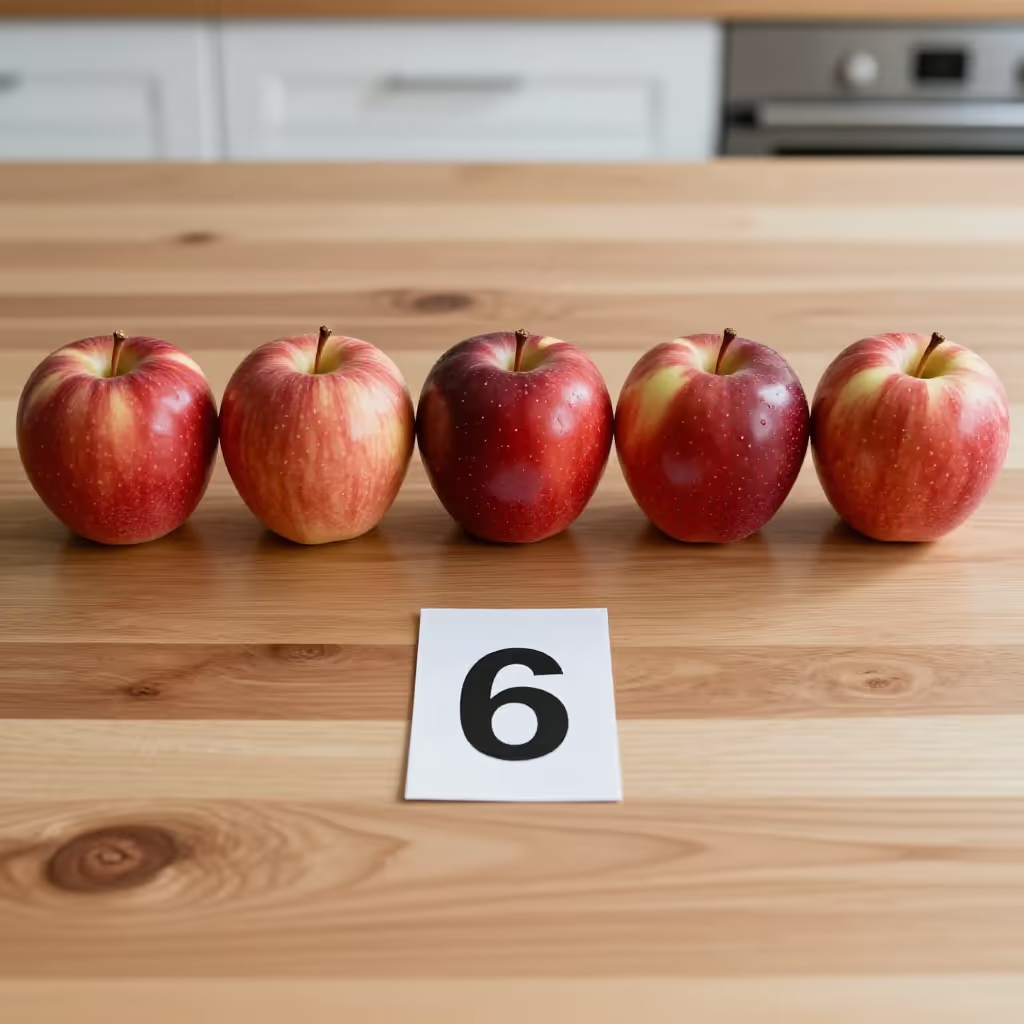
Die Freunde fahren zu sechst an den See.
The friends are going to the lake as a group of six.
Sechs Freunde fahren gemeinsam an den See.
Six friends are going to the lake together.