


sauer
sour
Having a sharp, tangy taste, like that of lemons or vinegar.
EXAMPLE
Die unreifen Äpfel schmecken sehr sauer.
The unripe apples taste very sour.
sour / angry
Loading your saved state.
sour
Having a sharp, tangy taste, like that of lemons or vinegar.
Die unreifen Äpfel schmecken sehr sauer.
The unripe apples taste very sour.

angry
Informal for annoyed, angry, or in a bad mood.
Sei nicht sauer, ich habe es nicht mit Absicht gemacht.
Don't be angry; I didn't do it on purpose.
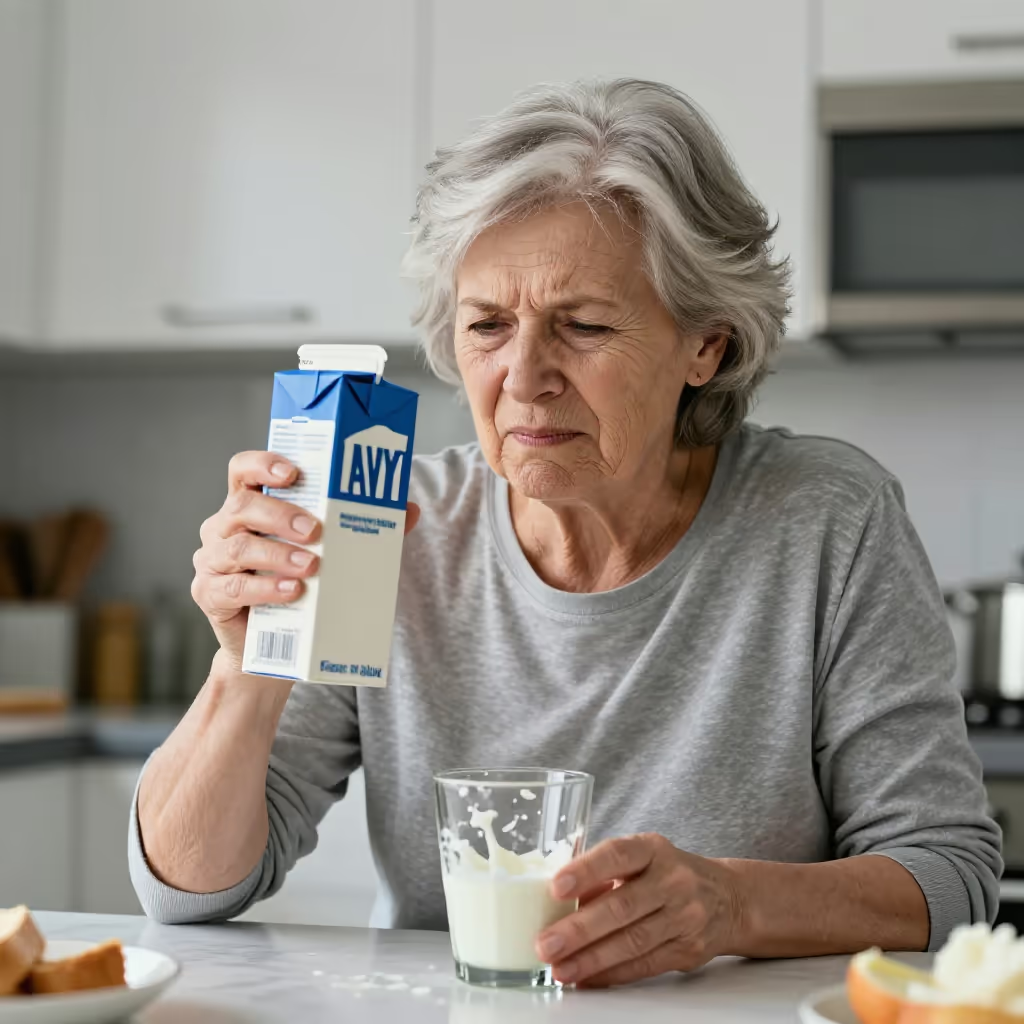
sour / spoiled
Describes the state of foods, especially dairy products, that have spoiled through fermentation and become inedible.
Die Milch stand zu lange draußen und ist jetzt sauer.
The milk was left out too long and is now sour.

acidic
In chemistry, the property of a substance that has a pH value below 7.
Der Teststreifen zeigte an, dass die Lösung sauer reagiert.
The test strip indicated that the solution reacts as acidic.

hard-earned
A fixed expression that describes something (usually money) acquired through hard, laborious work.
Ich passe gut auf mein sauer verdientes Geld auf.
I take good care of my hard-earned money.
The adjective 'sauer' (sour/acidic) is closely related to the noun 'die Säure' (acid). Many things that taste sour contain an acid, such as citric acid in lemons.
Diese Limonade enthält viel Zucker und Säure.
This lemonade contains a lot of sugar and acid.
If 'sauer' refers to a person, it usually means 'verärgert' (annoyed/angry). If it refers to food, it generally describes the taste or the spoiled state.
Warum bist du sauer auf mich?
Why are you angry with me?
When 'sauer' is used in the sense of 'verärgert' (angry/annoyed), it takes the preposition 'auf' and the accusative. You are always 'sauer auf' (angry at) a person or thing.
Er ist immer noch sauer auf seinen Kollegen.
He is still angry at his colleague.
The use of 'sauer' for 'verärgert' (angry/annoyed) or 'schlecht gelaunt' (in a bad mood) is very common in spoken language and informal contexts.
Mach dir keine Sorgen, er ist nicht lange sauer.
Don't worry; he won't stay angry for long.
In connection with foods like milk or cream, 'sauer werden' (to turn sour) means that they go bad or become inedible. This is a biological process.
Lass die Sahne nicht draußen stehen, sonst wird sie sauer.
Don't leave the cream out, otherwise it will turn sour.
The phrase 'sauer verdient' (hard-earned) describes something that you have acquired through hard and laborious work. It usually refers to money.
Er will sein sauer verdientes Geld nicht für Unsinn ausgeben.
He doesn't want to spend his hard-earned money on nonsense.
bad
When referring to spoiled milk, schlecht generally means that it is no longer fit to consume. Sauer more precisely describes the condition caused by fermentation. In this usage, sour milk is therefore bad, but schlecht does not explain how it spoiled.
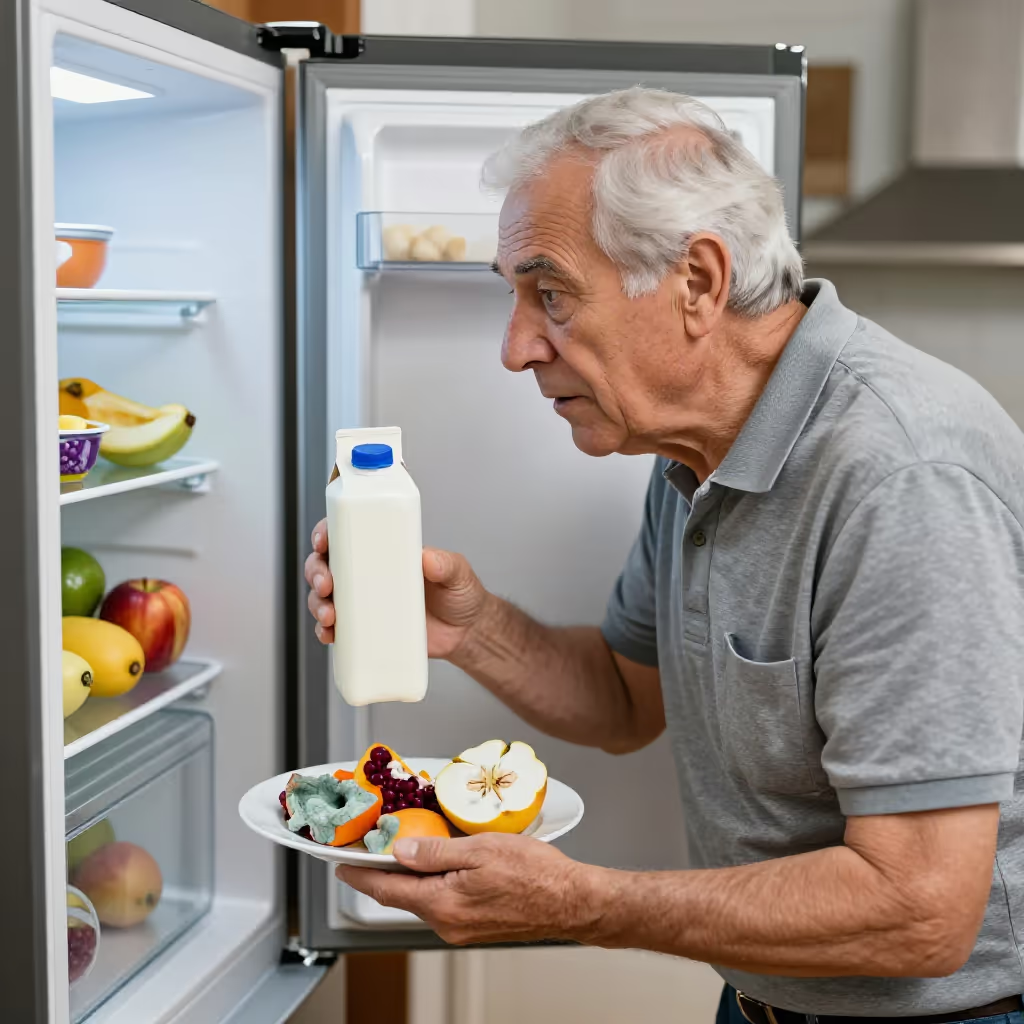
Die Milch ist durch die Wärme sauer geworden und muss weggeworfen werden.
The milk has gone sour because of the heat and needs to be thrown away.
Die Milch ist schlecht und muss weggeworfen werden.
The milk has gone bad and needs to be thrown away.