

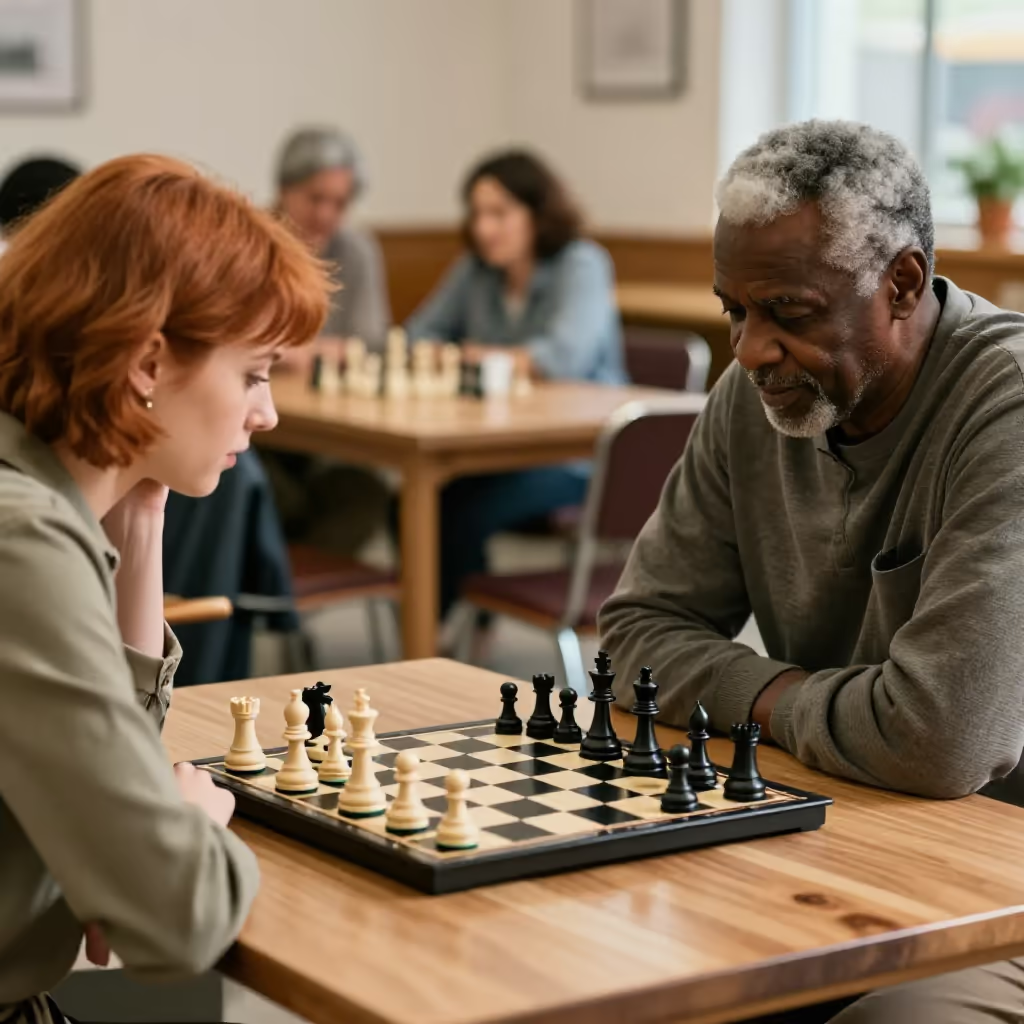
das Schach
chess
A strategic board game for two people in which the goal is to checkmate the opponent's king.
EXAMPLE
Mein Großvater hat mir beigebracht, wie man Schach spielt.
My grandfather taught me how to play chess.
chess
Loading your saved state.
chess
A strategic board game for two people in which the goal is to checkmate the opponent's king.
Mein Großvater hat mir beigebracht, wie man Schach spielt.
My grandfather taught me how to play chess.
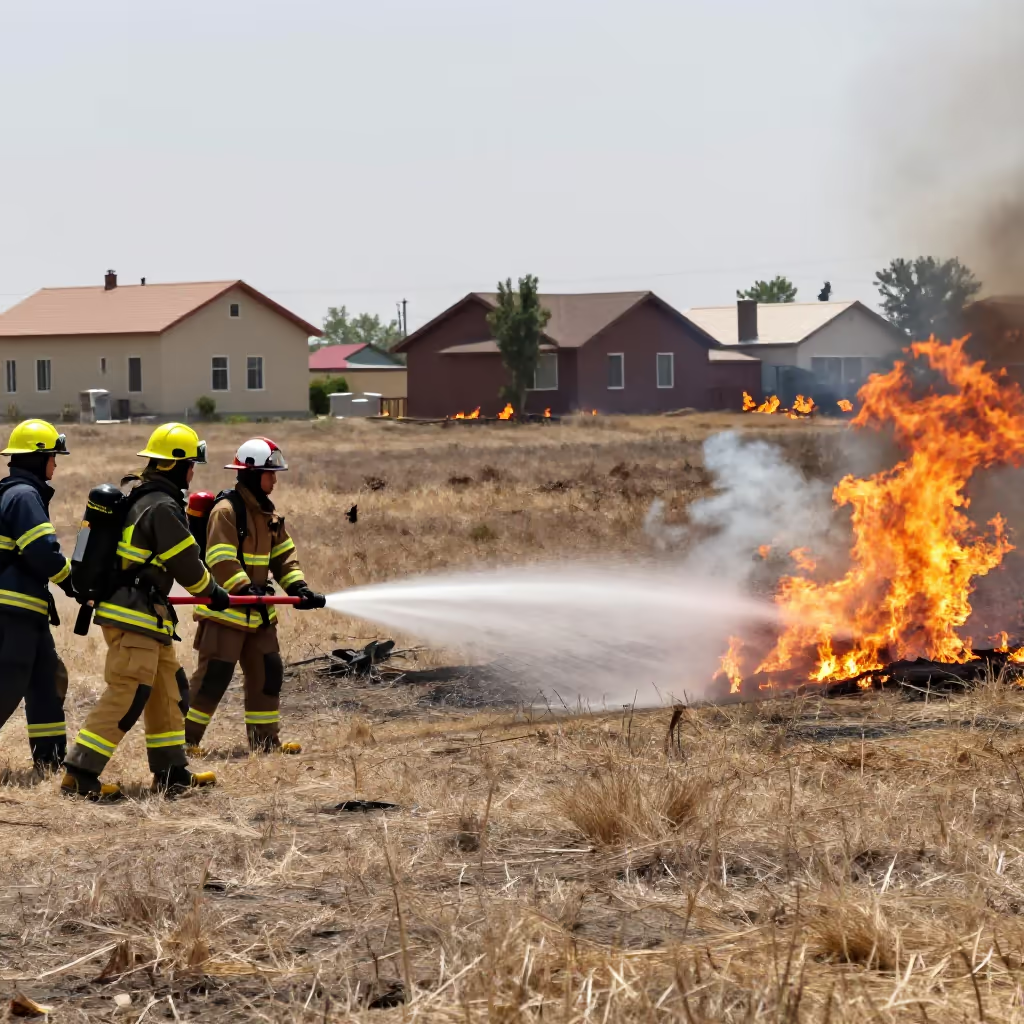
to keep in check
To keep a person, group, or situation under control and prevent it from becoming dangerous or problematic.
Die Feuerwehr konnte den Brand in Schach halten, bis Verstärkung eintraf.
The fire department was able to keep the fire in check until reinforcements arrived.
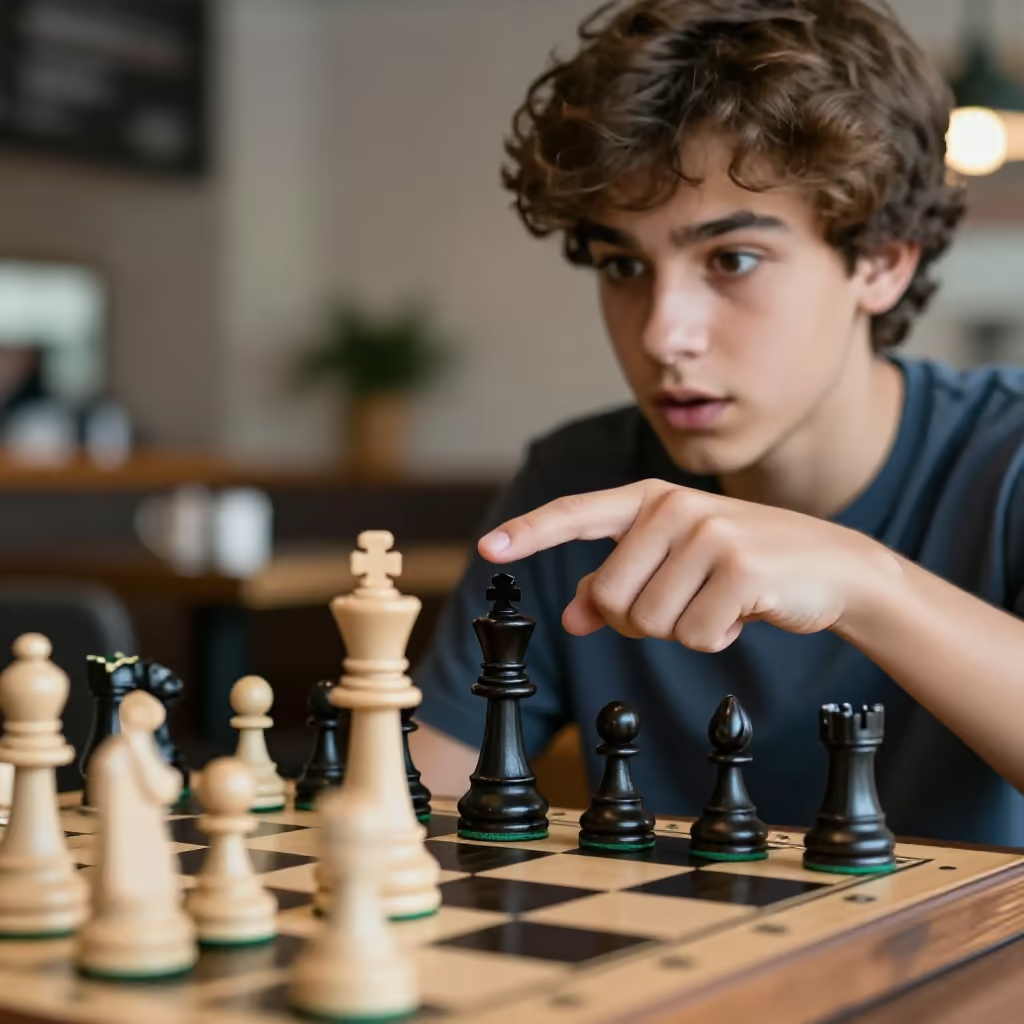
check
The call in a game of chess that indicates that the opponent's king is directly threatened by a piece.
Er zog seinen Turm und sagte laut: „Schach!“
He moved his rook and said loudly, “Check!”
The most common verb is 'Schach spielen' (to play chess). When referring to a single game, people often say 'eine Partie Schach spielen' (to play a game of chess).
Wollen wir heute Abend eine Partie Schach spielen?
Shall we play a game of chess tonight?
When talking about the game in general, 'Schach' (chess) is often used without an article. The article is used when referring to a specific type or era of the game.
Sie lernt gerade Schach in einem Verein.
She is currently learning chess at a club.
The expression 'jemanden/etwas in Schach halten' (to keep someone/something in check) is a fixed construction. It means to keep a person or situation under control. The object being controlled is in the accusative.
Die Polizei konnte die Demonstranten in Schach halten.
The police were able to keep the demonstrators in check.
The word 'Schach!' (Check!) is used as a short exclamation, or interjection, during a game of chess. It signals that the opponent's king is under threat.
Sie zog ihre Dame nach vorne und rief: „Schach!“
She moved her queen forward and called out, “Check!”