

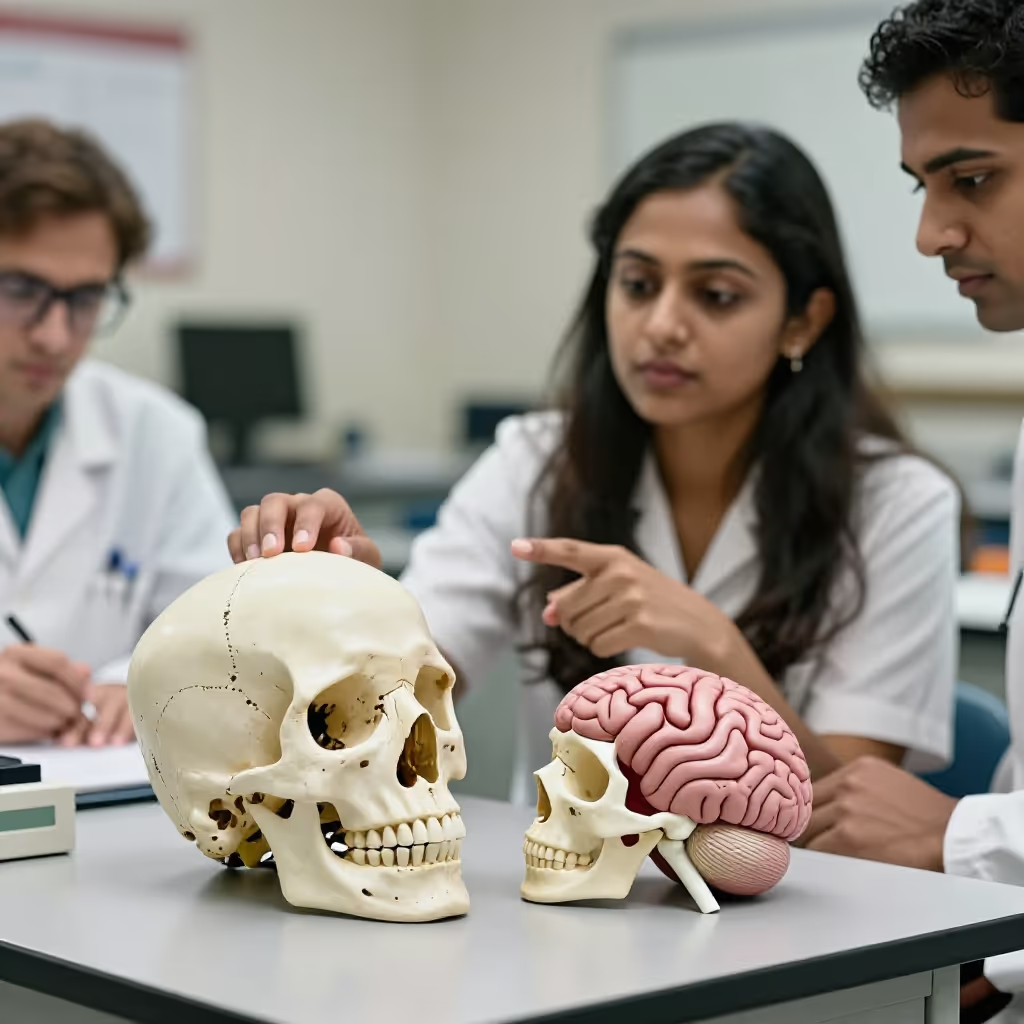
der Schädel
skull
The bone structure of the head in vertebrates that encloses the brain.
EXAMPLE
Der Arzt untersuchte das Röntgenbild des Schädels auf Frakturen.
The doctor examined the X-ray image of the skull for fractures.
skull
Loading your saved state.
skull
The bone structure of the head in vertebrates that encloses the brain.
Der Arzt untersuchte das Röntgenbild des Schädels auf Frakturen.
The doctor examined the X-ray image of the skull for fractures.

head
Colloquial term for a person's head.
Nach der langen Feier brummt mir heute Morgen der Schädel.
After the long party, my head is pounding this morning.
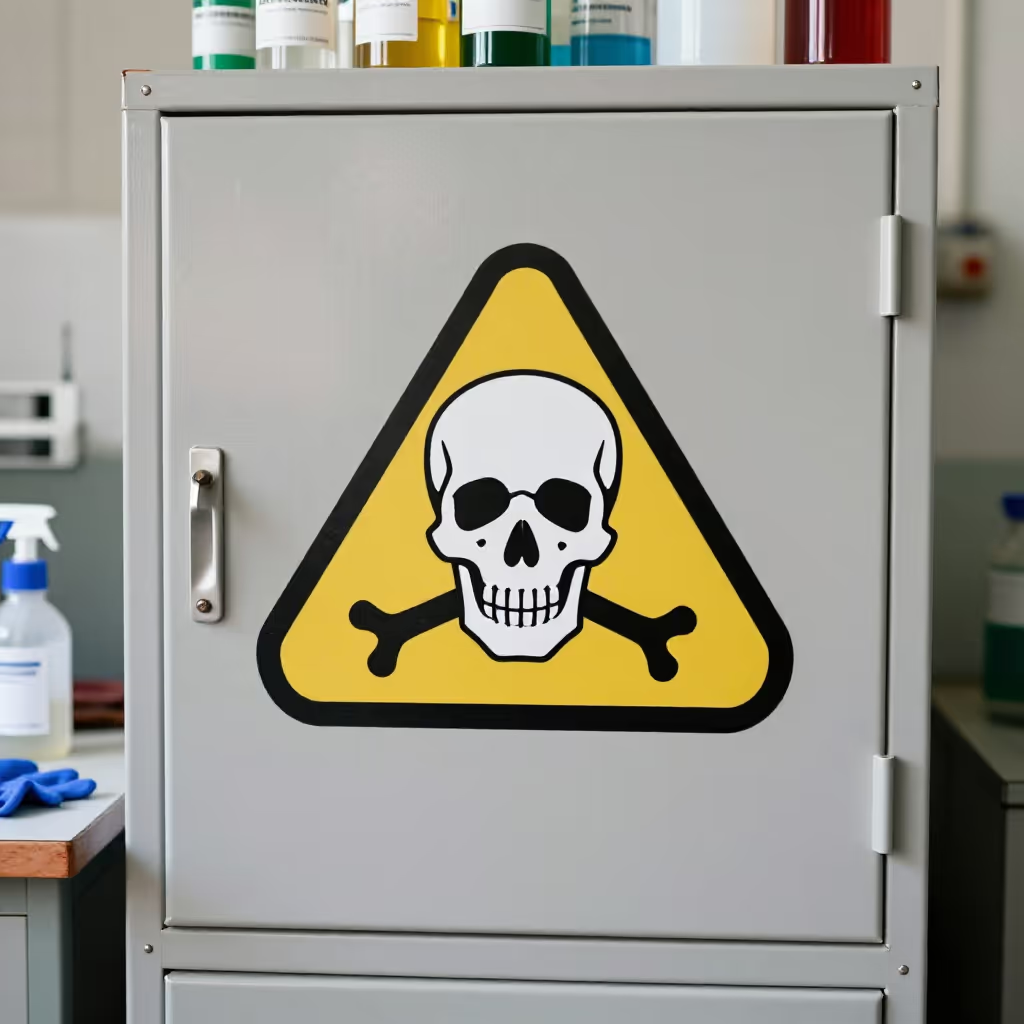
skull
A human skull bone as a symbol of death or danger.
Auf dem Giftfläschchen war als Warnung ein Schädel mit gekreuzten Knochen abgebildet.
A skull and crossbones was shown on the poison bottle as a warning.
The meaning of 'Schädel' (skull/head) depends strongly on the context. In medicine, it is the bone; colloquially, it means the head (often when in pain); and as an image, it is a symbol of danger.
Im Biologieunterricht haben wir einen menschlichen Schädel betrachtet.
In biology class, we looked at a human skull.
Colloquially, 'Schädel' (head) often replaces the word 'Kopf' (head), especially in fixed expressions. If someone says 'mir brummt der Schädel' (my head is pounding), it means they have a bad headache.
Nach der langen Prüfung raucht mir der Schädel.
After the long exam, my head is spinning.
As a symbol, the skull, often with crossed bones, stands for mortal danger or poison. You find this pictogram on warning signs or packaging for toxic substances.
Auf der alten Piratenflagge war ein weißer Schädel abgebildet.
A white skull was shown on the old pirate flag.
In science (medicine, biology, archaeology), 'der Schädel' (the skull) is the neutral and correct term for the bones of the head. It is used in technical terms such as 'Schädelbasisbruch' (basal skull fracture).
Der häufigste Unfall bei Fahrradfahrern ohne Helm ist eine Verletzung des Schädels.
The most common accident among cyclists without helmets is an injury to the skull.
head
Kopf refers neutrally to the entire upper part of the body. Schädel more precisely means the bony structure that protects the brain. In everyday use, Kopf is therefore usually appropriate; in an anatomical examination or when the bones are injured, Schädel is more precise.

Das Röntgenbild zeigt einen Bruch im Schädel des Patienten.
The X-ray shows a fracture in the patient's skull.
Nach dem Sturz untersucht die Ärztin den Kopf des Patienten.
After the fall, the doctor examines the patient's head.