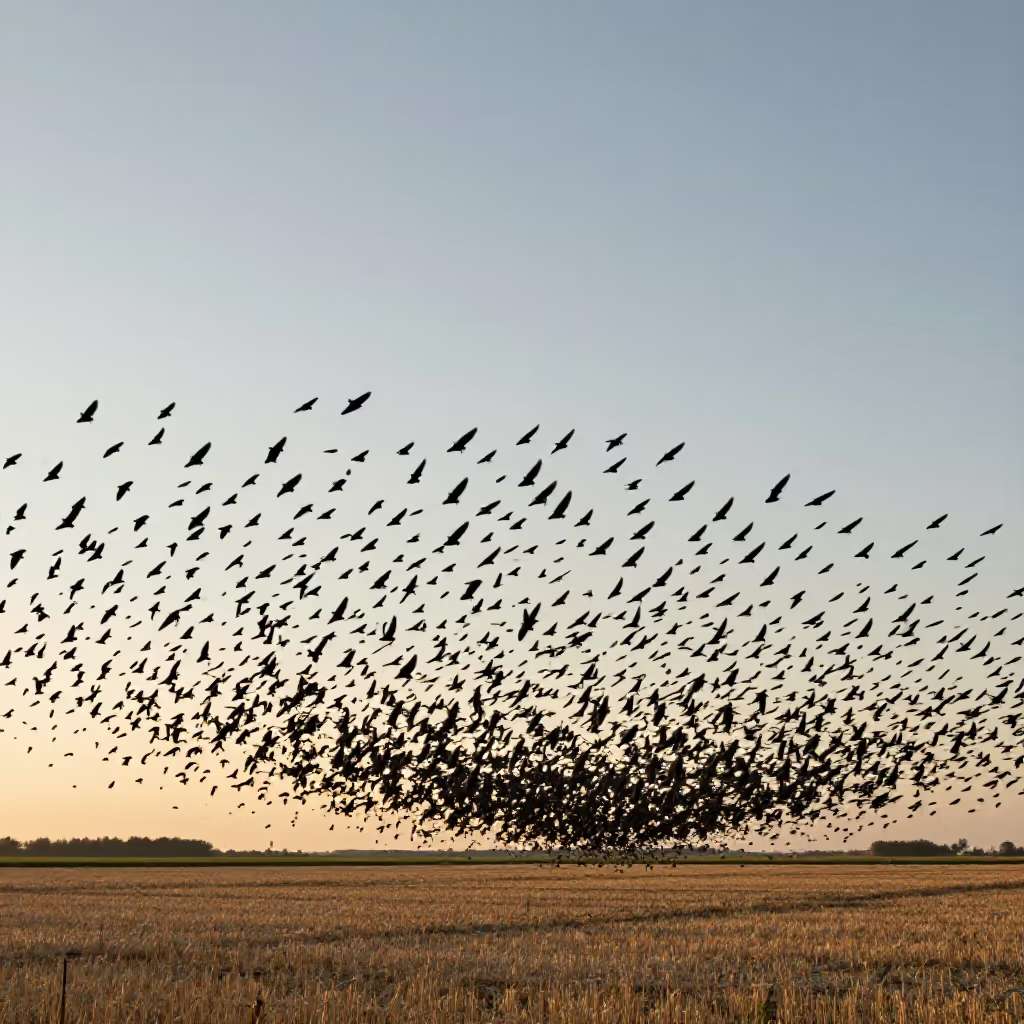
A larger, often hard-to-overview group of living beings, especially people or birds, that are moving together or have gathered.
example
Eine Schar von Kindern stürmte auf den Spielplatz.
A crowd of children rushed onto the playground.

Usage tips
Use with “von”
The word 'Schar' (crowd/flock) is very often used in the construction 'eine Schar von' + plural noun to describe the composition of the group.
EXAMPLE
Eine Schar von neugierigen Touristen versammelte sich vor dem Denkmal.
A crowd of curious tourists gathered in front of the monument.
Fixed expression
The plural form is used almost exclusively in the fixed expression 'in Scharen'. This means that very many living beings come to a place at the same time.
EXAMPLE
Die Fans strömten in Scharen ins Stadion, um das Finale zu sehen.
The fans streamed into the stadium in droves to watch the final.
Literary style
'Schar' (crowd/flock) is often used in a vivid or literary style to describe a lively and sometimes somewhat unorganized group.
EXAMPLE
Eine bunte Schar von Künstlern bevölkerte das Festivalgelände.
A colorful crowd of artists filled the festival grounds.
Context clue
In this meaning, 'Schar' (crowd/flock) describes a group that is together by chance or temporarily. By contrast, a 'Schar von Anhängern' (crowd of followers) refers to a group connected by a shared idea or person.
EXAMPLE
Jeden Morgen fliegt eine Schar von Krähen über unser Haus.
Every morning, a flock of crows flies over our house.
Compare with
near_synonym · confusable
Schar vs Gruppe
group
'die Gruppe' and 'die Schar' both refer to several people or living beings together. 'die Gruppe' is neutral and can also be small, organized, or planned. 'die Schar' sounds more like many living beings, often people or birds, appearing or moving together. The word can sound more vivid and somewhat more figurative. For example, people speak of 'eine Schar Kinder' (a crowd of children) or 'eine Schar Vögel' (a flock of birds). Learners may confuse the words because both mean 'several together'. When size and movement are not important, 'Gruppe' is usually more natural.
Schar
Im Park läuft eine Schar Kinder lachend über die Wiese.
In the park, a crowd of children runs laughing across the meadow.
Gruppe
Auf der Feier bleibt Daniel lieber bei seiner kleinen Gruppe von Freunden.
At the party, Daniel prefers to stay with his small group of friends.