

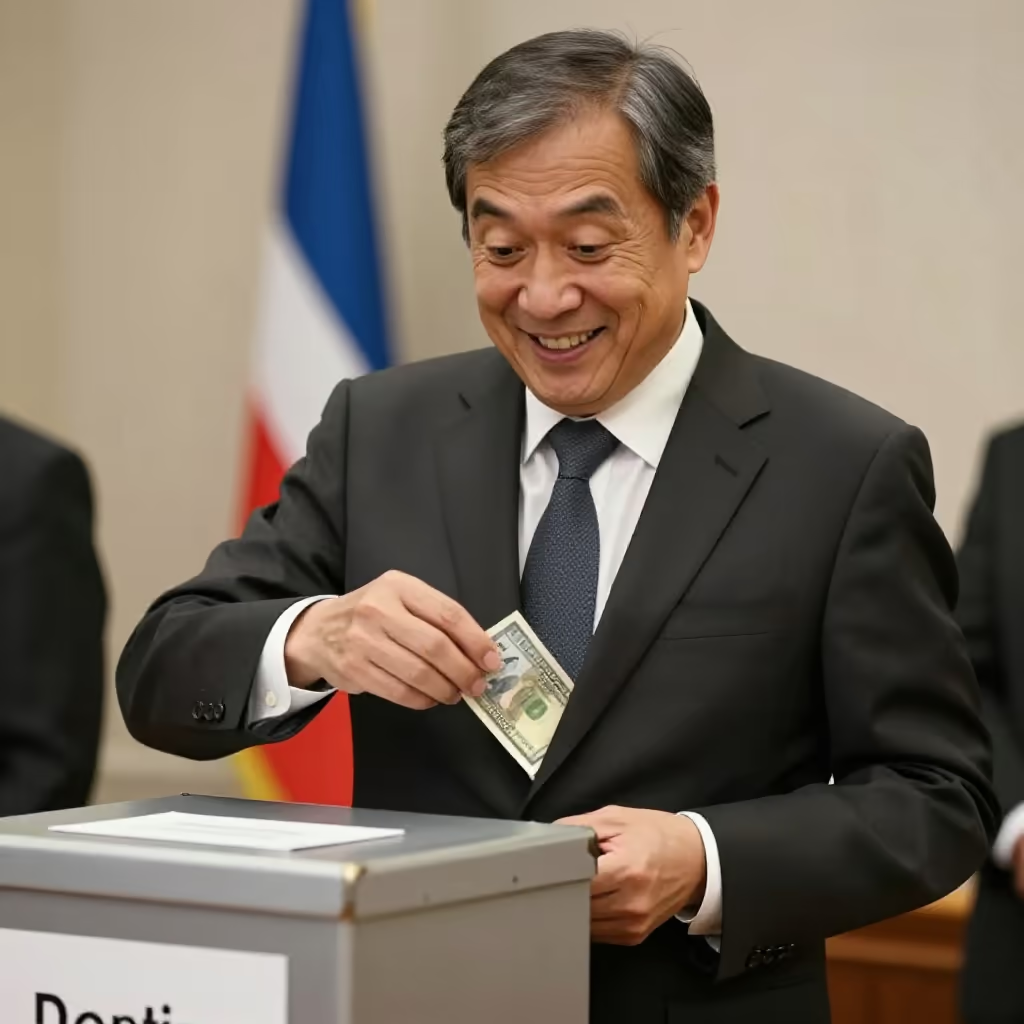
Describes behavior in which someone pretends to have moral principles, virtues, or feelings that they do not actually possess. A 'scheinheilig' (hypocritical) person therefore acts hypocritically and insincerely.
example
Es ist scheinheilig, ständig über Umweltschutz zu reden, aber selbst jeden Tag mit dem SUV zur Arbeit zu fahren.
It is hypocritical to constantly talk about environmental protection but to drive to work in an SUV every day yourself.

Usage tips
Word composition
The word is made up of 'Schein' (appearance, illusion) and 'heilig' (holy). So it describes someone who is only apparently holy or morally good, but in reality does not act that way.
EXAMPLE
Sein Lob klang scheinheilig, denn ich wusste, dass er mich nicht mag.
His praise sounded hypocritical, because I knew he didn't like me.
Word family
The related noun is 'die Scheinheiligkeit' (hypocrisy). It describes the hypocritical behavior itself.
EXAMPLE
Die Scheinheiligkeit in der Politik ist für viele Menschen ein großes Problem.
Hypocrisy in politics is a big problem for many people.
Typical collocations
'Scheinheilig' (hypocritical) often describes people, their behavior, or their words. Typical examples are: 'eine scheinheilige Person' (a hypocritical person), 'ein scheinheiliges Lächeln' (a hypocritical smile), 'eine scheinheilige Entschuldigung' (a hypocritical apology), or 'eine scheinheilige Frage' ( a hypocritical question).
EXAMPLE
Er gab mir eine scheinheilige Umarmung, aber ich spürte, dass sie nicht echt war.
He gave me a hypocritical hug, but I could feel that it wasn't genuine.
Use as an adverb
The word can also be used as an adverb to describe an action. It then remains unchanged after the verb.
EXAMPLE
Er fragte scheinheilig, ob er helfen könne, obwohl er keine Lust hatte.
He asked hypocritically whether he could help, even though he didn't feel like it.
Compare with
near_synonym · confusable
scheinheilig vs falsch
wrong / false
'falsch' and 'scheinheilig' can both describe a dishonest attitude. 'falsch' is more general: a person may be insincere or only pretending. 'scheinheilig' is more specific: someone acts as if they were especially moral, friendly, or proper, even though it is not genuine. Learners may confuse the words because both refer to a kind of dishonesty. When it is generally about insincerity, 'falsch' fits. When someone wants to appear good and moral on the outside but acts differently, 'scheinheilig' is more accurate.
scheinheilig
Ich finde seine Kritik scheinheilig, denn er macht selbst genau dasselbe.
I find his criticism hypocritical because he does exactly the same thing himself.
falsch
Sein freundliches Lächeln wirkte falsch, weil er kurz vorher schlecht über uns gesprochen hatte.
His friendly smile seemed false because he had spoken badly about us shortly before.