

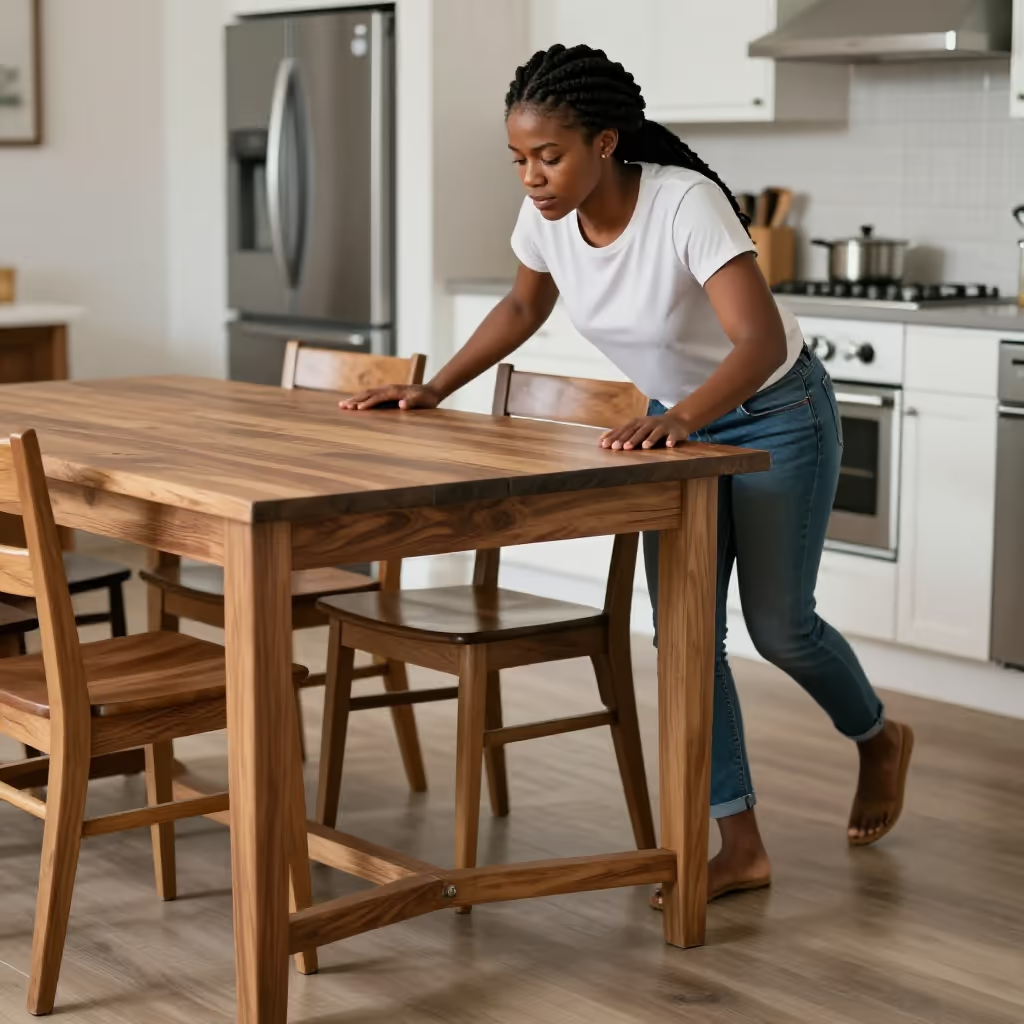
schieben
to push
To move something from one place to another by pressing it along a surface, without lifting it.
EXAMPLE
Hilf mir mal, den Schrank an die andere Wand zu schieben.
Help me push the wardrobe over to the other wall.
to push
Loading your saved state.
to push
To move something from one place to another by pressing it along a surface, without lifting it.
Hilf mir mal, den Schrank an die andere Wand zu schieben.
Help me push the wardrobe over to the other wall.

to shift the blame
To give someone else the responsibility for your own mistake or a problem.
Anstatt den Fehler zuzugeben, hat er die Schuld auf seine Assistentin geschoben.
Instead of admitting the mistake, he shifted the blame onto his assistant.
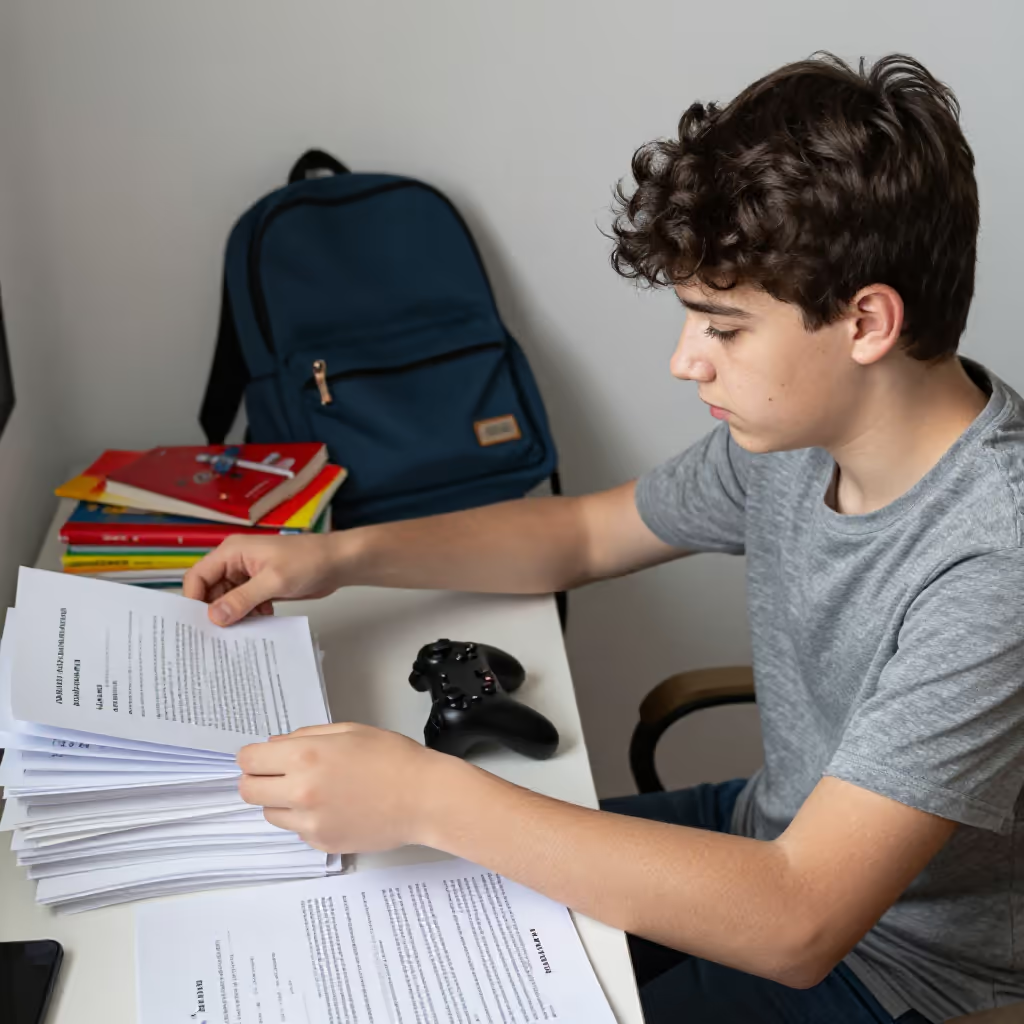
to keep putting off
To repeatedly postpone an unpleasant or necessary task to a later point in time.
Ich schiebe meine Steuererklärung schon seit Wochen vor mir her.
I've been putting off my tax return for weeks.
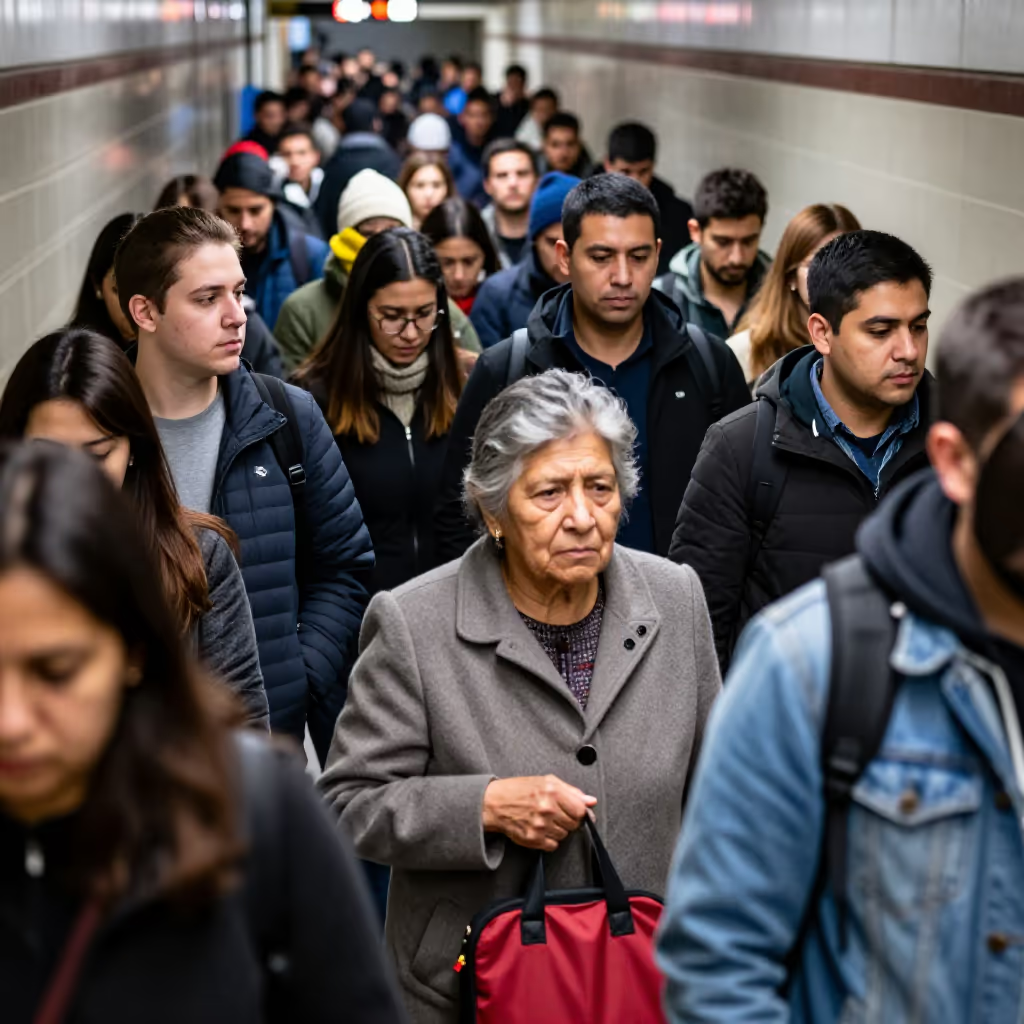
to move slowly
To move forward slowly and often laboriously as part of a dense mass.
Eine riesige Menschenmenge schob sich durch die engen Gassen der Altstadt.
A huge crowd moved slowly through the narrow alleys of the old town.
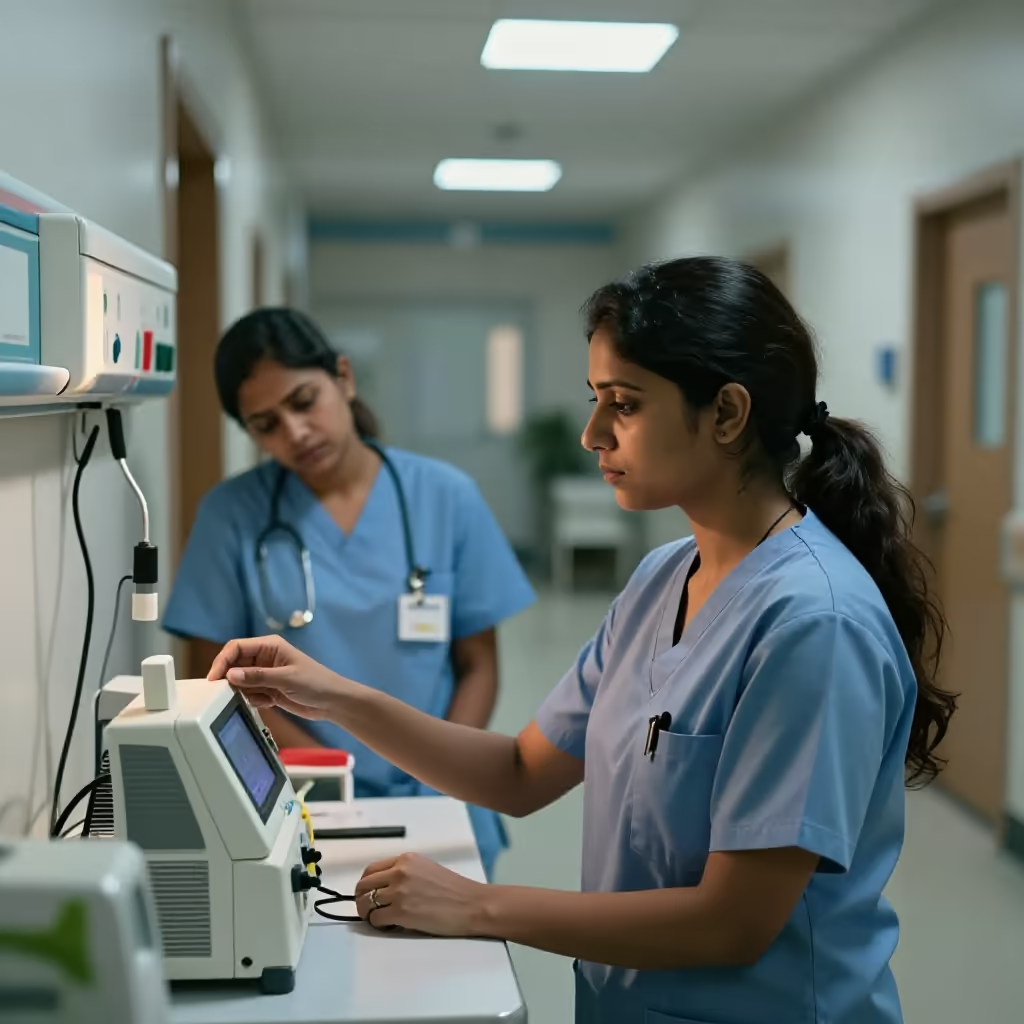
to be on duty
Colloquial for working or being on duty, especially in shift work or on-call duties.
Ich kann heute Abend nicht kommen, ich muss Dienst schieben.
I can't come tonight; I have to be on duty.

to freak out
Colloquial for feeling a strong negative emotion such as panic, frustration, or hatred.
Als er merkte, dass er seinen Pass verloren hatte, fing er an, Panik zu schieben.
When he realized that he had lost his passport, he started to freak out.
In its basic meaning, 'schieben' (to push) is often combined with a preposition that indicates a direction. Typical examples are 'etwas zur Seite schieben' (to push something to the side), 'etwas an die Wand schieben' (to push something against/to the wall), or 'etwas unter das Bett schieben' (to push something under the bed).
Kannst du bitte den Stuhl ein Stück nach rechts schieben?
Can you please push the chair a bit to the right?
The idiom 'die Schuld auf jemanden schieben' (to shift the blame onto someone) is very common. It means giving another person responsibility for something negative. The preposition 'auf' requires the accusative here.
Es ist unfair, die ganze Schuld nur auf eine Person zu schieben.
It's unfair to shift all the blame onto just one person.
The expression 'etwas vor sich her schieben' means to procrastinate on a task. The reflexive pronoun 'sich' is a fixed part of the construction here.
Hör auf, deine Hausaufgaben vor dir her zu schieben und fang endlich an!
Stop putting off your homework and finally get started!
The reflexive verb 'sich schieben' describes the slow, pressing movement of a large crowd or a line of vehicles. The subject here is always a mass.
Der Verkehr schob sich nur langsam über die Brücke.
The traffic moved only slowly across the bridge.
The expression 'Dienst schieben' is a colloquial way of saying 'arbeiten' (to work) or 'im Dienst sein' (to be on duty). It is often used by people who work shifts, such as police officers, doctors, or factory workers.
Mein Vater muss am Wochenende wieder Dienst schieben.
My father has to be on duty again this weekend.
Expressions like 'Panik schieben' or 'Frust schieben' are modern, very colloquial phrases. They mean that someone suddenly starts feeling panicked or frustrated.
Als ich mein Handy nicht finden konnte, habe ich kurz Panik geschoben.
When I couldn't find my phone, I freaked out for a moment.
to give
„Jemandem die Schuld geben“ directly holds someone responsible for a mistake. „Die Schuld auf jemanden schieben“ places greater emphasis on shifting the responsibility onto someone else, especially for your own mistake. Geben takes the dative, whereas schieben takes „auf“ with the accusative.

Nach seinem eigenen Fehler schob Paul die Schuld auf seine Kollegin.
After making the mistake himself, Paul shifted the blame onto his colleague.
Nach dem Fehler gab Paul seiner Kollegin die Schuld.
After the mistake, Paul blamed his colleague.