


verschieben
to postpone
To move an appointment, event, or task to a later point in time.
Wegen Krankheit musste ich meinen Arzttermin auf nächste Woche verschieben.
Because of illness, I had to postpone my doctor's appointment until next week.

to postpone / move / fence
Loading your saved state.
to postpone
To move an appointment, event, or task to a later point in time.
Wegen Krankheit musste ich meinen Arzttermin auf nächste Woche verschieben.
Because of illness, I had to postpone my doctor's appointment until next week.

'Verschieben' (to postpone/move) is an inseparable verb because it is formed with the prefix 'ver-'. The prefix remains firmly attached to the verb 'schieben' (to push) in all sentence forms and tenses.
Er verschiebt den Stuhl an den Tisch.
He moves the chair to the table.
You can recognize the meaning of 'verschieben' (to postpone/move) from the object: time-related things like 'Termin' (appointment) or 'Treffen' (meeting) are moved to later. Physical objects like 'Tisch' (table) or 'Schrank' (cabinet) are moved to another place.
Können wir unser Treffen verschieben?
Can we postpone our meeting?
When you postpone an appointment, use the preposition 'auf' followed by the accusative to indicate the new time.
Wir müssen das Meeting auf nächsten Freitag verschieben.
We have to postpone the meeting until next Friday.
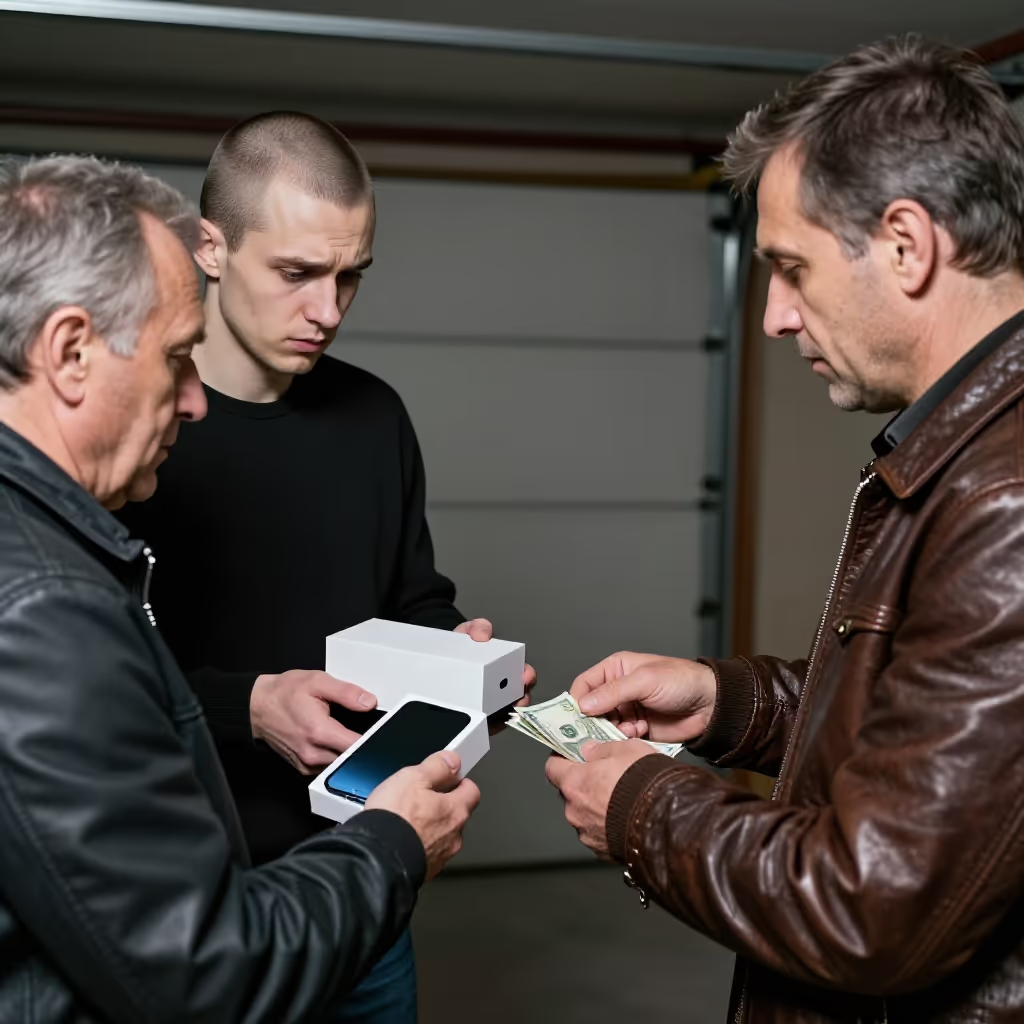
The meaning 'to sell illegally' belongs to colloquial language and is often used in the context of crime. You would not use this word this way in a normal conversation.
Die Polizei beobachtete den Hehler, als er versuchte, die gestohlene Uhr zu verschieben.
The police watched the fence as he tried to fence the stolen watch.
to move
'bewegen' and 'verschieben' can both mean that something ends up in a different place. 'bewegen' is more general: something or someone changes position or moves. 'verschieben' is more specific when you move something to another place by pushing it. In addition, 'verschieben' is used very often for appointments and plans when they are moved to a later time. 'bewegen' does not fit here. Learners may confuse the words because in both cases something changes its place or time. Memory tip: for bodies or physical movement in general, use 'bewegen'. For moving something by pushing, or for appointments, often use 'verschieben'.

Wegen des Streiks haben wir den Termin auf nächste Woche verschoben.
Because of the strike, we postponed the appointment until next week.
Nach der Operation soll Max den Arm noch nicht viel bewegen.
After the operation, Max should not move his arm much yet.