

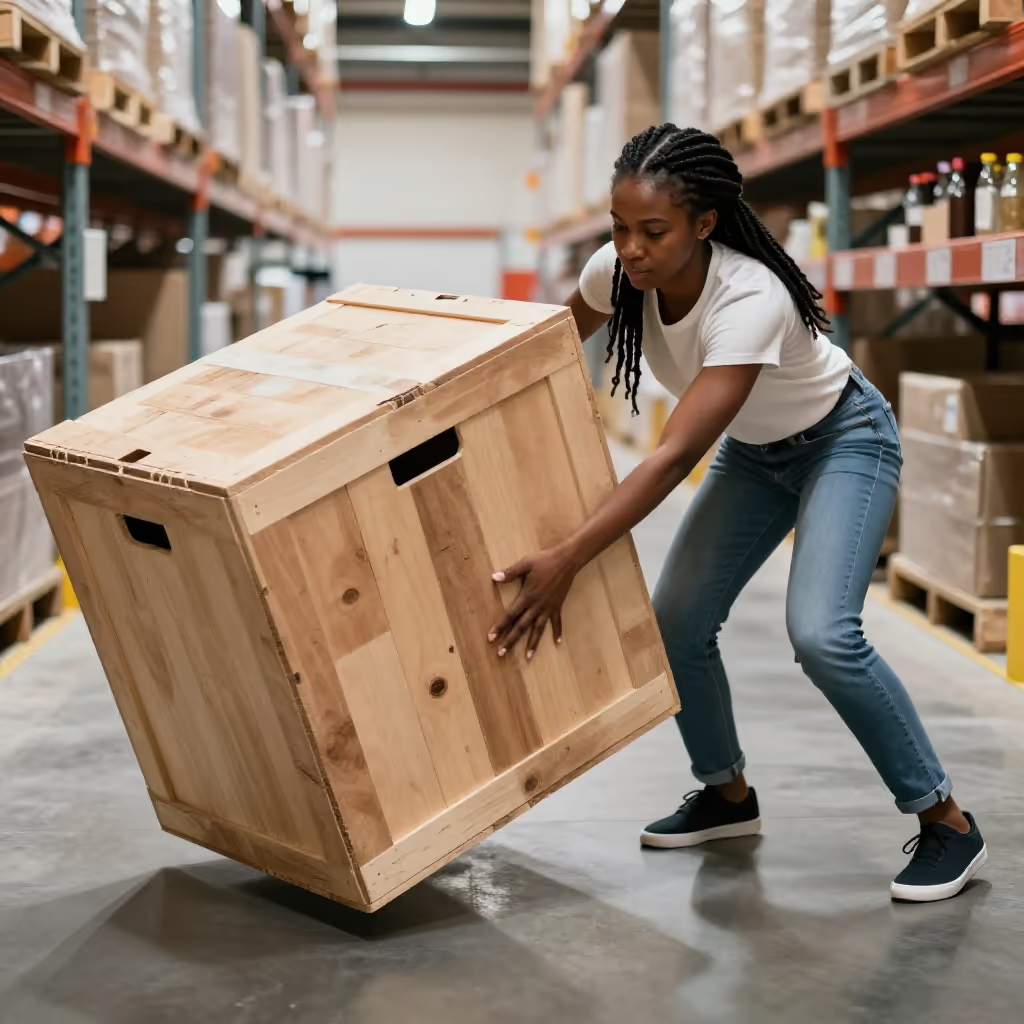
stoßen
to bump / push
To push, hit, or ram someone or something with a short, forceful movement.
EXAMPLE
Pass auf, dass du nicht gegen den Tisch stößt.
Be careful not to bump into the table.
to push / bump / come across
Loading your saved state.
to bump / push
To push, hit, or ram someone or something with a short, forceful movement.
Pass auf, dass du nicht gegen den Tisch stößt.
Be careful not to bump into the table.
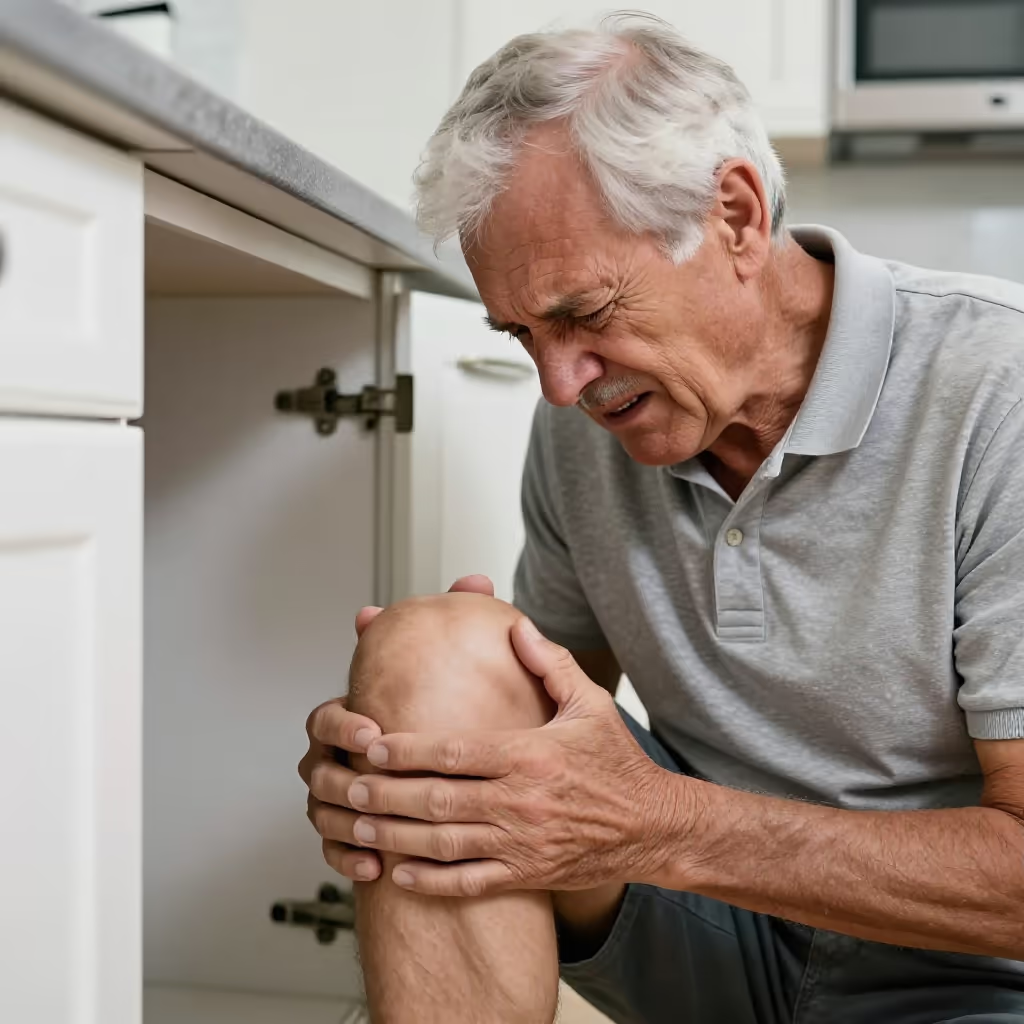
to bump oneself
To accidentally hit a body part against an obstacle and injure yourself in the process.
Ich habe mir im Dunkeln den Kopf am Türrahmen gestoßen.
I bumped my head on the doorframe in the dark.
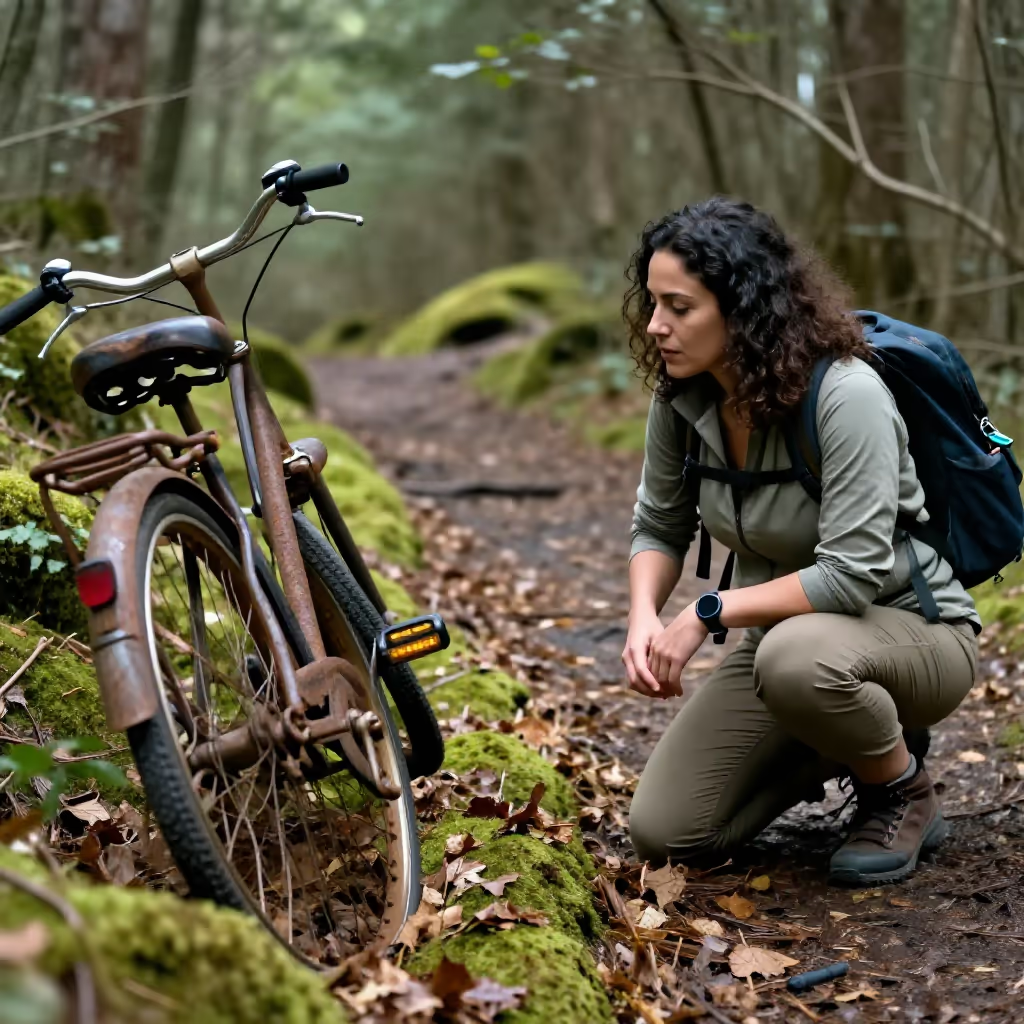
to come across
To find or encounter someone or something by chance.
Bei den Aufräumarbeiten sind wir auf alte Liebesbriefe gestoßen.
While cleaning up, we came across old love letters.

to join
To join an already existing group or company.
Wir fangen schon mal an, sie wird später zu uns stoßen.
We'll go ahead and start; she'll join us later.
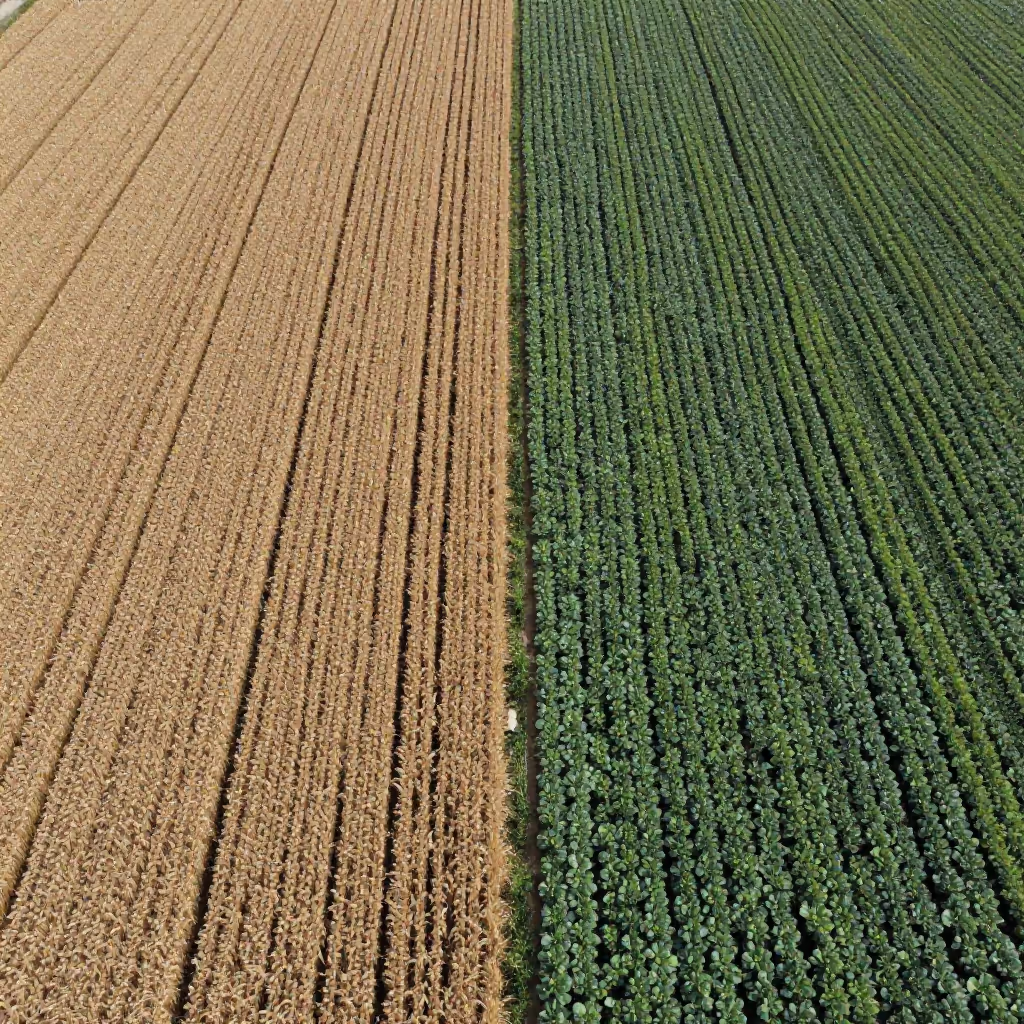
to border on
To directly border on something; to share a boundary.
Unser Grundstück stößt direkt an den Wald.
Our property borders directly on the forest.
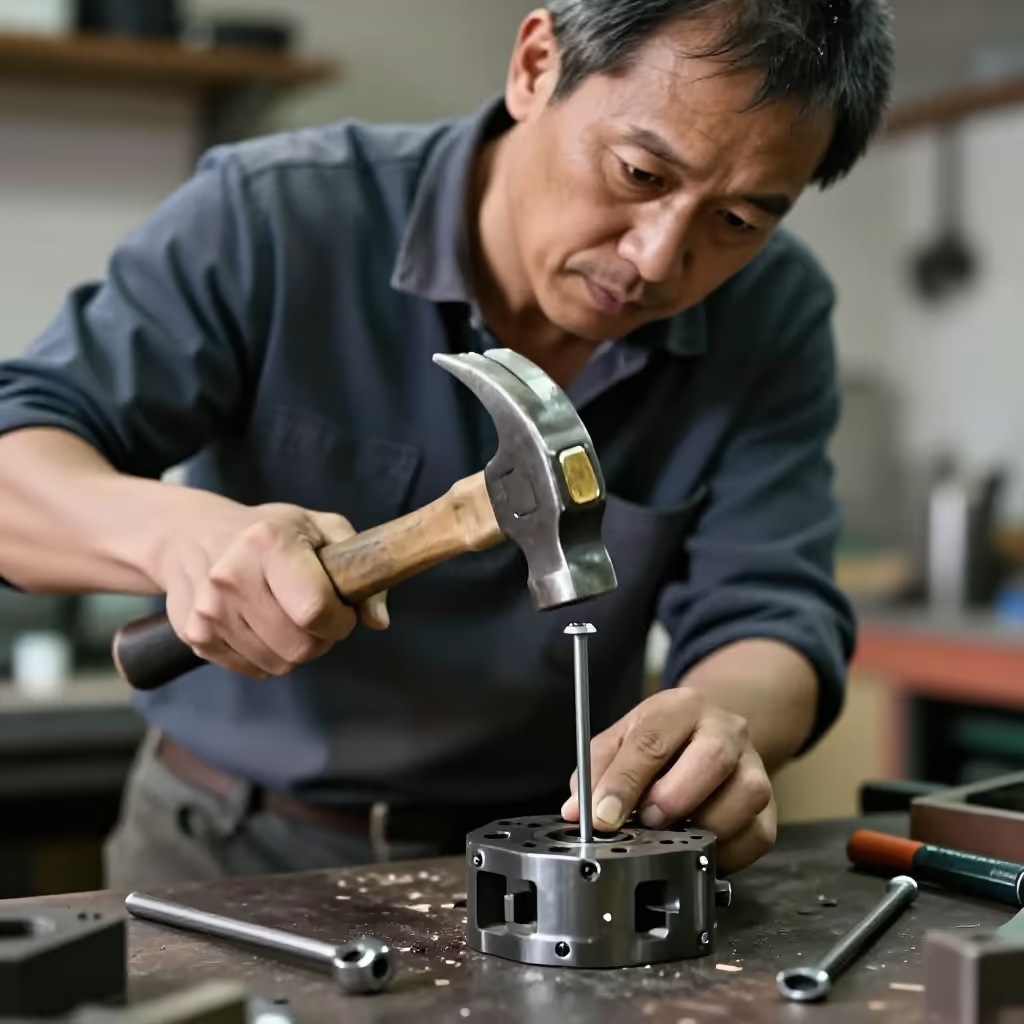
to push
To bring something into a certain direction or state by pushing it.
Er stieß die Tür mit dem Fuß auf und stürmte ins Zimmer.
He pushed the door open with his foot and stormed into the room.
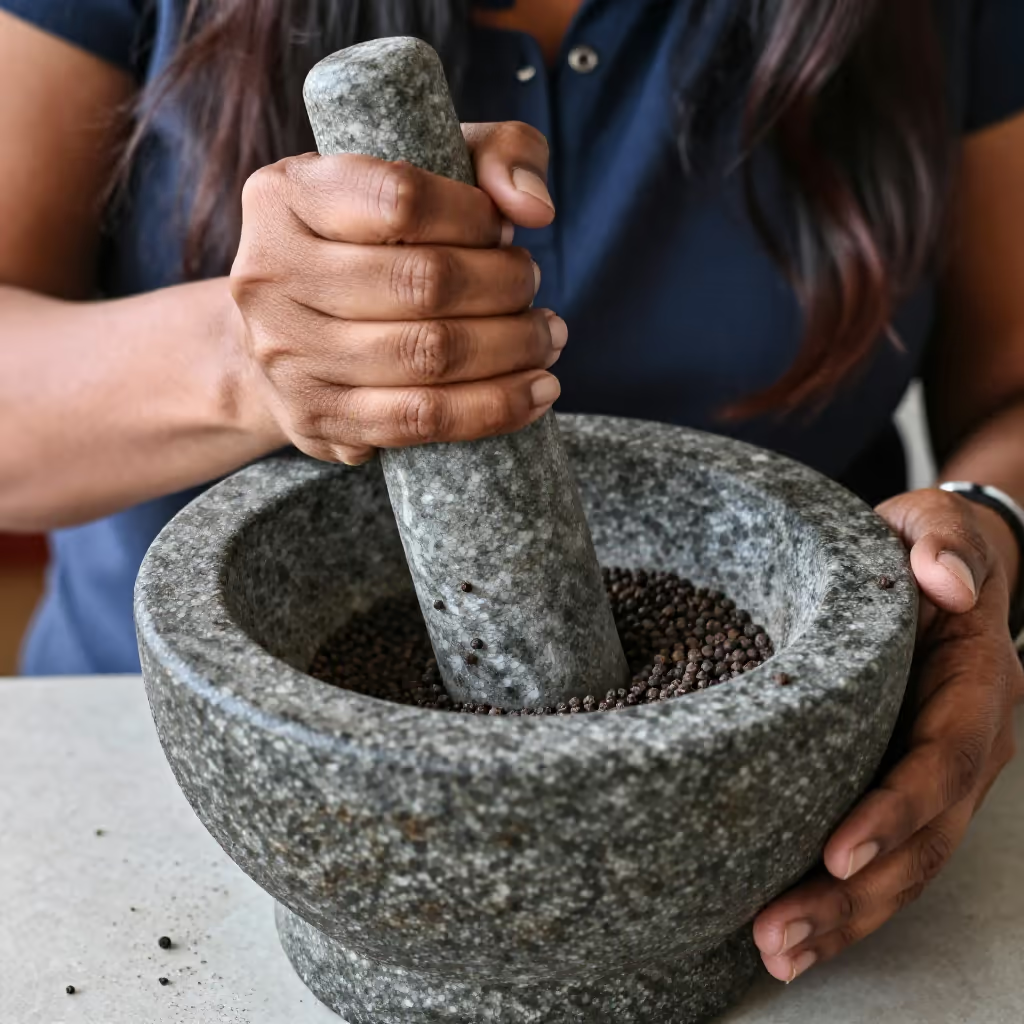
to crush
To crush something hard in a mortar or process it into powder.
Für das Pesto müssen die Pinienkerne zuerst gestoßen werden.
For the pesto, the pine nuts must first be crushed.
The verb 'stoßen' (to push/bump) can be used with 'haben' or 'sein'. 'Haben' is used for the active action (intentionally pushing someone). 'Sein' is used for an unintentional collision or a chance discovery.
Er hat seinen Gegner zu Boden gestoßen.
He pushed his opponent to the ground.
The meaning of 'stoßen' changes completely depending on the preposition. Pay close attention to whether the verb is combined with 'auf', 'zu', or 'an', because this creates completely new, figurative meanings.
Wir sind bei der Wanderung auf eine seltene Pflanze gestoßen.
We came across a rare plant during the hike.
When you accidentally injure yourself, a special reflexive construction is used. The person is in the dative, and the body part is in the accusative: 'sich (dative) + Körperteil (body part, accusative) + stoßen' (to bump a body part).
Ich habe mir den Ellbogen am Tisch gestoßen.
I bumped my elbow on the table.
The expression 'auf etwas stoßen' (to come across something / meet with something) is very often used figuratively. Typical combinations are 'auf Widerstand stoßen' (to meet with resistance), 'auf Kritik stoßen' (to meet with criticism), or 'auf Zustimmung stoßen' (to meet with approval).
Sein Vorschlag stieß im Team auf große Begeisterung.
His suggestion met with great enthusiasm in the team.
When you join a group that is already there, you use the fixed expression 'zu jemandem/etwas stoßen' (to join someone/something). The separable verb 'dazustoßen' (to join in / join later) is often used for this as well.
Wir sitzen schon im Café, du kannst einfach zu uns stoßen.
We're already sitting in the café; you can just join us.
The meaning 'angrenzen' (to border on) is used almost exclusively in a spatial or geographic context to describe the boundaries of properties, gardens, or countries.
Unser Garten stößt an ein kleines Waldstück.
Our garden borders on a small piece of woodland.
The meaning 'zerkleinern' (to crush) is specific to cooking or pharmacy. It is used when you crush hard ingredients such as spices, herbs, or nuts in a mortar.
Für das Curry müssen die Gewürze frisch gestoßen werden.
For the curry, the spices must be freshly crushed.
to find
Finden can refer to finding something deliberately or by chance. Auf etwas stoßen places more emphasis on discovering something unexpectedly while doing something else. Finden fits when you are searching; when something turns up in passing, „auf etwas stoßen“ is especially appropriate.
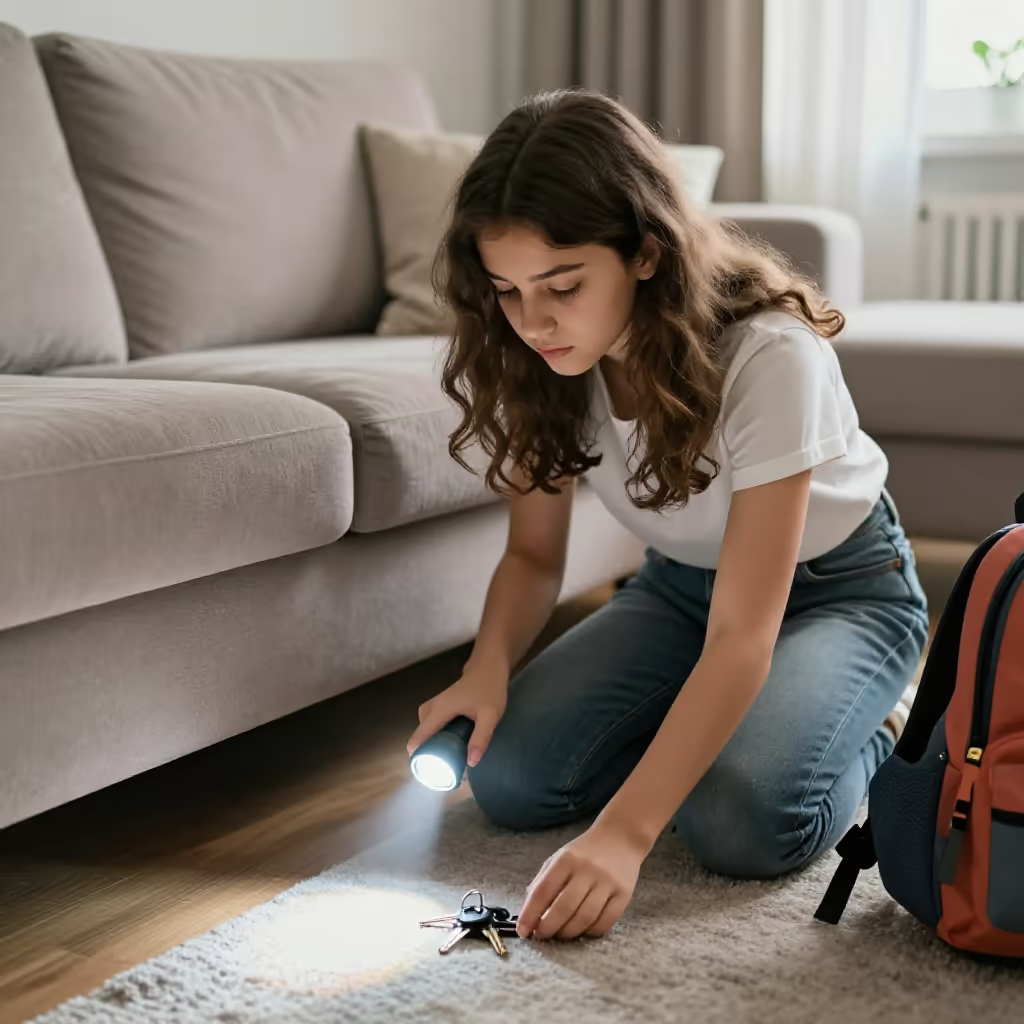
Beim Aufräumen stieß ich auf die alte Rechnung.
While tidying up, I came across the old invoice.
Beim Suchen nach dem Ordner fand ich die alte Rechnung.
While looking for the folder, I found the old invoice.