

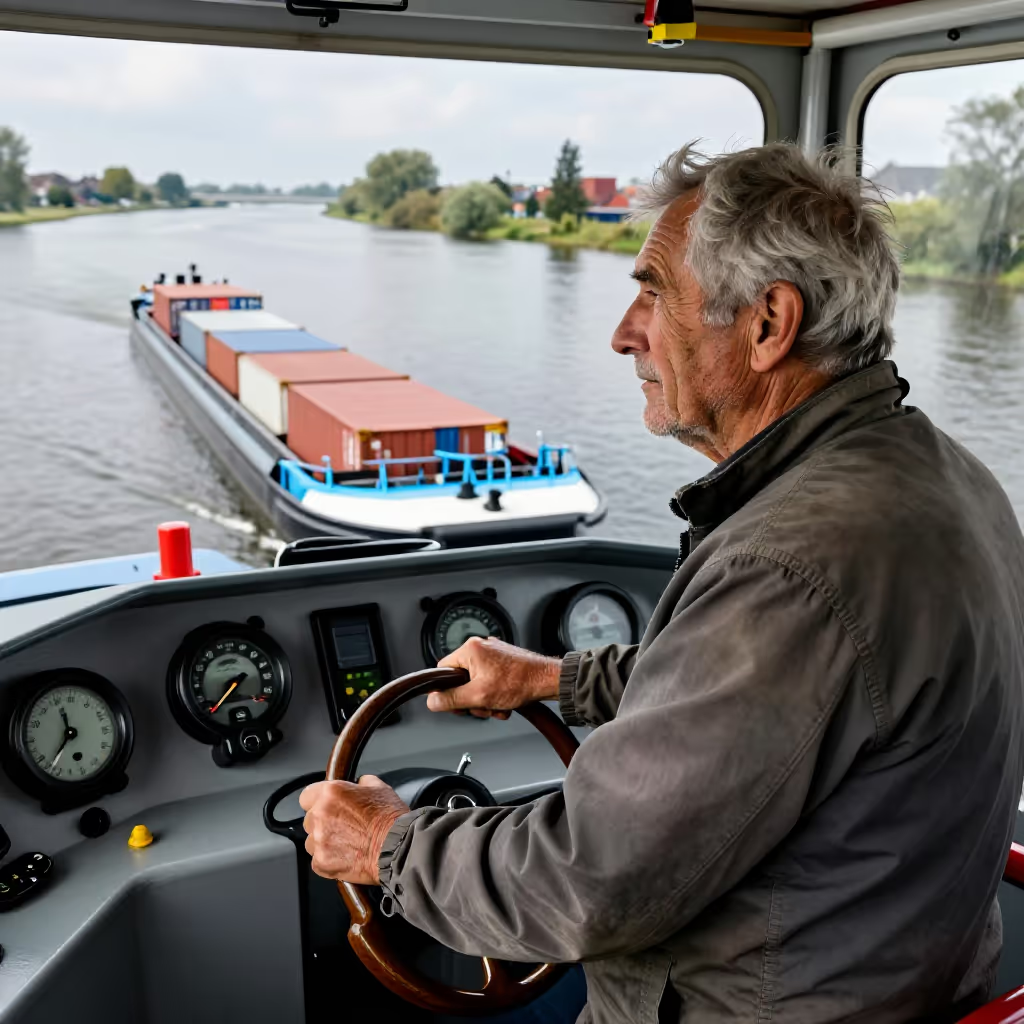
der Schiffer
boatman
A person who operates a ship professionally, especially in inland navigation on rivers and canals.
EXAMPLE
Der alte Schiffer kennt den Rhein wie seine Westentasche.
The old boatman knows the Rhine like the back of his hand.
boatman
Loading your saved state.
boatman
A person who operates a ship professionally, especially in inland navigation on rivers and canals.
Der alte Schiffer kennt den Rhein wie seine Westentasche.
The old boatman knows the Rhine like the back of his hand.
The word 'Schiffer' (boatman) is derived directly from 'das Schiff' (the ship). The ending '-er' here, as often in German, refers to a person who performs a certain activity—in this case, operating a ship.
Ein erfahrener Schiffer navigiert auch bei Nebel sicher.
An experienced boatman navigates safely even in fog.
The term 'Schiffer' (boatman) is used almost exclusively for inland navigation, meaning on rivers and canals. It is also often combined with the name of a river.
Die Donauschiffer transportieren Waren zwischen mehreren Ländern.
The Danube boatmen transport goods between several countries.
The word 'Schiffer' (boatman) often has a traditional or even slightly romantic feel. It is frequently used in stories, reports, or historical contexts.
In dem Roman verliebt sich die Hauptfigur in einen jungen Schiffer.
In the novel, the main character falls in love with a young boatman.
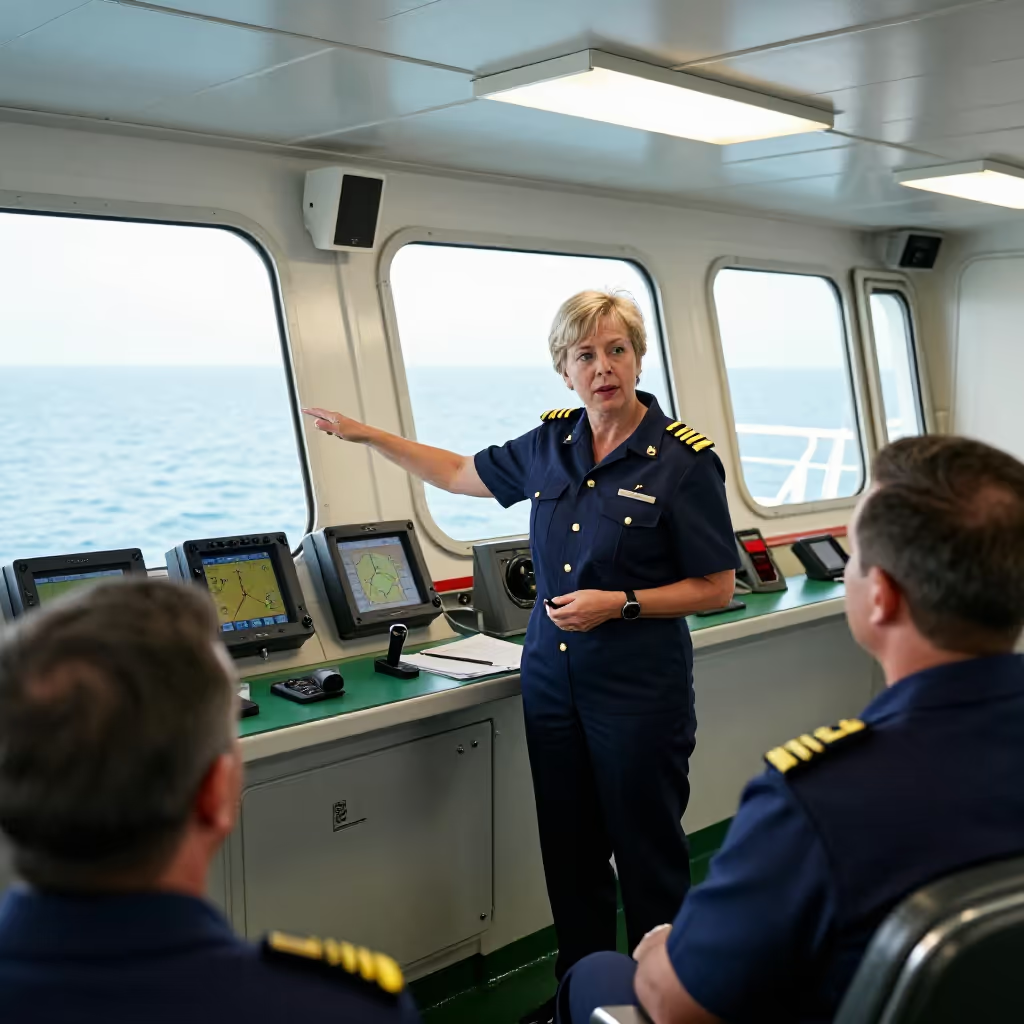
captain
Both words can refer to a person who operates a ship professionally. „Kapitän“ is the more formal nautical term and emphasizes the person’s position of responsibility, while „Schiffer“ is used especially for the professional operation of a vessel in inland navigation and sounds less formal.
Der Schiffer brachte das Frachtschiff sicher durch den engen Kanal.
The boatman guided the cargo ship safely through the narrow canal.
Der Kapitän des Ausflugsschiffs begrüßte die Gäste vor der Abfahrt.
The captain of the excursion boat welcomed the guests before departure.