

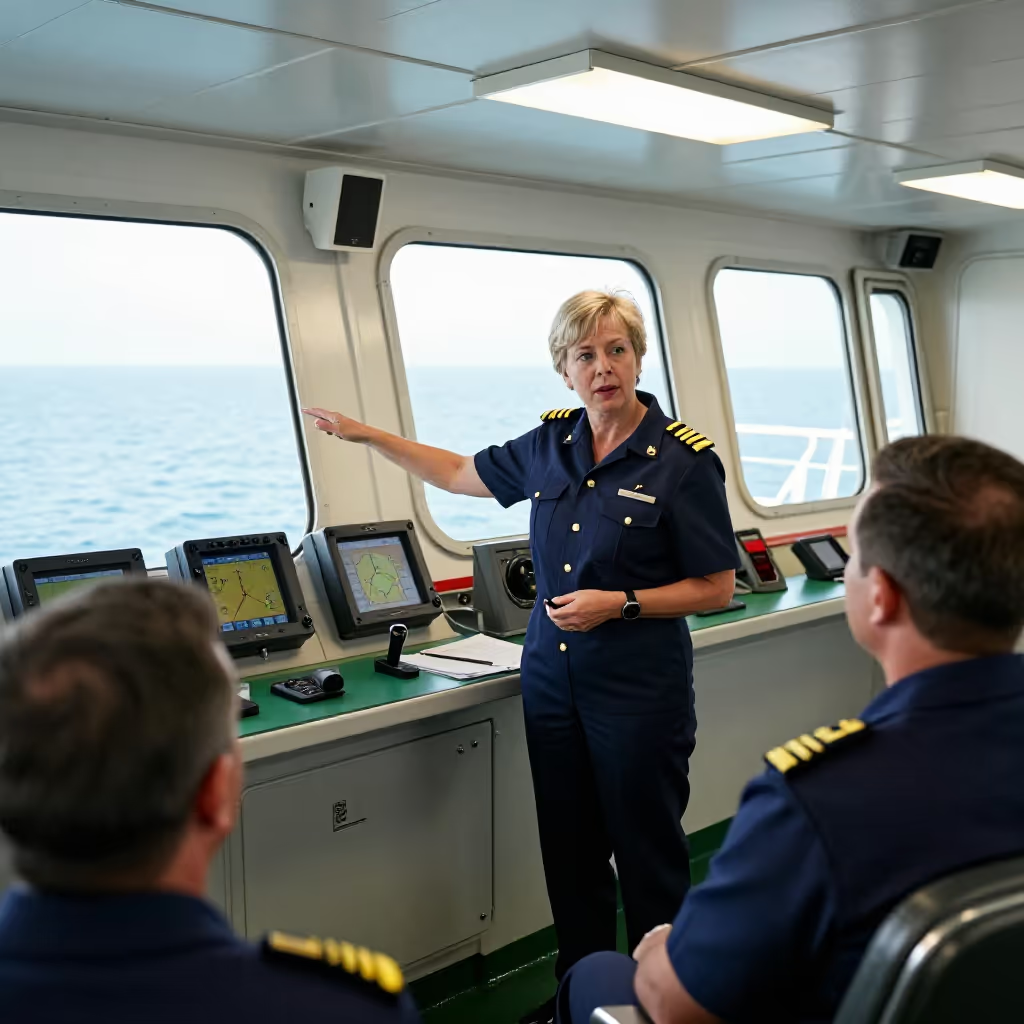
der Kapitän
captain
The person who has command of a ship or airplane and bears responsibility for it.
EXAMPLE
Der Kapitän steuerte das Schiff sicher durch den Sturm.
The captain steered the ship safely through the storm.
captain
Loading your saved state.
captain
The person who has command of a ship or airplane and bears responsibility for it.
Der Kapitän steuerte das Schiff sicher durch den Sturm.
The captain steered the ship safely through the storm.

captain
The leader of a sports team, often identified by an armband.
Der Kapitän der Fußballmannschaft schoss das entscheidende Tor.
The captain of the soccer team scored the decisive goal.
'Der Kapitän' (captain) is a weak noun (N-declension). This means it takes the ending '-en' in all cases except the nominative singular.
Die Mannschaft vertraut dem Kapitän_en_.
The team trusts the captain.
You can tell from context whether a ship/airplane captain or a sports captain is meant. Words like 'Schiff' (ship), 'Flugzeug' (airplane), or 'Crew' (crew) point to the commander, while 'Mannschaft' (team), 'Team' (team), or 'Spiel' (game) point to the athlete.
Der Kapitän der Nationalmannschaft gab nach dem Spiel ein Interview.
The captain of the national team gave an interview after the game.
In a maritime or aviation context, 'Kapitän' (captain) is often connected with verbs like 'steuern' (to steer), 'navigieren' (to navigate), or 'das Kommando haben' (to have command). A typical location phrase is 'auf der Brücke' (on the bridge).
Der Kapitän hat das alleinige Kommando auf der Brücke.
The captain has sole command on the bridge.
In a sports context, the most common combination is 'Kapitän der Mannschaft' (captain of the team). An important symbol is the 'Kapitänsbinde' (captain's armband), which the captain wears on the arm.
Er wurde zum neuen Kapitän der Mannschaft ernannt und trug stolz die Kapitänsbinde.
He was appointed the new captain of the team and proudly wore the captain's armband.
pilot
Both words can refer to a person on an airplane. “Der Pilot” primarily refers to the person who flies the airplane, while “der Kapitän” emphasizes the person’s command role and responsibility. When the focus is on flying itself, “Pilot” is appropriate; when the focus is on overall responsibility, “Kapitän” is appropriate.

Der Kapitän trug während des gesamten Fluges die Verantwortung für die Passagiere.
The captain was responsible for the passengers throughout the entire flight.
Der Pilot steuerte das Flugzeug sicher durch die Wolken.
The pilot safely flew the airplane through the clouds.