


der Schirm
umbrella / parasol
A fold-out object that protects against rain (umbrella) or sun (parasol).
EXAMPLE
Weil es regnete, spannte sie ihren Schirm auf.
Because it was raining, she opened her umbrella.
umbrella / shade
Loading your saved state.
umbrella / parasol
A fold-out object that protects against rain (umbrella) or sun (parasol).
Weil es regnete, spannte sie ihren Schirm auf.
Because it was raining, she opened her umbrella.
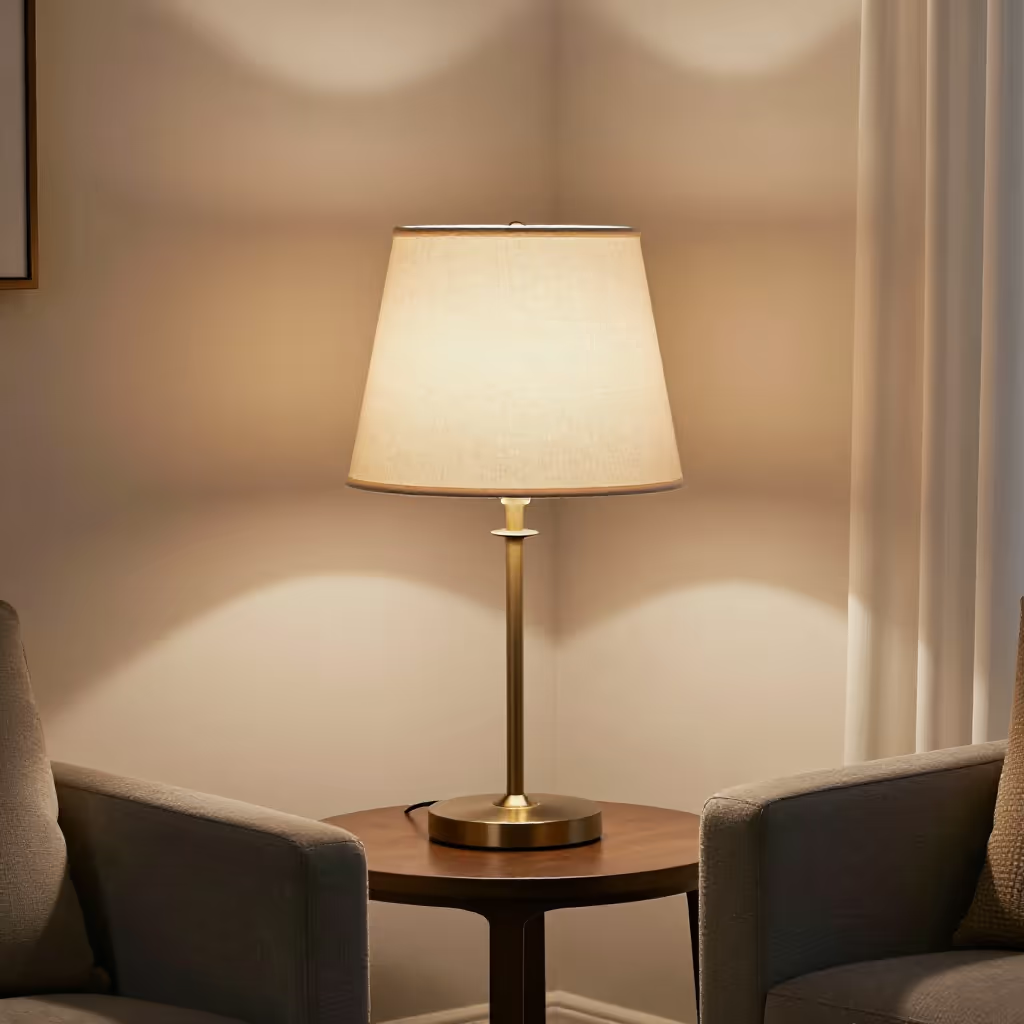
shade
A cover, usually for a lamp, that softens and directs the light (lampshade).
Der neue Schirm für die Stehlampe macht ein sehr gemütliches Licht.
The new shade for the floor lamp gives off a very cozy light.

under the patronage of
A figurative meaning for protection, supervision, or patronage by an influential person or institution.
Das Musikfestival stand dieses Jahr unter dem Schirm des Kultusministers.
This year, the music festival was held under the patronage of the minister of culture.

to have on one's radar
An informal expression meaning that one is aware of a person, matter, or problem and is paying attention to it.
Den neuen Konkurrenten auf dem Markt müssen wir unbedingt auf dem Schirm haben.
We absolutely need to have the new competitor on the market on our radar.

screen
An informal, somewhat outdated term for a computer or television screen.
Er starrte den ganzen Tag nur auf den Schirm.
He just stared at the screen all day.
'Schirm' (umbrella / shade) is a very productive base word. Many meanings can be recognized from the compound: 'Regenschirm' (umbrella, against rain), 'Sonnenschirm' (parasol, against sun), or 'Bildschirm' (screen, for images).
Nimm einen Regenschirm mit, es soll heute regnen.
Take an umbrella with you; it's supposed to rain today.
The context reveals which 'Schirm' (umbrella / shade) is meant. Words like 'Regen' (rain) or 'aufspannen' (to open) point to an umbrella, 'Lampe' (lamp) or 'Licht' (light) to a lampshade, and 'Computer' (computer) or 'fernsehen' (to watch TV) to a screen.
Bei dem starken Wind konnte ich den Schirm kaum halten.
In the strong wind, I could hardly hold the umbrella.
In connection with an umbrella or parasol, typical verbs are used: you 'spannt' a 'Schirm' 'auf' (open an umbrella) to open it, and 'klappt' it 'zu' or 'macht' it 'zu' to close it.
Als der Regen aufhörte, klappte er seinen Schirm zu.
When the rain stopped, he closed his umbrella.
The expression 'unter dem Schirm von jemandem/etwas stehen' (to be under the patronage of someone/something) means that a person or project is protected or supported by an influential authority. The preposition 'unter' (under) is crucial here.
Die Veranstaltung steht unter dem Schirm der Bürgermeisterin.
The event is under the patronage of the mayor.
The informal expression 'jemanden/etwas auf dem Schirm haben' (to have someone/something on one's radar) means to be aware of something or to keep an eye on it. The preposition 'auf' (on) is a fixed part of the expression here.
Ich habe auf dem Schirm, dass die Frist nächste Woche endet.
I have it on my radar that the deadline ends next week.
Using 'Schirm' (screen) for a monitor or screen is informal. In more formal or technical contexts, the more precise word 'Bildschirm' (screen/monitor) is preferred.
Schau nicht so lange auf den Schirm, das ist schlecht für die Augen.
Don't look at the screen for so long; it's bad for your eyes.
screen
Bildschirm and Schirm can both refer to a computer or television screen. Schirm is informal and somewhat outdated, while Bildschirm is the neutral standard term. People understand Schirm in normal conversation, but Bildschirm is more suitable for clear, general wording.
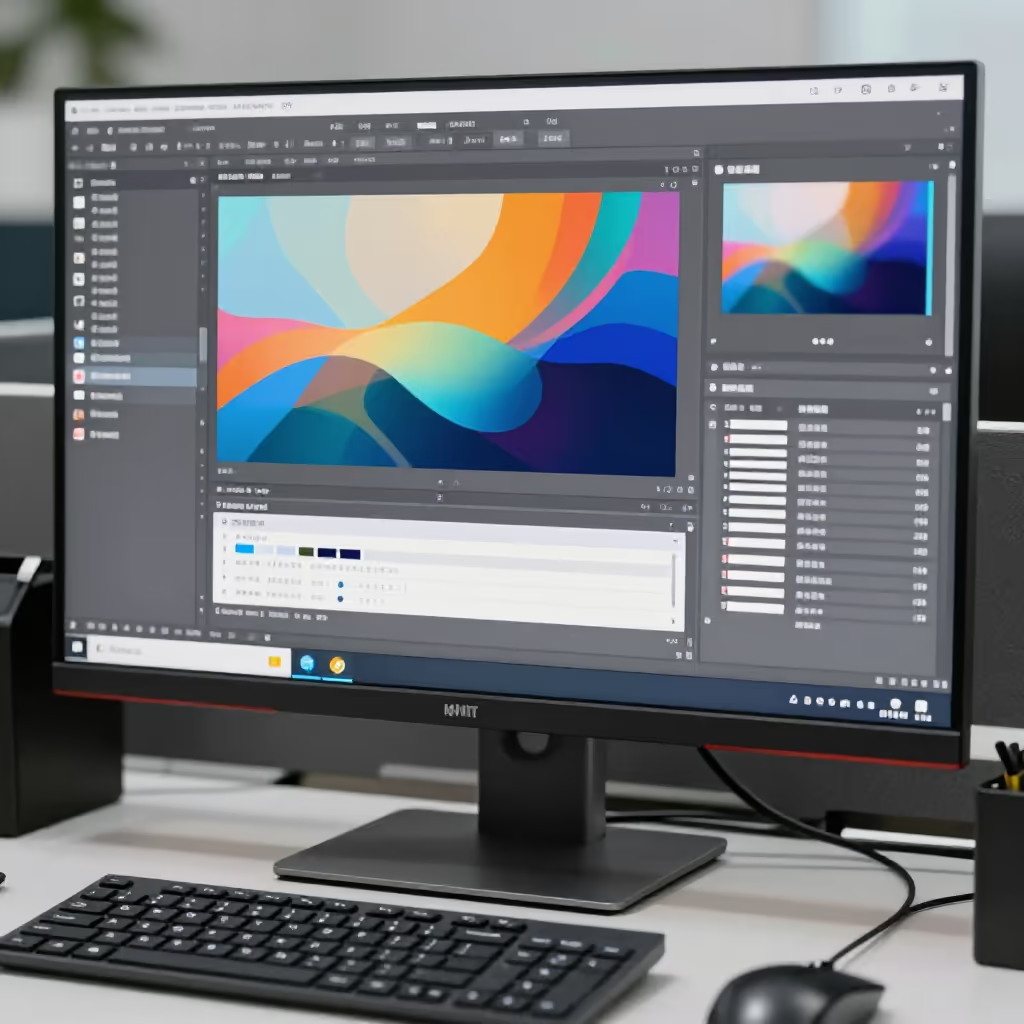
Der alte Fernseher hat noch einen kleinen Schirm.
The old television still has a small screen.
Der Bildschirm des Fernsehers zeigt heute ein besonders klares Bild.
The television screen is showing an especially clear picture today.