

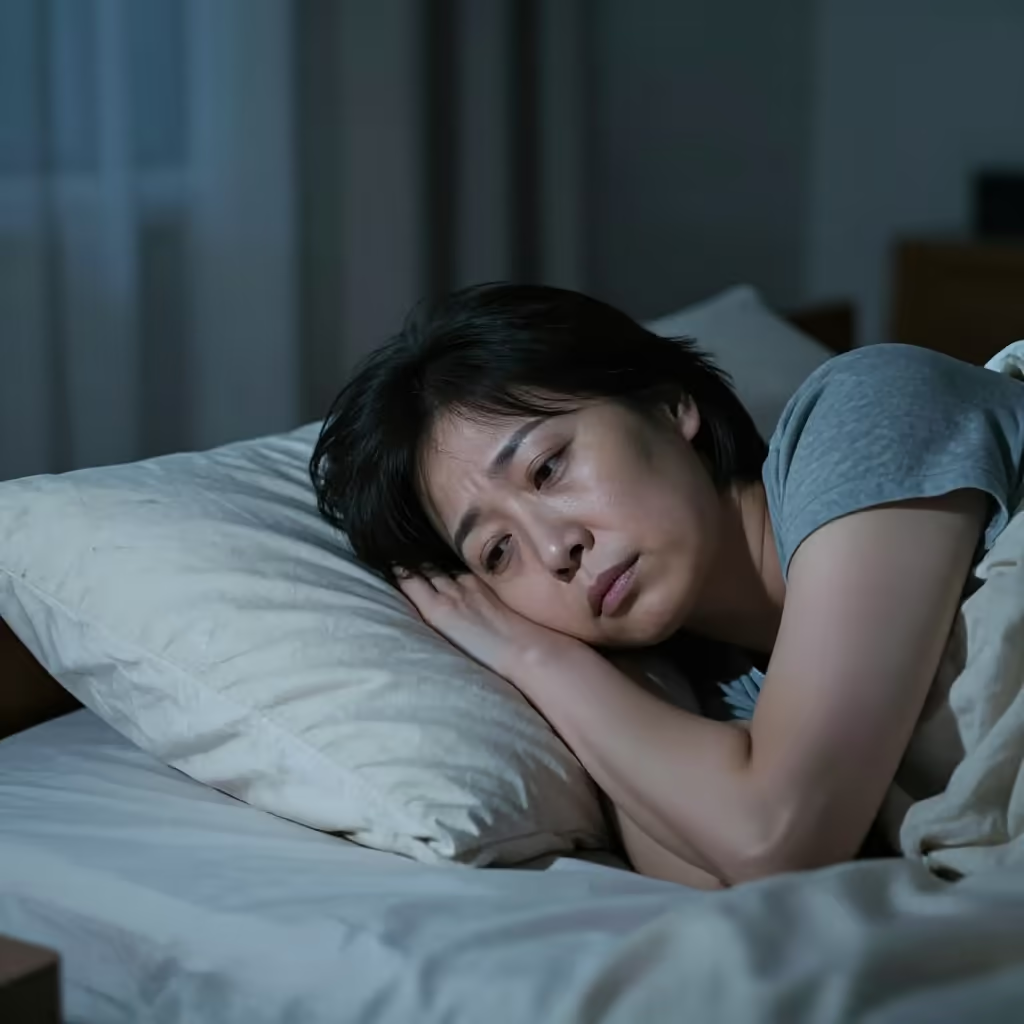
Describing the state in which you cannot sleep, even though you are tired or want to sleep.
example
Wegen des Lärms und der Sorgen lag er die ganze Nacht schlaflos im Bett.
Because of the noise and his worries, he lay sleepless in bed all night.
Usage tips
Word structure
The word consists of 'der Schlaf' (sleep) and the ending '-los' (-less), which means 'without'. 'Schlaflos' (sleepless) therefore literally means 'without sleep'. You can find this ending in many other words such as 'hoffnungslos' (hopeless) or 'arbeitslos' (unemployed).
EXAMPLE
Nach dem starken Kaffee war er die halbe Nacht schlaflos.
After the strong coffee, he was sleepless for half the night.
Typical collocation
A very common and fixed combination is 'eine schlaflose Nacht' (a sleepless night). You can say 'eine schlaflose Nacht haben' (to have a sleepless night) or 'eine schlaflose Nacht verbringen' (to spend a sleepless night).
EXAMPLE
Vor der wichtigen Prüfung hatte ich eine schlaflose Nacht.
Before the important exam, I had a sleepless night.
Giving the reason
To state the reason for sleeplessness, the prepositions 'vor' are often used with emotions and 'wegen' with external causes.
EXAMPLE
Sie war schlaflos vor Aufregung.
She was sleepless with excitement.
Compare with
confusable
schlaflos vs wach
awake / alert
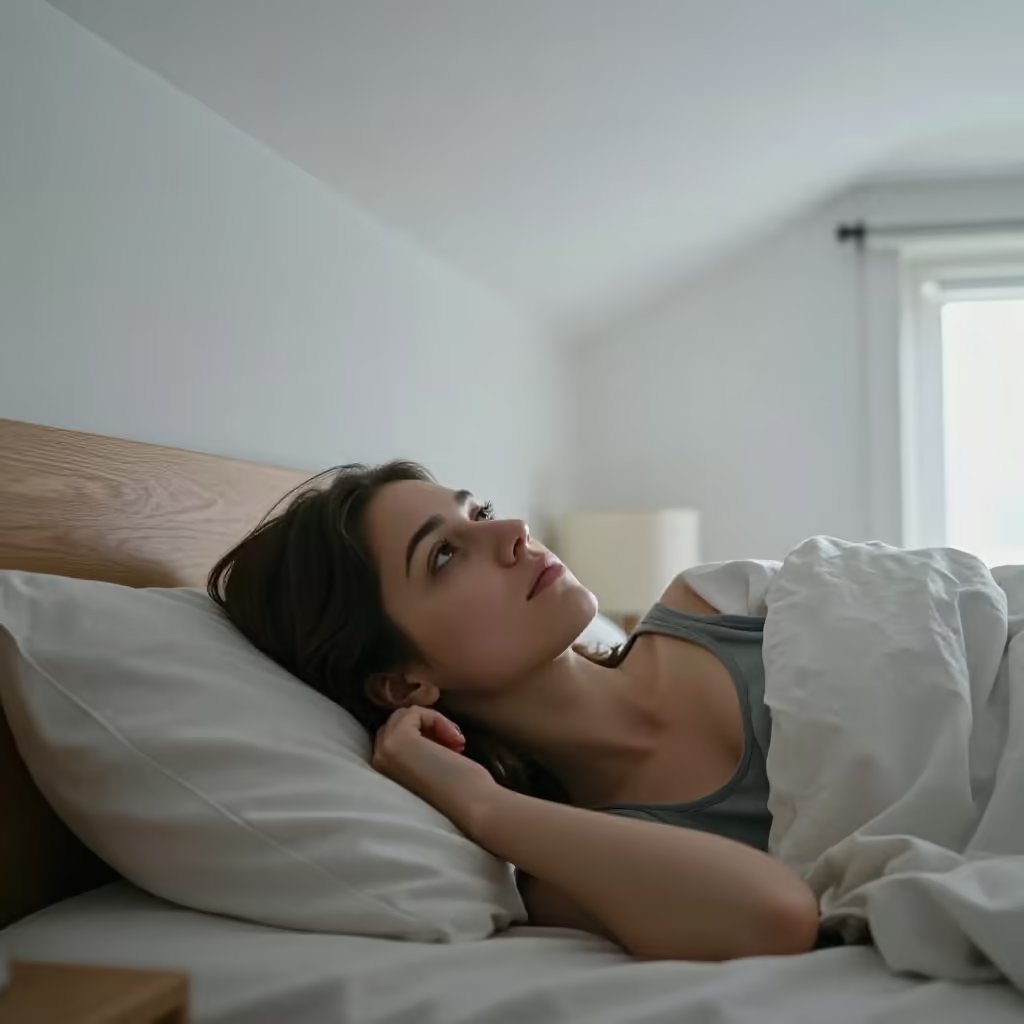
'wach' and 'schlaflos' can both mean that someone is not sleeping, but they do not mean the same thing. 'wach' simply describes the state: you are not asleep. That can be normal, intentional, or just for a moment. 'schlaflos' is used when someone cannot sleep even though they are tired or want to sleep. Learners may confuse the words because in both cases no sleep is happening. The important difference is: 'schlaflos' sounds like a problem; 'wach' does not necessarily.
schlaflos
Nach dem Streit lag er die ganze Nacht schlaflos im Bett.
After the argument, he lay sleepless in bed all night.