


wach
awake
Not sleeping; in a state of being awake.
EXAMPLE
Wegen des Lärms war ich die halbe Nacht wach.
Because of the noise, I was awake half the night.
awake / alert
Loading your saved state.
awake
Not sleeping; in a state of being awake.
Wegen des Lärms war ich die halbe Nacht wach.
Because of the noise, I was awake half the night.

alert
Mentally attentive, active, and receptive.
Sie hat einen sehr wachen Verstand und versteht alles sofort.
She has a very alert mind and understands everything immediately.
'Wach' (awake, the state) is closely related to the verbs 'aufwachen' (to wake up, the act of becoming awake) and 'wecken' (to wake someone up). These words describe different aspects of the same concept.
Ich wache jeden Morgen um sieben Uhr auf und bin dann sofort wach.
I wake up every morning at seven and am then immediately awake.
The adjective 'wach' (awake) is very often combined with the verbs 'sein' (to be), 'bleiben' (to stay), and 'werden' (to become). 'Wach sein' describes the state, 'wach bleiben' the continuation, and 'wach werden' the transition to being awake.
Ich trinke Kaffee, um länger wach zu bleiben.
I drink coffee to stay awake longer.
In the meaning 'nicht schlafend' (not sleeping), 'wach' (awake) is almost always used predicatively, meaning it comes after the verb and describes the state of the subject.
Bist du noch wach oder schläfst du schon?
Are you still awake, or are you already sleeping?
When 'wach' (alert) means mental attentiveness, it can also stand before a noun. Typical expressions are 'ein wacher Geist' (an alert mind) or observing something 'mit wachen Augen' (with alert eyes).
Er ist ein alter Mann, hat aber immer noch einen sehr wachen Geist.
He is an old man, but he still has a very alert mind.
clear
Wach initially means that someone is not asleep, and it can also refer to mental alertness. Klar, on the other hand, emphasizes that the person can think consciously and rationally. Someone can therefore already be wach but still not be completely clear-headed.
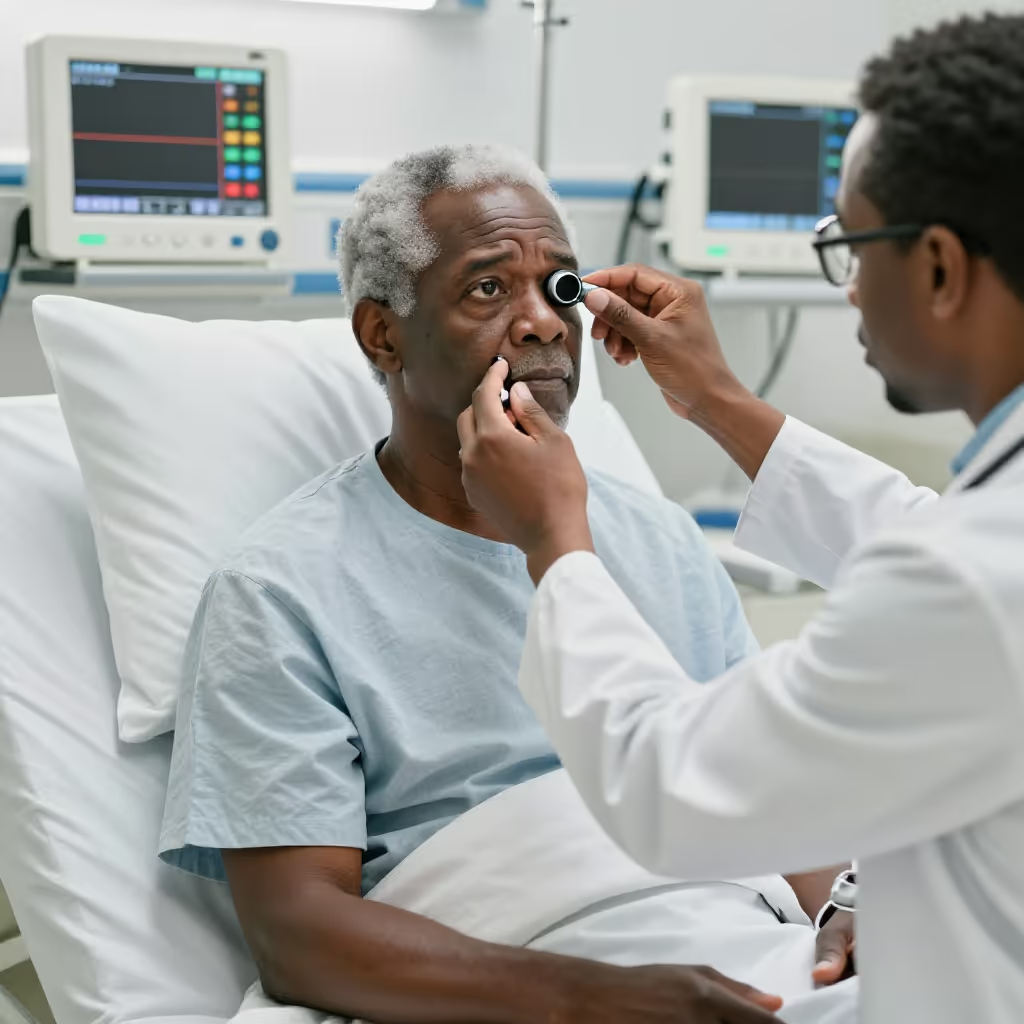
Nach der Narkose ist Paul schon wach, kann sich aber noch nicht gut konzentrieren.
After the anesthesia, Paul is already awake, but he still cannot concentrate well.
Nach der Narkose ist Paul wieder klar im Kopf und beantwortet alle Fragen.
After the anesthesia, Paul is clear-headed again and answers all the questions.