

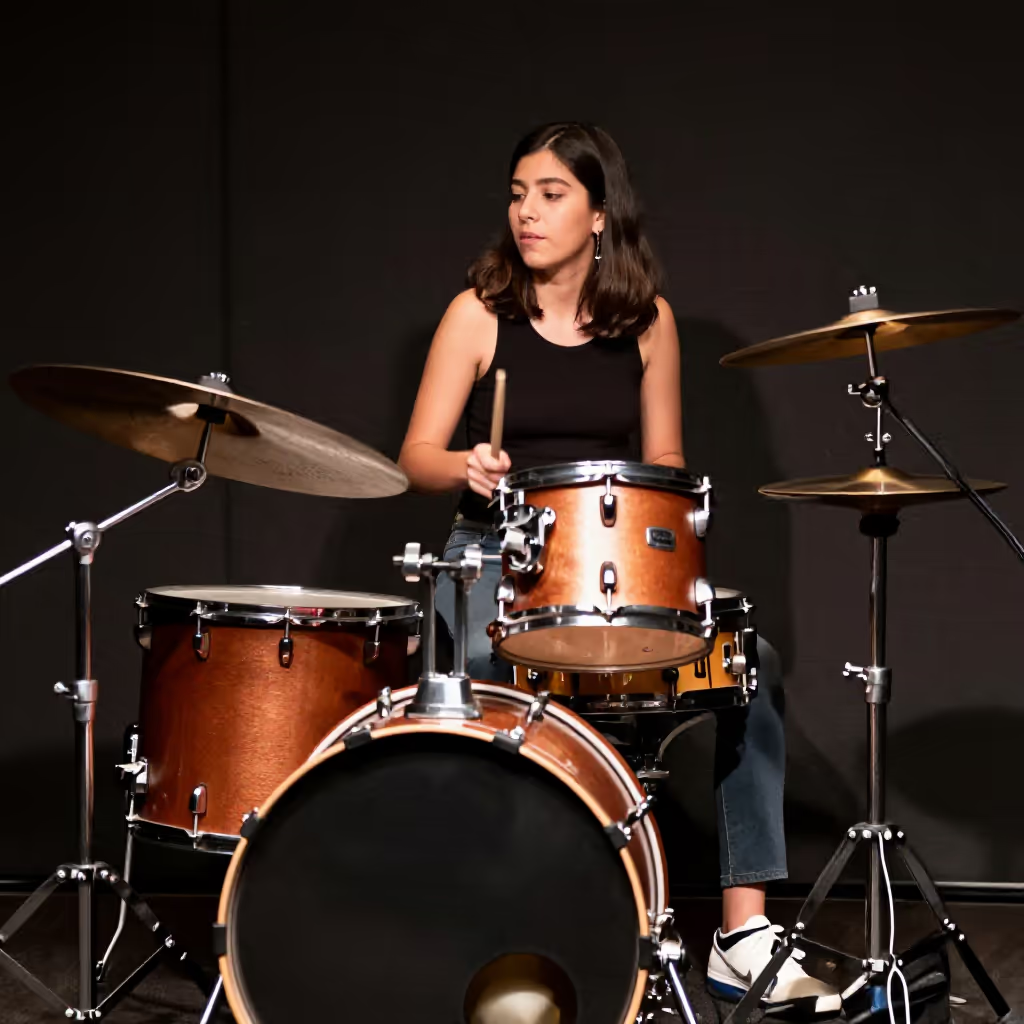
A combination of different drums and cymbals played by one person, forming the rhythmic foundation especially in pop, rock, and jazz music.
example
Er spielt seit fünf Jahren Schlagzeug in einer Band.
He has been playing drums in a band for five years.
Usage tips
Word composition
The word 'Schlagzeug' (drum kit) is made up of 'Schlag' (from 'schlagen' — to hit) and 'Zeug' (equipment, stuff). So it literally means 'equipment for hitting.'
EXAMPLE
Ein komplettes Schlagzeug besteht aus vielen Einzelteilen.
A complete drum kit consists of many individual parts.
Typical combination
The most common and important verb combination is 'Schlagzeug spielen' (to play drums). In this fixed phrase, 'Schlagzeug' is usually used without an article.
EXAMPLE
Mein Bruder lernt seit einem Jahr, Schlagzeug zu spielen.
My brother has been learning to play drums for a year.
Word family
Other words related to the instrument are derived from 'Schlagzeug' (drum kit). These include, for example, 'der Schlagzeuger' (the drummer) and 'das Schlagzeugsolo' (a piece of music just for the drums).
EXAMPLE
Der Schlagzeuger spielte am Ende des Liedes ein beeindruckendes Solo.
The drummer played an impressive solo at the end of the song.
Compare with
synonym · confusable
Schlagzeug vs Batterie
battery
'Batterie' and 'Schlagzeug' can both mean the instrument made up of drums and cymbals. In this sense, they are very similar. 'Schlagzeug' is the normal and clear word in modern German. 'Batterie' in this meaning is rarer and can easily be misunderstood because 'Batterie' usually means a power storage device. When it is about music, 'Schlagzeug' is almost always the safer choice.
Schlagzeug
Nach der Arbeit übt er eine Stunde Schlagzeug im Proberaum.
After work, he practices drums for an hour in the rehearsal room.
Batterie
In der alten Jazzband spielte mein Großvater die Batterie.
In the old jazz band, my grandfather played the drum kit.