

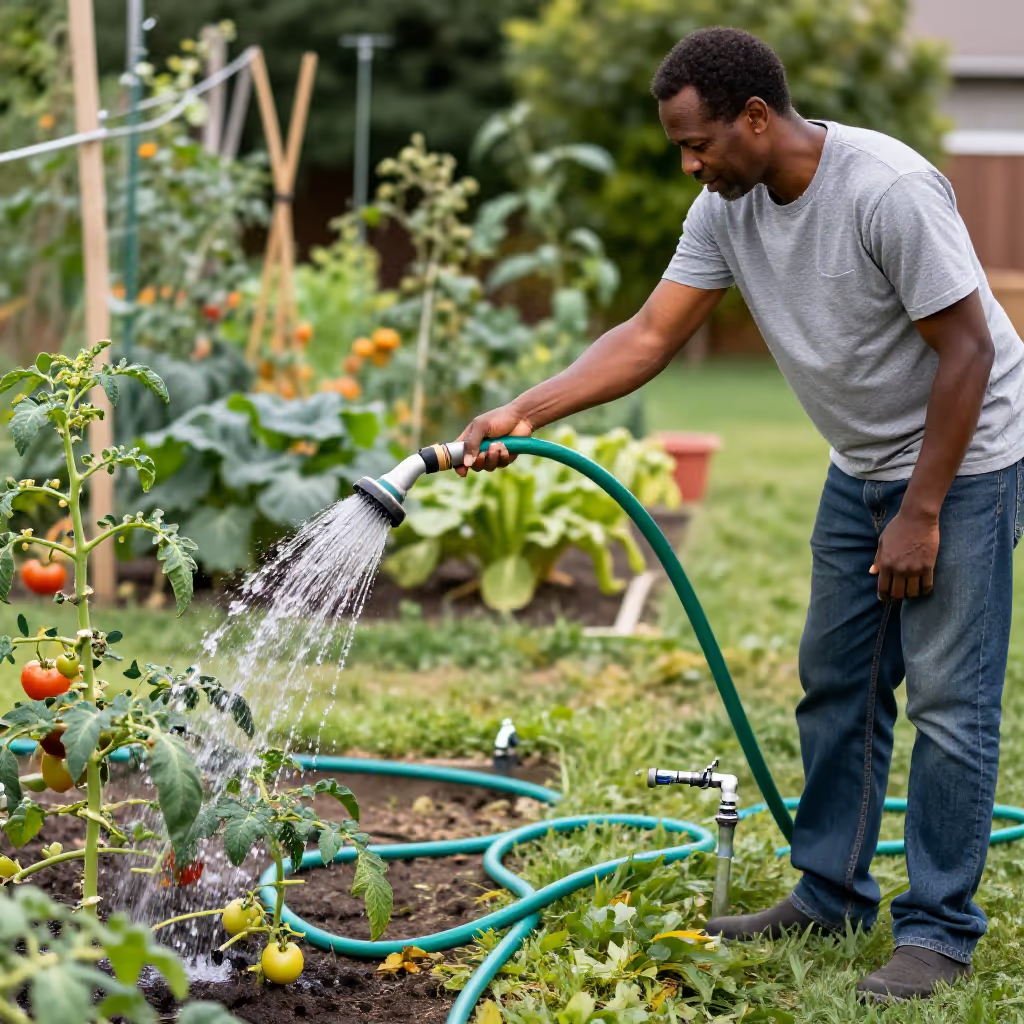
der Schlauch
hose / tube
A long, flexible, hollow cylinder used to conduct liquids or gases.
EXAMPLE
Im Sommer gieße ich die Blumen mit dem Gartenschlauch.
In summer, I water the flowers with the garden hose.
hose / tube
Loading your saved state.
hose / tube
A long, flexible, hollow cylinder used to conduct liquids or gases.
Im Sommer gieße ich die Blumen mit dem Gartenschlauch.
In summer, I water the flowers with the garden hose.
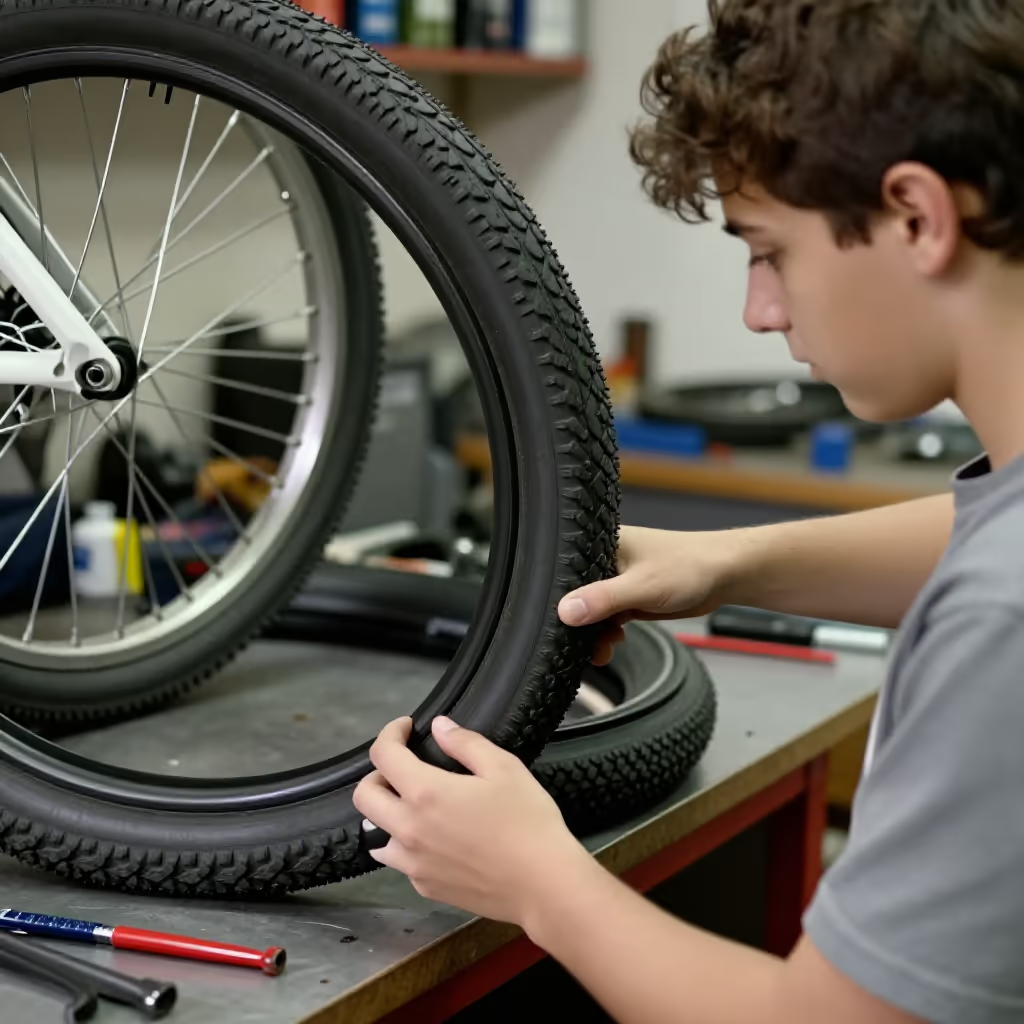
inner tube
The inner, inflatable part of a tire, for example on a bicycle.
Ich habe einen Platten und muss den Schlauch flicken.
I have a flat tire and need to patch the inner tube.

to be confused
A colloquial idiom meaning that you do not understand something at the moment or are being slow on the uptake.
Entschuldigung, ich stehe gerade total auf dem Schlauch, was meinst du?
Sorry, I'm completely confused right now—what do you mean?

tight clothing
A colloquial term for a very tight-fitting item of clothing, especially pants or a dress.
Sie trug eine Hose, die eng wie ein Schlauch war.
She was wearing pants that were as tight as a tube.
The expression 'auf dem Schlauch stehen' (to be confused / to be slow on the uptake) is a fixed idiom. It is used colloquially when someone does not understand a simple thing at the moment or cannot find a solution.
Kannst du mir das nochmal erklären? Ich glaube, ich stehe gerade auf dem Schlauch.
Can you explain that to me again? I think I'm not getting it right now.
The context helps distinguish the main meanings: if it is about water and the garden, it means a water hose. If it is about a bicycle tire and air, it means the inner rubber tube.
Der Schlauch ist zu kurz, um die hinteren Beete zu gießen.
The hose is too short to water the back flower beds.
The term 'Schlauch' (tube) for an item of clothing is colloquial and figurative. It describes a very tight, tube-shaped dress or tight pants.
Für die Party zog sie ein enges, schwarzes Schlauchkleid an.
For the party, she put on a tight black tube dress.
In the meaning 'tube for conducting liquids', 'Schlauch' is often used in compound words, e.g. 'Gartenschlauch' (garden hose), 'Wasserschlauch' (water hose), or 'Feuerwehrschlauch' (fire hose).
Bitte roll den Gartenschlauch nach der Benutzung wieder auf.
Please roll up the garden hose again after using it.
When the bicycle inner tube is broken ('einen Platten haben', to have a flat tire), the typical verbs are 'flicken' (to patch/repair) or 'wechseln' (to change/replace).
Ich muss lernen, wie man einen Fahrradschlauch selbst flickt.
I need to learn how to patch a bicycle inner tube myself.
management / line
In colloquial fixed expressions, both words refer to a moment when you do not understand something. You say auf der Leitung stehen, but auf dem Schlauch stehen; the words and prepositions cannot be exchanged in these expressions.

Bei der einfachen Frage stand ich plötzlich auf dem Schlauch.
I suddenly drew a blank when faced with the simple question.
Bei der einfachen Frage stand ich plötzlich auf der Leitung.
I suddenly drew a blank when faced with the simple question.