

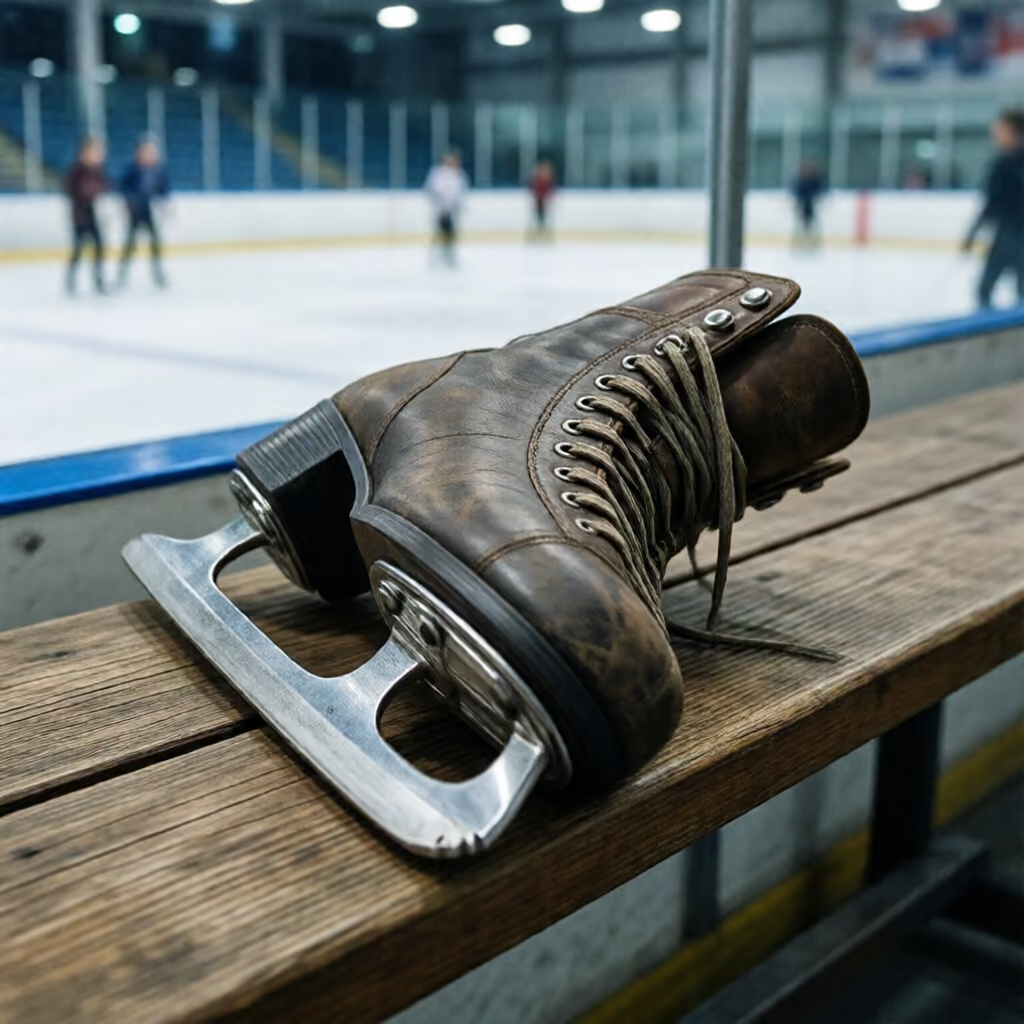
der Schlittschuh
ice skate
A skate with a narrow metal blade that allows you to glide across ice.
EXAMPLE
Für das Eislaufen brauche ich noch passende Schlittschuhe.
I still need a suitable pair of ice skates for ice-skating.
ice skate
der Schlittschuh, die Schlittschuhe
Loading your saved state.
ice skate
A skate with a narrow metal blade that allows you to glide across ice.
Für das Eislaufen brauche ich noch passende Schlittschuhe.
I still need a suitable pair of ice skates for ice-skating.
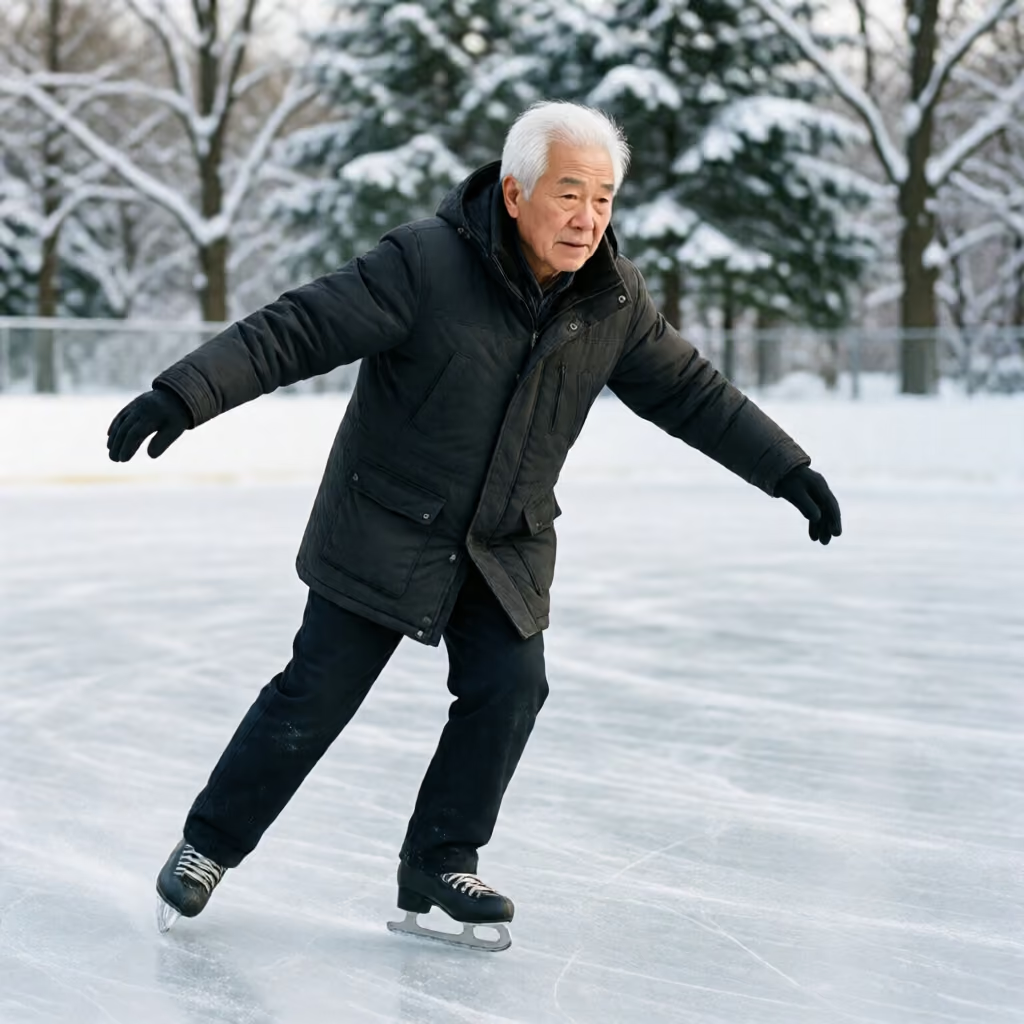
to ice-skate
To move across an ice surface and glide while wearing ice skates.
Als Kind bin ich jeden Winter Schlittschuh gelaufen.
As a child, I went ice-skating every winter.
| gender | masculine der |
|---|---|
| plural | die Schlittschuhe |
| genitive | des Schlittschuhes |
| singular | plural | |
|---|---|---|
| nominative | der Schlittschuh | die Schlittschuhe |
| accusative | den Schlittschuh | die Schlittschuhe |
| dative | dem Schlittschuh | den Schlittschuhen |
| genitive | des Schlittschuhes des Schlittschuhs | der Schlittschuhe |
The article changes with the case; it is shown in colour.
When referring to the equipment, 'Schlittschuh' is often used with verbs such as 'anziehen' (to put on), 'schnüren' (to lace up), 'ausziehen' (to take off), and 'tragen' (to wear). It usually refers to the pair as a whole.
Vor dem Eislaufen zieht er seine Schlittschuhe an.
Before ice-skating, he puts on his ice skates.
For the sporting activity, the fixed expression 'Schlittschuh laufen' (to ice-skate) is used. It can, for example, follow 'gehen' (to go) or 'lernen' (to learn).
Am Samstag gehen wir Schlittschuh laufen.
On Saturday, we're going ice-skating.
Meine Tochter lernt gerade, Schlittschuh zu laufen.
My daughter is currently learning to ice-skate.
When giving a location, 'Schlittschuh laufen' (to ice-skate) is often used with 'auf' (on) and the dative. Typical locations include an ice surface, a lake, or an ice rink.
Die Jugendlichen laufen auf der Eisbahn Schlittschuh.
The teenagers are ice-skating at the rink.