

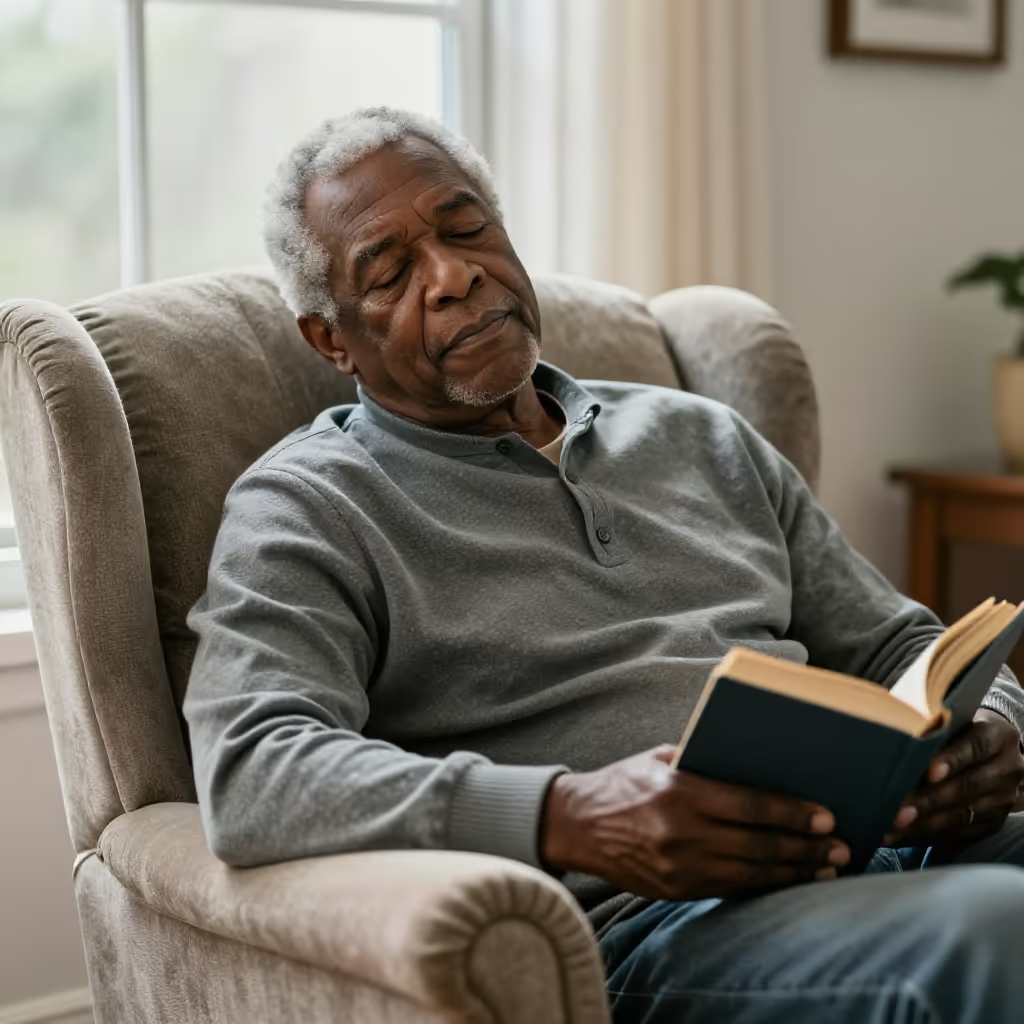
schlummern
to slumber
To sleep lightly or not deeply; to doze.
EXAMPLE
Das Baby schlummert friedlich in seiner Wiege.
The baby is slumbering peacefully in its cradle.
to slumber / lie dormant
Loading your saved state.
to slumber
To sleep lightly or not deeply; to doze.
Das Baby schlummert friedlich in seiner Wiege.
The baby is slumbering peacefully in its cradle.
to lie dormant
To be present in a hidden way and not yet have become active or visible. Often refers to talents, abilities, or dangers.
In ihm schlummert ein großes künstlerisches Talent, das nur darauf wartet, geweckt zu werden.
A great artistic talent lies dormant in him, just waiting to be awakened.
You can recognize the meaning of 'schlummern' (to slumber / to lie dormant) from the subject. If a person or animal 'schlummert' (slumbers), they are sleeping lightly. If an abstract concept such as talent, danger, or potential 'schlummert' (lies dormant), it is hidden or inactive.
Der Kater schlummert auf dem warmen Fensterbrett.
The tomcat is slumbering on the warm windowsill.
In the meaning 'leicht schlafen' (to sleep lightly), 'schlummern' (to slumber) is a rather poetic or literary word. It sounds gentler and more peaceful than the neutral word 'schlafen' (to sleep).
Nach der langen Wanderung schlummerte er erschöpft auf dem Sofa.
After the long hike, he slumbered exhausted on the sofa.
In the figurative meaning, the structure 'in jemandem/etwas schlummert ...' (in someone/something lies dormant ...) is often used. The preposition 'in' with the dative indicates where the hidden potential or danger is to be found.
In meiner Kollegin schlummert ein echtes Organisationstalent.
A true talent for organization lies dormant in my colleague.
The figurative meaning is frequently combined with abstract nouns. Typical examples are: 'ein Talent schlummert' (a talent lies dormant), 'eine Fähigkeit schlummert' (an ability lies dormant), 'ein Potenzial schlummert' (a potential lies dormant), or 'eine Gefahr schlummert' (a danger lies dormant).
Die Archäologen ahnten nicht, welcher Schatz unter der Erde schlummerte.
The archaeologists had no idea what treasure lay dormant beneath the ground.
to sleep
Schlafen is the neutral, general term for being in a state of sleep. Schlummern usually describes light or especially peaceful sleep and has a gentler style. Without this particular nuance, schlafen is the better choice.
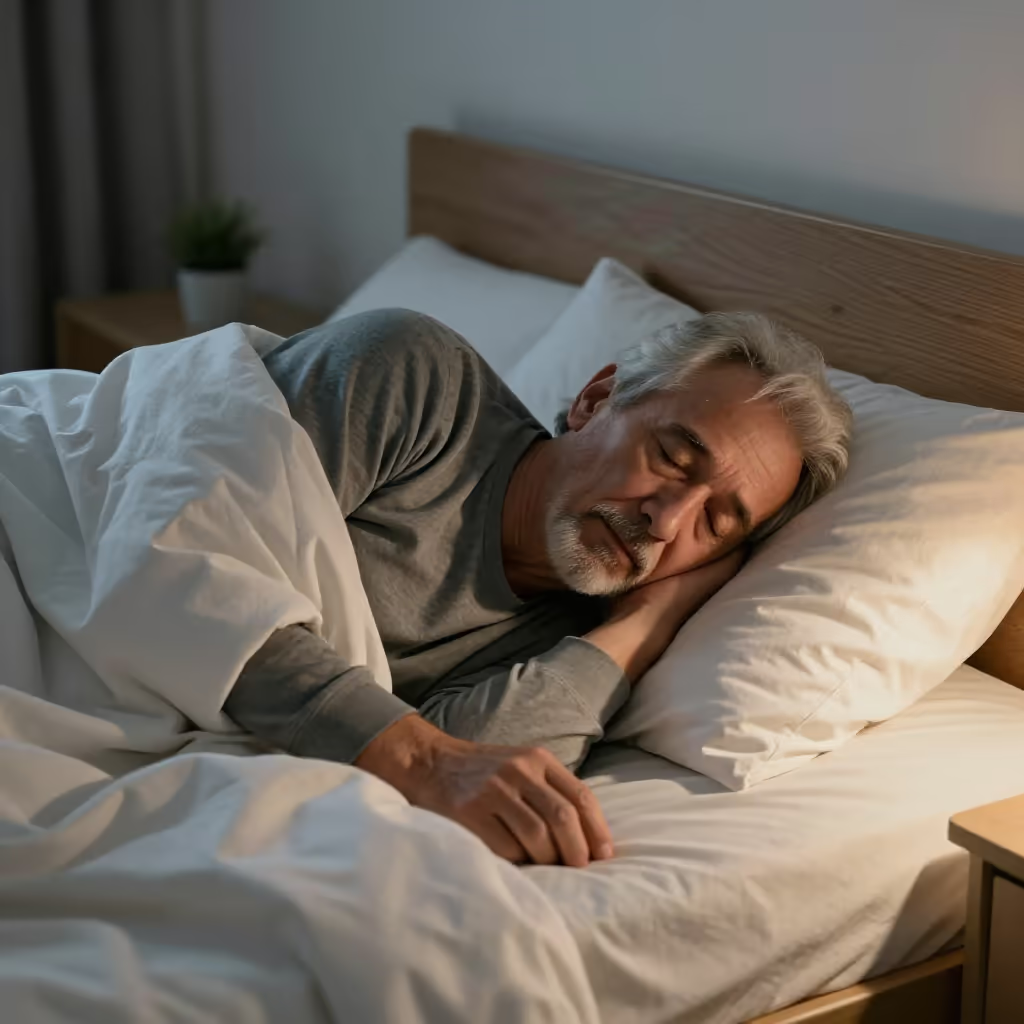
Nach dem Mittagessen schlummert Paul friedlich im Sessel.
After lunch, Paul dozes peacefully in the armchair.
Nach dem langen Arbeitstag schläft Paul tief und fest.
After the long workday, Paul sleeps deeply and soundly.