


der Schmelz
enamel
The hard, protective outer layer of the teeth; tooth enamel.
EXAMPLE
Säurehaltige Getränke können den Zahnschmelz angreifen.
Acidic drinks can attack tooth enamel.
enamel / warmth
Loading your saved state.
enamel
The hard, protective outer layer of the teeth; tooth enamel.
Säurehaltige Getränke können den Zahnschmelz angreifen.
Acidic drinks can attack tooth enamel.

warmth
A special, pleasant, and warm sound in a voice or in music.
Die Sängerin verzauberte das Publikum mit dem Schmelz in ihrer Stimme.
The singer enchanted the audience with the warmth in her voice.
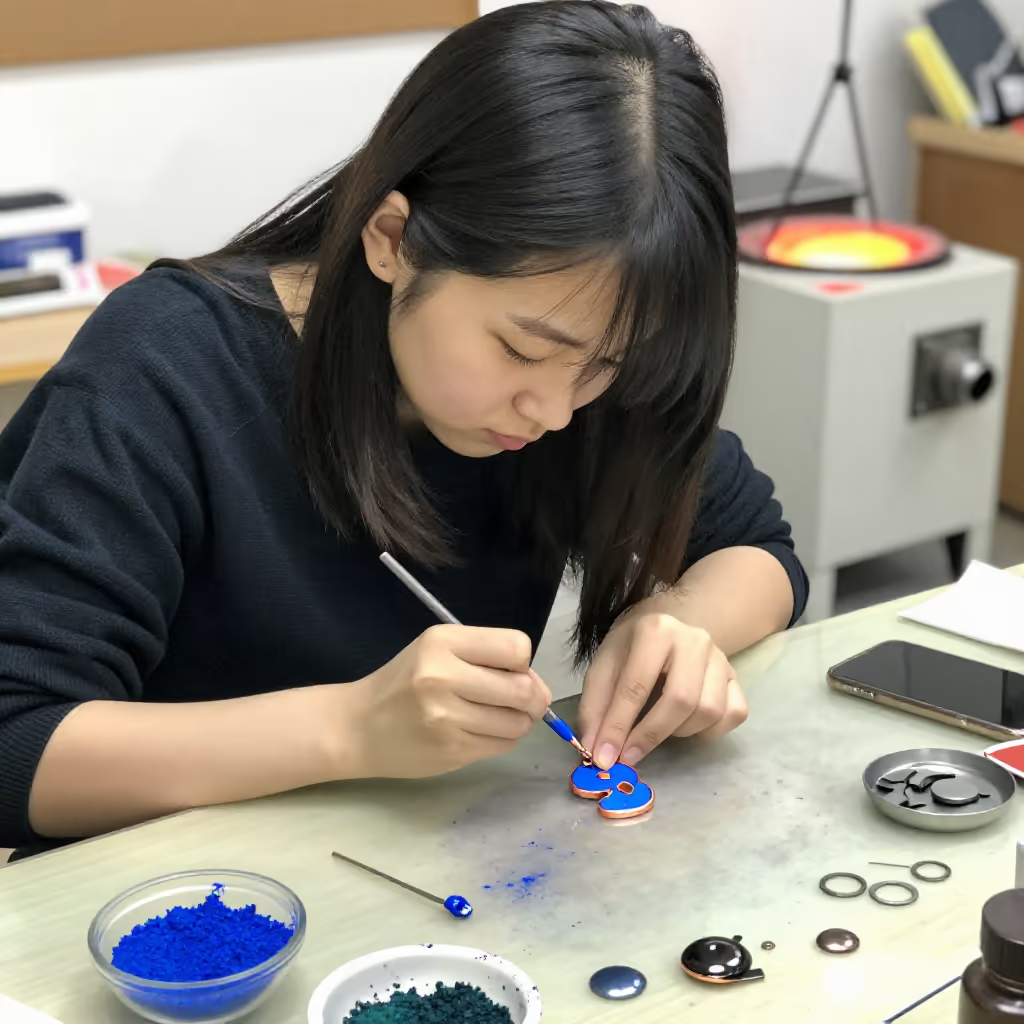
enamel
A glass-like, often colored substance used to coat metal, ceramics, or glass; enamel.
Die Brosche war mit einem feinen blauen Schmelz verziert.
The brooch was decorated with a fine blue enamel.
'Der Schmelz' (enamel/warmth) is the noun related to the verb 'schmelzen' (to melt). The basic meaning refers to a substance applied by melting (enamel). The other meanings derive from this: the hard protective layer on the teeth and the “melting” quality of a voice.
Die Schokolade schmilzt langsam im Topf.
The chocolate is slowly melting in the pot.
In a medical or dental context, 'Schmelz' (enamel) always means tooth enamel. Watch for words like 'Zahn' (tooth), 'Karies' (cavities/tooth decay), 'Säure' (acid), or 'Zahnpasta' (toothpaste). The word 'Zahnschmelz' (tooth enamel) is also very common.
Diese spezielle Zahnpasta soll den Zahnschmelz schützen.
This special toothpaste is supposed to protect tooth enamel.
The meaning 'warmer Klang' (warm sound) is found only in connection with music or voices. Typical signal words are 'Stimme' (voice), 'Gesang' (singing), 'singen' (to sing), or the names of musical instruments.
Der Sänger ist berühmt für den besonderen Schmelz in seiner Stimme.
The singer is famous for the special warmth in his voice.
When 'Schmelz' refers to the glass-like substance enamel, the context is usually art, jewelry, or crafts. You will then find the word together with terms like 'Brosche' (brooch), 'Vase' (vase), 'Keramik' (ceramics), or 'verziert' (decorated).
Die alte Brosche war mit einem feinen blauen Schmelz verziert.
The old brooch was decorated with a fine blue enamel.
sound
Klang generally refers to the audible quality of a voice or music. Schmelz refers more specifically to an especially pleasant, warm, and mellifluous sound. Klang is suitable for a neutral description; when this particular soft warmth is meant to be emphasized, Schmelz is suitable.
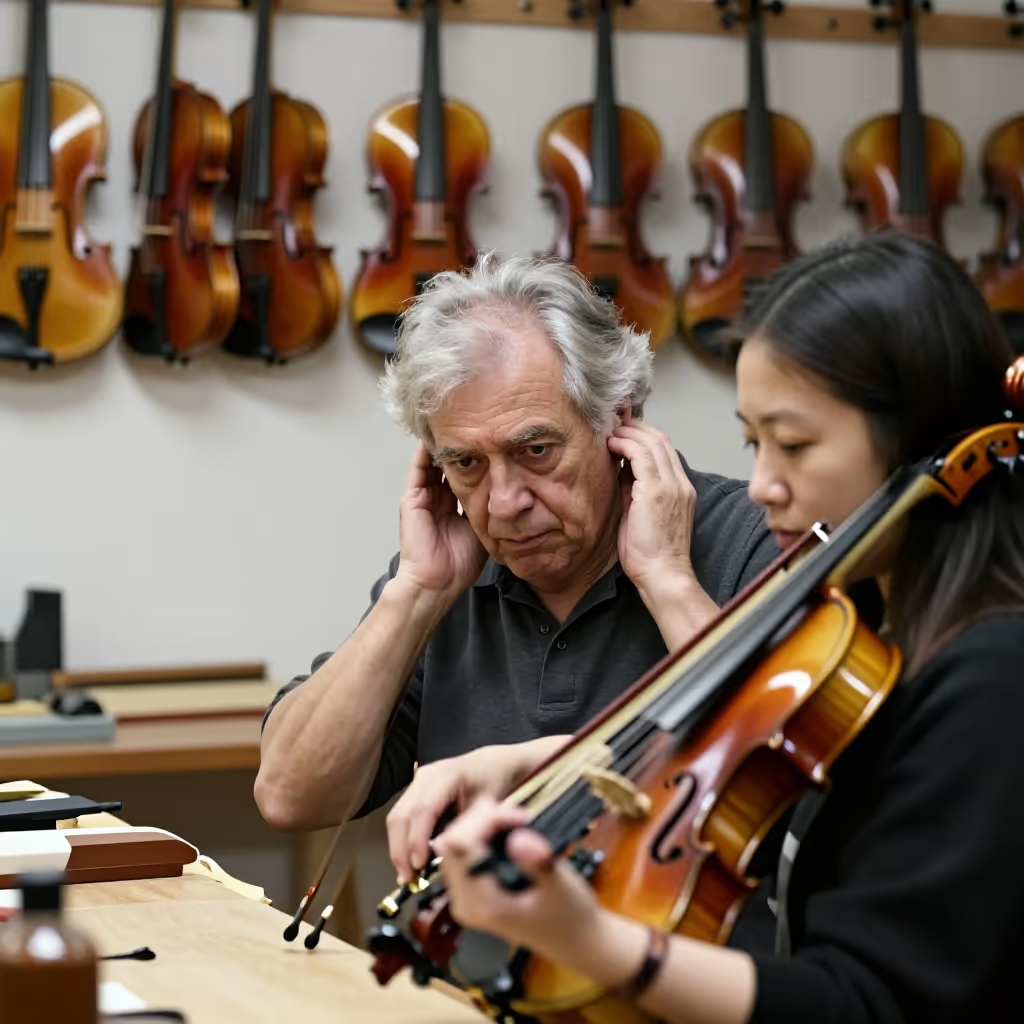
Die Sängerin verleiht der ruhigen Melodie mit ihrer warmen Stimme viel Schmelz.
With her warm voice, the singer gives the quiet melody a great deal of warmth.
Die Sängerin hat einen klaren und kräftigen Klang in der Stimme.
The singer has a clear and powerful sound in her voice.