

der Klang
sound
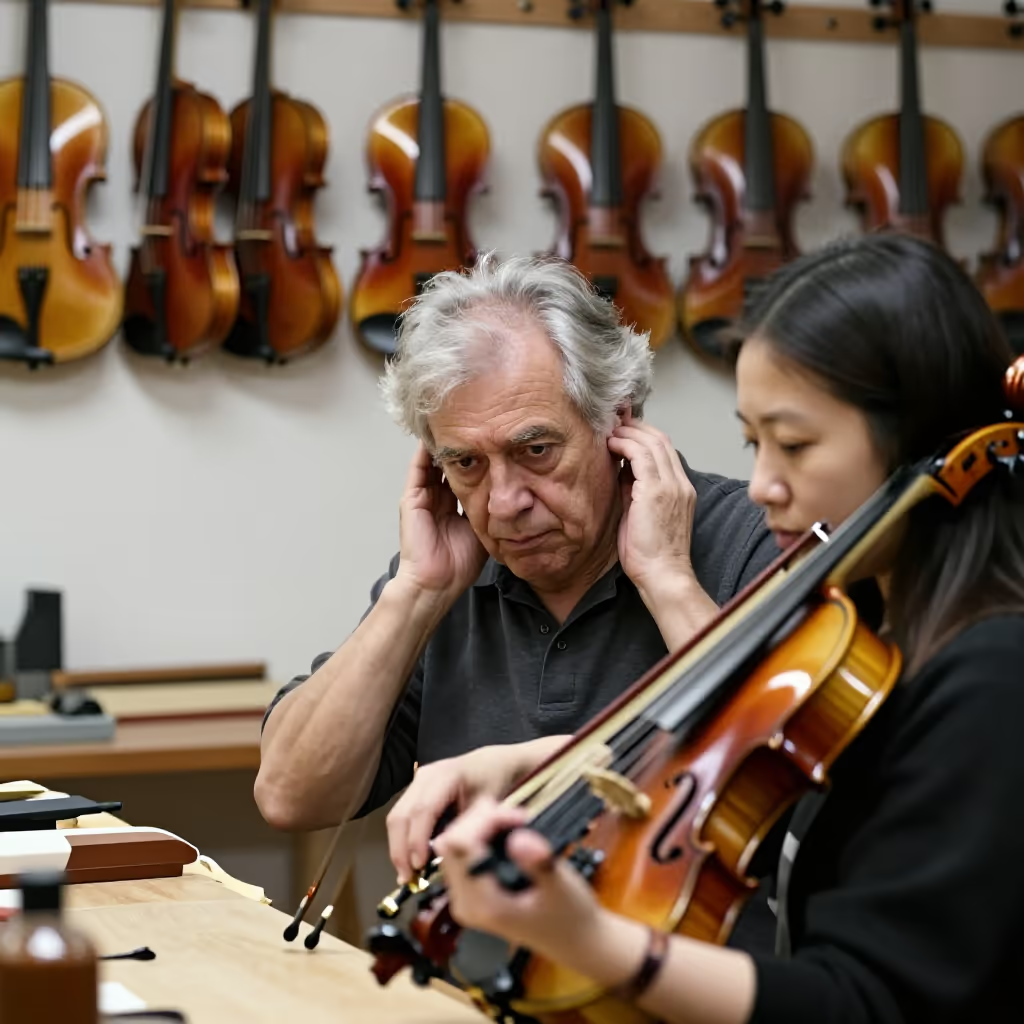
The specific way something sounds; the quality of the tone of a voice, a musical instrument, or a noise.
EXAMPLE
Der warme Klang des Cellos erfüllte den Konzertsaal.
The warm sound of the cello filled the concert hall.
sound
Loading your saved state.
sound
The specific way something sounds; the quality of the tone of a voice, a musical instrument, or a noise.
Der warme Klang des Cellos erfüllte den Konzertsaal.
The warm sound of the cello filled the concert hall.

connotation
The resonant meaning or undertone of words or names; the association that something evokes.
Das Wort „Steuererhöhung“ hat für die meisten Bürger einen negativen Klang.
For most citizens, the word 'tax increase' has a negative connotation.
'Der Klang' (sound) belongs to the word family of the verb 'klingen' (to sound). When something sounds, it has a 'Klang' (sound). This connection helps you understand the meaning as the result of an audible process.
Ich mag den Klang von Regen auf einem Dach.
I like the sound of rain on a roof.
To describe the quality of a tone, 'Klang' (sound) is often combined with adjectives such as 'hell' (bright), 'dunkel' (dark), 'voll' (full), 'klar' (clear), or 'dumpf' (muffled).
Die neue Stereoanlage hat einen sehr klaren Klang.
The new stereo system has a very clear sound.
You can recognize this figurative meaning by the fact that it is not about a real noise. Instead, 'Klang' (connotation) refers to abstract things like words, names, or ideas in order to describe their associated effect.
Der Name der Firma hat in der Branche einen guten Klang.
The company's name has a good reputation in the industry.
In the figurative meaning, 'Klang' (connotation) is often used with adjectives such as 'positiv' (positive), 'negativ' (negative), 'seltsam' (strange), or 'ironisch' (ironic). It usually appears in the fixed expression 'einen ... Klang haben' (to have a ... connotation/undertone).
Seine Entschuldigung hatte einen ironischen Klang.
His apology had an ironic undertone.
voice / vote
Stimme is the sound produced by a person when speaking or singing. Klang refers primarily to the perceived acoustic quality of that sound, such as whether the voice sounds warm or clear. Stimme is the appropriate word for the human means of expression, while Klang describes its audible quality.

Der warme Klang ihrer Stimme ist bis in die letzte Reihe zu hören.
The warm sound of her voice can be heard all the way to the last row.
Die Stimme der Sängerin ist bis in die letzte Reihe zu hören.
The singer's voice can be heard all the way to the last row.