

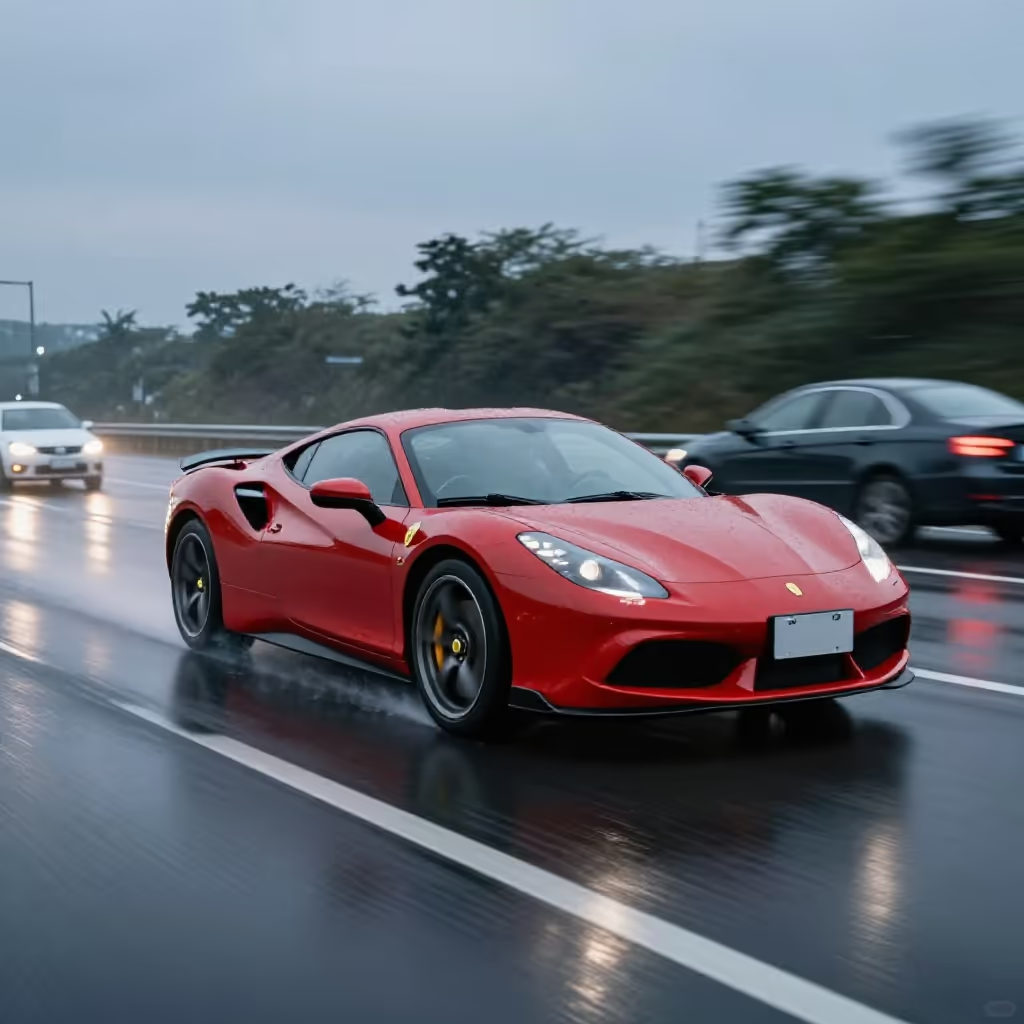
schnell
fast
Describes a movement, process, or action that happens at high speed or in a short time.
EXAMPLE
Ein Gepard ist ein sehr schnelles Tier.
A cheetah is a very fast animal.
fast / quick
Loading your saved state.
fast
Describes a movement, process, or action that happens at high speed or in a short time.
Ein Gepard ist ein sehr schnelles Tier.
A cheetah is a very fast animal.

quickly
Used as an adverb to express that something should be done or happens without delay or promptly.
Komm bitte schnell, der Film fängt gleich an!
Please come quickly, the movie is about to start!
'Schnell' (fast/quick) can be an adjective before a noun (and is then declined) or an adverb describing a verb (and then remains unchanged).
Der ICE ist ein schneller Zug.
The ICE is a fast train.
In everyday speech, 'schnell' (quickly) often does not mean 'at high speed', but rather 'briefly' or 'for a moment'. It expresses that something is uncomplicated and does not take long.
Kannst du mir mal schnell den Salzstreuer geben?
Could you quickly pass me the salt shaker?
As an adjective, 'schnell' (quick/fast) is often combined with abstract nouns to express efficiency or a prompt reaction. Typical examples are 'eine schnelle Lösung' (a quick solution), 'eine schnelle Antwort' (a quick reply), or 'schnelle Hilfe' (quick help).
Vielen Dank für deine schnelle Antwort auf meine E-Mail.
Thank you very much for your quick reply to my email.
quickly
Schnell and rasch both express here that something happens without much delay. Schnell is neutral and common in everyday language. Rasch means the same thing, but often sounds somewhat more formal or elevated and therefore works well in formal statements.

Kannst du mir bitte schnell auf meine Nachricht antworten?
Could you please reply to my message quickly?
Wir bitten Sie, rasch auf unsere Nachricht zu antworten.
We kindly ask you to respond to our message promptly.