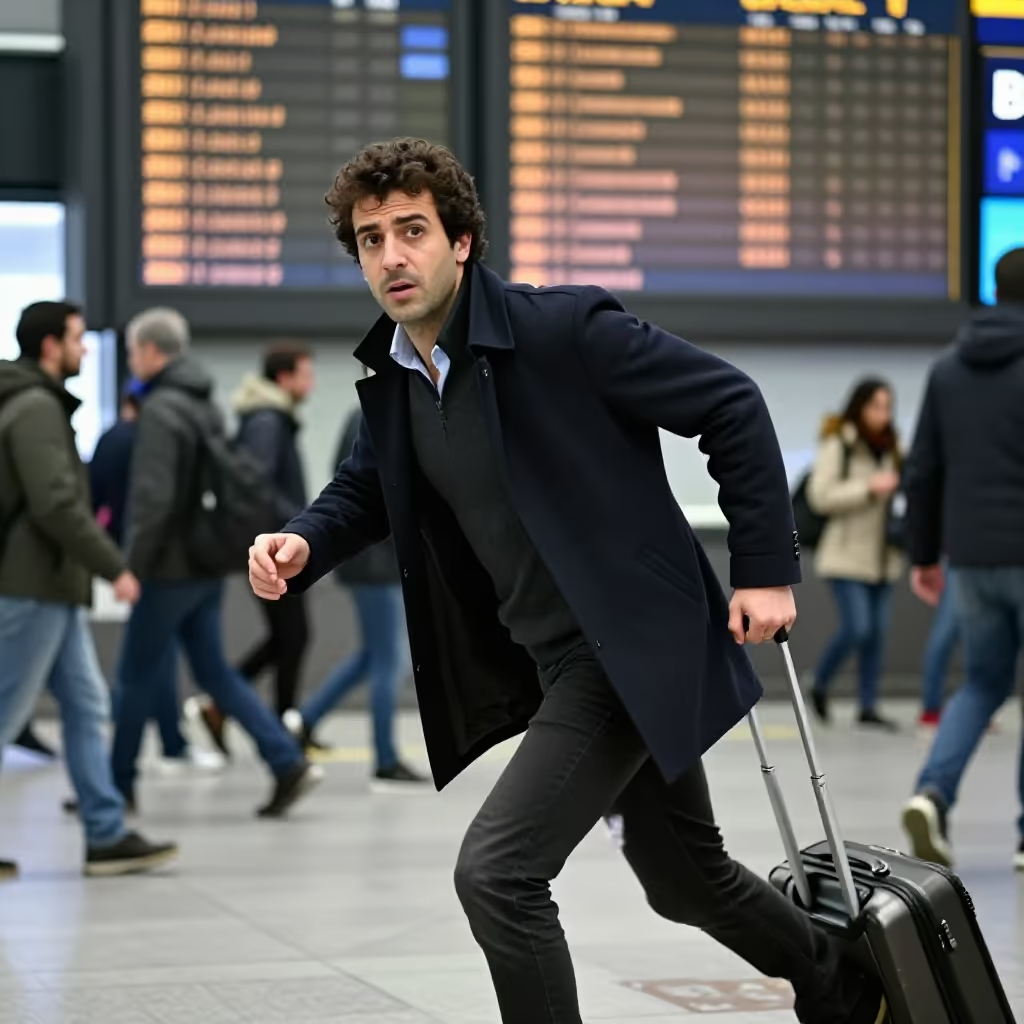
To be in a rush or under time pressure because you need to get somewhere quickly or want to get something done quickly.
example
Ich kann nicht lange bleiben, ich habe es heute sehr eilig.
I can't stay long; I'm in a real hurry today.

Usage tips
Word family
The adjective 'eilig' (urgent/in a hurry) is derived from the noun 'die Eile' (haste). Both words express that you have little time or that something needs to happen quickly.
EXAMPLE
In der morgendlichen Eile vergaß er seine Tasche.
In the morning rush, he forgot his bag.
Fixed expression
To express that a person is in a hurry, you use the fixed expression 'es eilig haben' (to be in a hurry). The pronoun 'es' is a fixed part of the expression.
EXAMPLE
Ich muss jetzt gehen, ich habe es wirklich eilig.
I have to go now; I'm really in a hurry.
Sentence structure and use
When something is urgent, 'eilig' (urgent) is used like a normal adjective. It can stand before a noun or be connected with the verb 'sein' (to be).
EXAMPLE
Der Chef hat mir eine eilige Aufgabe gegeben.
The boss gave me an urgent task.
Compare with
near_synonym · confusable
eilig vs schnell
fast / quick
'schnell' and 'eilig' both have to do with having little time, but they emphasize different things. 'schnell' describes how something happens: at high speed or without delay. 'eilig' is more about time pressure. A person 'hat es eilig' (is in a hurry) when they need to leave quickly or get something done soon. Something is 'eilig' (urgent) when it needs to be dealt with urgently. Learners confuse these words because both often occur in stressful situations. Remember: 'schnell' says how fast something goes; 'eilig' says that little time is left or that something is urgent.
eilig
Morgen habe ich es eilig, weil mein Zug früh abfährt.
Tomorrow I'll be in a hurry because my train leaves early.
schnell
Herr Meier isst heute Abend schnell, weil der Kurs gleich beginnt.
Mr. Meier is eating quickly this evening because the course is about to start.