

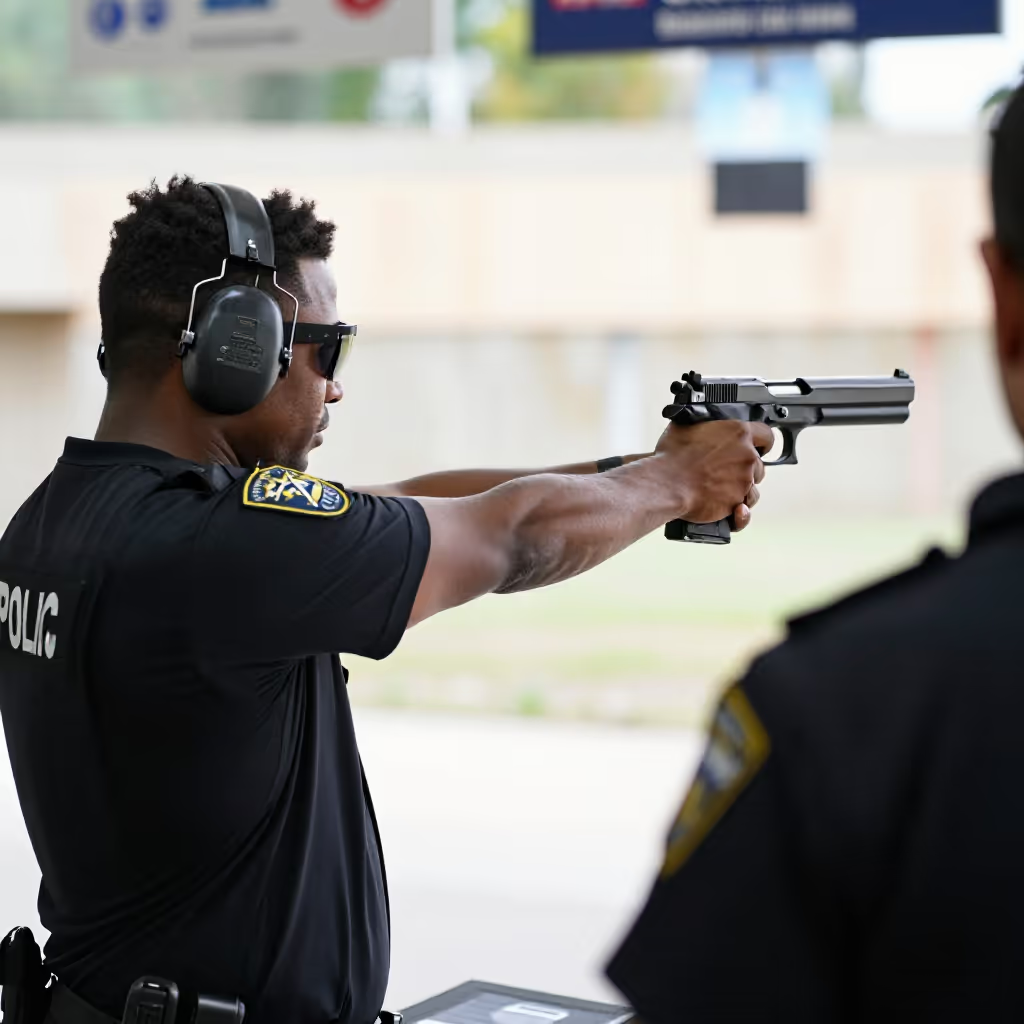
A weapon that fires a projectile through a barrel by means of the explosion of a propellant charge.
example
Für den Besitz einer Schusswaffe benötigt man in Deutschland eine Genehmigung.
In Germany, you need a permit to own a firearm.
Usage tips
Word composition
The word is made up of 'Schuss' (shot) and 'Waffe' (weapon). The 's' in the middle is a linking s, which connects the two parts. Literally, it is therefore a 'Schuss-Waffe' (shooting weapon).
EXAMPLE
Der Polizist trug seine Schusswaffe am Gürtel.
The police officer carried his firearm on his belt.
Typical collocations
Common verbs used with 'Schusswaffe' (firearm) are 'eine Schusswaffe besitzen' (to own a firearm), 'tragen' (to carry), or 'abfeuern' (to fire). You also often hear 'Gebrauch der Schusswaffe' (use of a firearm).
EXAMPLE
Er hat die Schusswaffe im Tresor eingeschlossen.
He locked the firearm in the safe.
Register and style
'Schusswaffe' (firearm) is a formal and official term used mainly in legal contexts, by the police, or in the news.
EXAMPLE
Der Täter war im Besitz einer illegalen Schusswaffe.
The perpetrator was in possession of an illegal firearm.
Compare with
near_synonym · confusable
Schusswaffe vs Waffe
weapon
'die Waffe' and 'die Schusswaffe' both refer to dangerous objects that can be used to injure or threaten someone. However, 'Waffe' is the general term. It can include knives, rifles, or other means of combat, for example. 'Waffe' can also be meant figuratively, such as in an argument or competition. 'Schusswaffe' is more specific and means only a weapon that shoots, for example a pistol or a rifle. Learners may confuse the words because every 'Schusswaffe' is a 'Waffe', but not every 'Waffe' is a 'Schusswaffe'.
Schusswaffe
Bei der Kontrolle musste der Jäger seine Schusswaffe zeigen.
During the inspection, the hunter had to show his firearm.
Waffe
Der Sicherheitsdienst fand eine Waffe in der Tasche des Besuchers.