

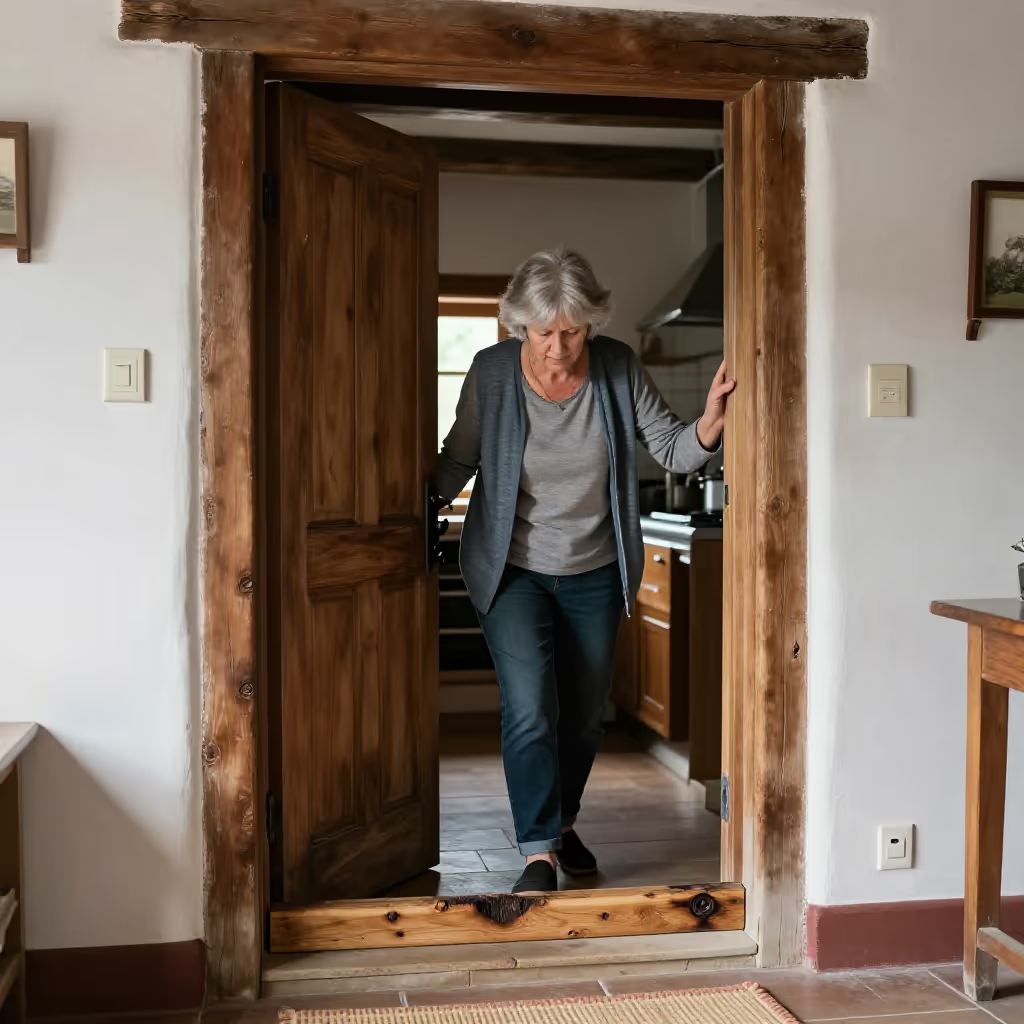
die Schwelle
threshold
The lower, horizontal piece of wood or stone in a doorframe that you step over to enter or leave a room.
EXAMPLE
Pass auf, dass du nicht über die hohe Schwelle stolperst.
Be careful not to trip over the high threshold.
threshold / sill
Loading your saved state.
threshold
The lower, horizontal piece of wood or stone in a doorframe that you step over to enter or leave a room.
Pass auf, dass du nicht über die hohe Schwelle stolperst.
Be careful not to trip over the high threshold.

threshold
In a figurative sense, the beginning of or boundary to a new state, a new era, or a new experience.
Er stand an der Schwelle zum Erwachsenwerden.
He stood on the threshold of adulthood.
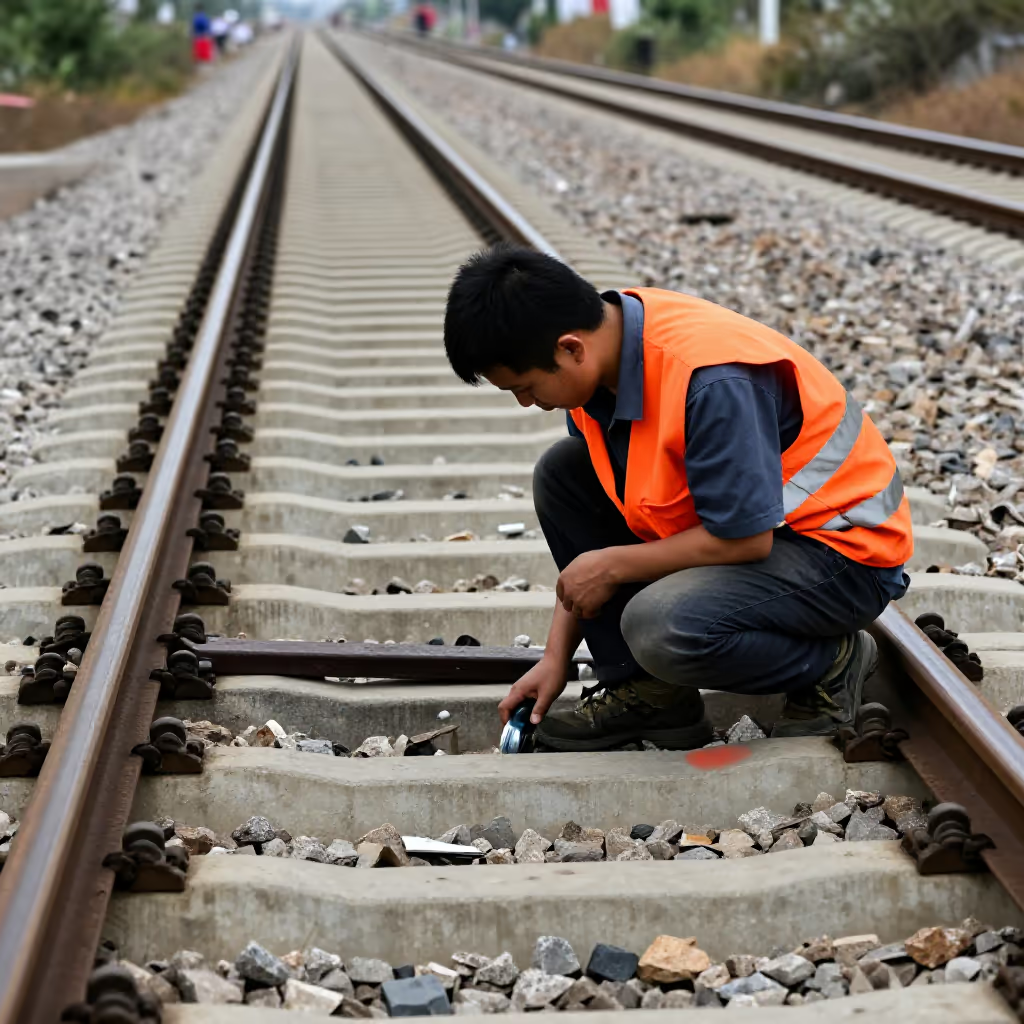
railway sleeper
A beam made of wood, concrete, or steel that lies crosswise to the direction of travel and to which the rails of a railway line are attached.
Die alten Holzschwellen der Bahnstrecke werden durch Betonschwellen ersetzt.
The old wooden sleepers on the railway line are being replaced with concrete sleepers.

threshold
In science and technology, a limit value from which a certain effect or reaction begins.
Die Schmerzgrenze wird auch als Reizschwelle für Schmerz bezeichnet.
The pain threshold is also referred to as the stimulus threshold for pain.
The literal meaning refers to doors and buildings. You can recognize the figurative meaning by its combination with abstract terms such as 'Leben' (life), 'Tod' (death), 'Zukunft' (future), or 'Erwachsenwerden' (growing up/adulthood).
Der alte Mann stand an der Schwelle des Todes.
The old man stood on the threshold of death.
When the door threshold is meant, verbs of movement are often used. Typical formulations are 'über die Schwelle treten' (to step over the threshold), 'an der Schwelle stehen' (to stand at/on the threshold), or 'über die Schwelle stolpern' (to trip over the threshold).
Der Gast zögerte, über die Schwelle zu treten.
The guest hesitated to step over the threshold.
The figurative meaning is very often used in the fixed expression 'an der Schwelle zu etwas stehen' (to stand on the threshold of something). The noun after 'zu' is always in the dative.
Die Menschheit steht an der Schwelle zu einem neuen Zeitalter.
Humanity stands on the threshold of a new age.
In connection with trains, tracks, or railway lines, 'Schwelle' (railway sleeper) refers to the crossbeams on which the rails lie. This meaning is very specific to the railway context.
Die Arbeiter verlegen neue Schwellen für die Gleise.
The workers are laying new sleepers for the tracks.
In scientific or technical texts, a 'Schwelle' (threshold) is a limit value from which a reaction begins. You can recognize this meaning from words such as 'Wert' (value), 'Reiz' (stimulus), 'Dosis' (dose), or 'Schmerz' (pain).
Der Lärm überschritt die Schwelle des Erträglichen.
The noise exceeded the threshold of what was bearable.
beginning
Beginn refers to the point in time or first stage of a new era. Schwelle, by contrast, emphasizes the boundary and transition into that era. Beginn is used when talking about the first developments, while Schwelle is suitable immediately before or during the transition.

An der Schwelle zum digitalen Zeitalter standen viele große Veränderungen bevor.
On the threshold of the digital age, many major changes lay ahead.
Zu Beginn des digitalen Zeitalters veränderte sich die Kommunikation schnell.
At the beginning of the digital age, communication changed rapidly.