

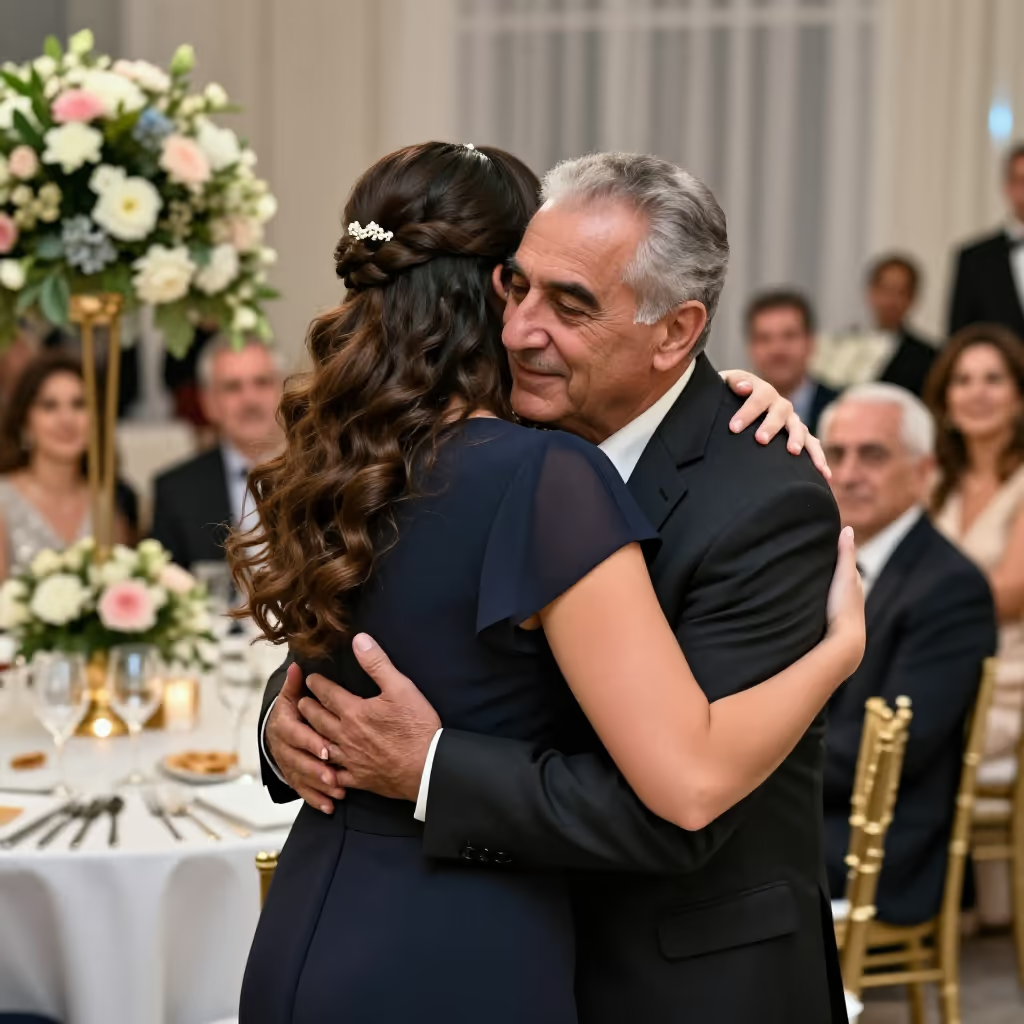
der Schwiegervater
father-in-law
The father of one's spouse or partner.
EXAMPLE
Mein Schwiegervater kommt am Wochenende zu Besuch.
My father-in-law is coming to visit this weekend.
father-in-law
Loading your saved state.
father-in-law
The father of one's spouse or partner.
Mein Schwiegervater kommt am Wochenende zu Besuch.
My father-in-law is coming to visit this weekend.
The word consists of the prefix 'Schwieger-' and the base word 'vater' (father). The prefix 'Schwieger-' always refers to a family relationship created by marriage.
Seit der Hochzeit meiner Tochter ist er mein Schwiegervater.
Since my daughter's wedding, he has been my father-in-law.
The component 'Schwieger-' is used for all family members by marriage. If you know this pattern, you will also understand 'Schwiegermutter' (mother-in-law), 'Schwiegersohn' (son-in-law), and 'Schwiegereltern' (parents-in-law).
Meine Schwiegereltern sind die Eltern meiner Frau.
My parents-in-law are my wife's parents.
Since it always concerns a relationship to a person, 'Schwiegervater' (father-in-law) is almost always used with a possessive article such as 'mein' (my), 'dein' (your), or 'ihr' (her/their).
Wie verstehst du dich mit deinem Schwiegervater?
How do you get along with your father-in-law?