

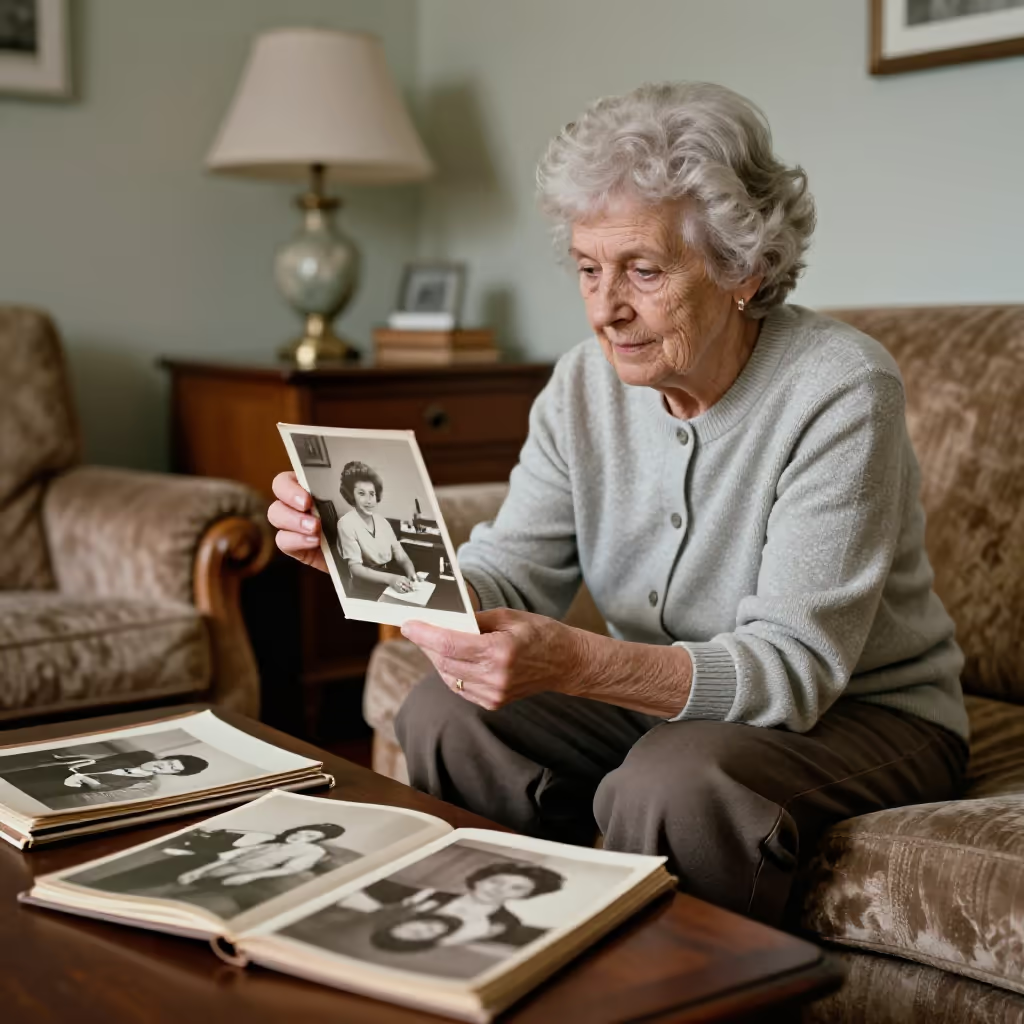
At a particular time in the past; back then. Often used to refer to an earlier era or an earlier period of life.
example
Mein Großvater war seinerzeit ein sehr bekannter Architekt in dieser Stadt.
My grandfather was a very well-known architect in this city at the time.

Usage tips
Word formation
'Seinerzeit' (at the time) is composed of the old forms 'seiner' (genitive of 'sein') and 'Zeit' (time). Literally, it means 'in his time' or 'at that time'.
EXAMPLE
Seinerzeit gab es in diesem Dorf nur eine einzige Straße.
At the time, there was only a single road in this village.
Sentence position
As an adverb, 'seinerzeit' (at the time) can stand in position 1; then the verb follows in position 2. But it can also stand after the verb in the middle of the sentence.
EXAMPLE
Seinerzeit war das Reisen viel komplizierter.
At the time, traveling was much more complicated.
Register
This word belongs to an elevated or written style. It often sounds somewhat nostalgic or historical.
EXAMPLE
Die Gebäude, die seinerzeit als modern galten, stehen heute unter Denkmalschutz.
The buildings that were considered modern at the time are now protected as historic monuments.
Compare with
near_synonym
seinerzeit vs damals
back then
'damals' and 'seinerzeit' both mean 'at that earlier time'. 'damals' is the normal word in everyday language and storytelling. 'seinerzeit' sounds somewhat more formal or written and is often used when looking back on an earlier phase, position, job, or well-known time. Both can be used in similar ways, but 'damals' feels more personal and simpler. 'seinerzeit' fits well when the sentence sounds like a report or a recollection of an earlier time.
seinerzeit
Herr Schneider leitete seinerzeit den kleinen Sportverein im Ort.
At the time, Mr. Schneider ran the small sports club in the town.
damals
Damals war sie oft nach der Schule in der Bibliothek.
Back then, she was often in the library after school.