

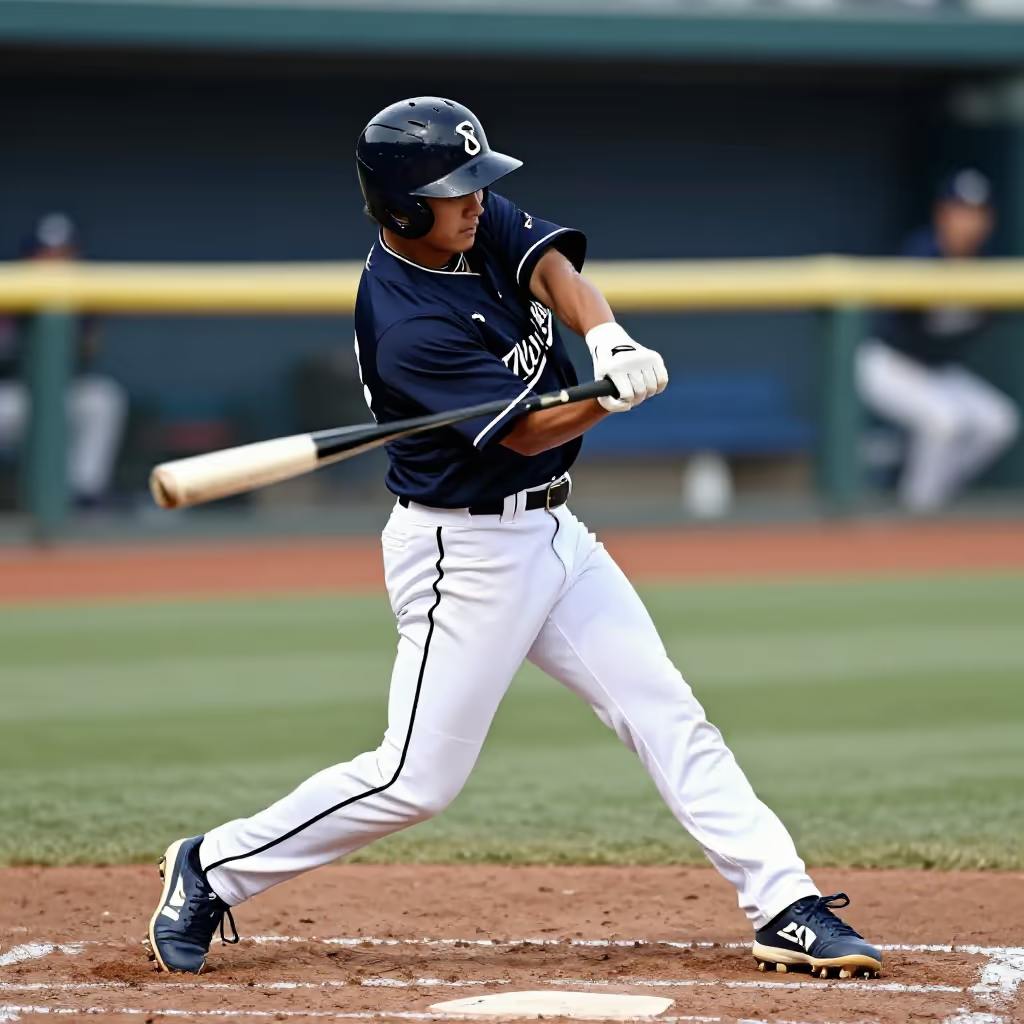
der Schwenk
swing
A quick, turning, or sideways movement of the body, a body part, or an object.
EXAMPLE
Mit einem schnellen Schwenk des Kopfes blickte er zurück.
With a quick swing of his head, he looked back.
swing / pan
Loading your saved state.
swing
A quick, turning, or sideways movement of the body, a body part, or an object.
Mit einem schnellen Schwenk des Kopfes blickte er zurück.
With a quick swing of his head, he looked back.

shift
A sudden change in direction, topic, opinion, or strategy.
Der unerwartete Schwenk in der Diskussion überraschte alle Teilnehmer.
The unexpected shift in the discussion surprised all the participants.
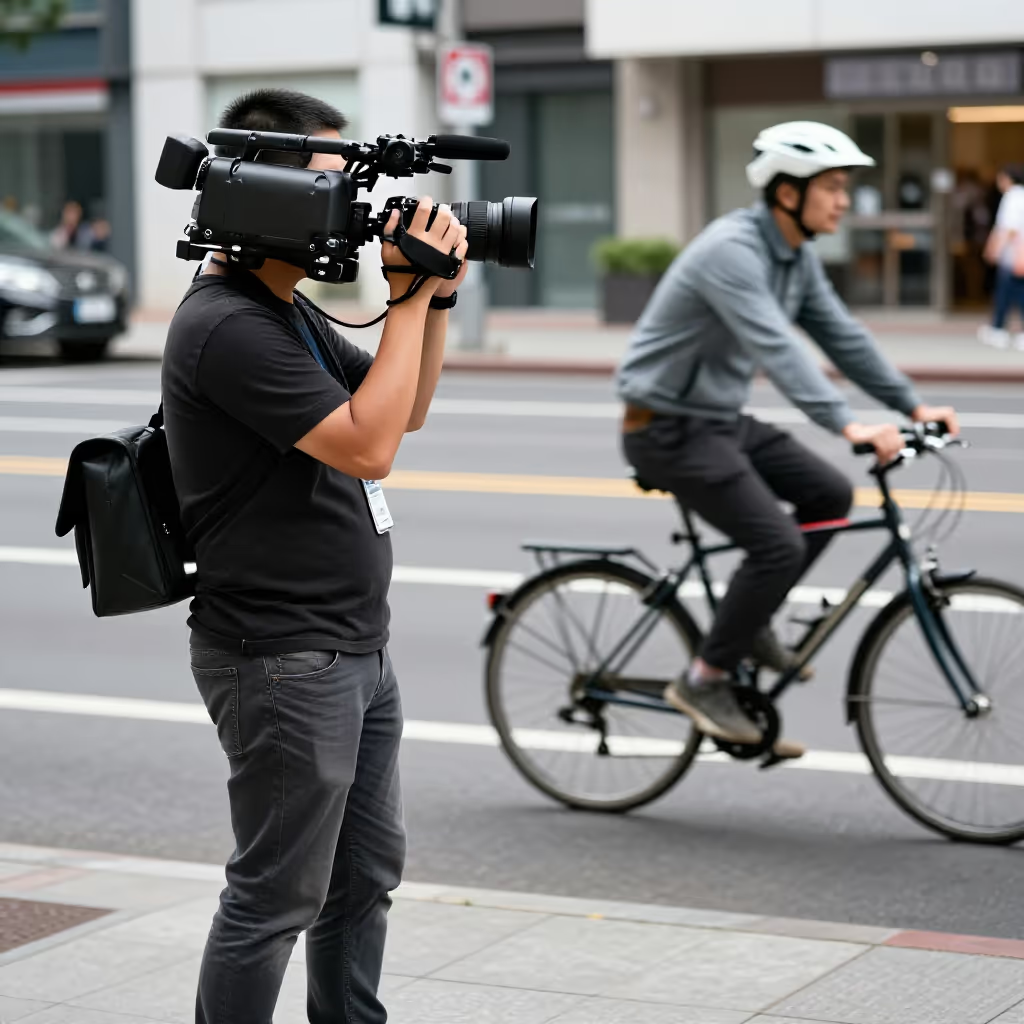
pan
A sideways camera movement in filming or photography, used to capture a panorama or follow a moving object.
Der Kameramann machte einen langsamen Schwenk über die Landschaft.
The cameraman made a slow pan across the landscape.
The noun 'der Schwenk' (swing/pan) is derived directly from the verb 'schwenken' (to swing/pan). If you know the verb, you can more easily understand the meaning of the noun as a swinging or panning movement.
Der Fahnenträger schwenkte die Fahne im Wind.
The flag bearer waved the flag in the wind.
In all meanings, 'der Schwenk' (swing/pan) is very often combined with the verb 'machen' (to make): 'einen Schwenk machen' (to make a swing/pan).
Der Tänzer machte einen eleganten Schwenk zur Seite.
The dancer made an elegant swing to the side.
The figurative meaning of a change in direction can be recognized from the context. It is often used in reference to abstract things such as 'Thema' (topic), 'Diskussion' (discussion), 'Strategie' (strategy), or 'Politik' (politics/policy).
Nach diesem Argument gab es einen Schwenk in der Debatte.
After this argument, there was a shift in the debate.
This special meaning is typical in the field of film and photography. Words such as 'Kamera' (camera), 'Kameramann' (cameraman), 'Aufnahme' (shot/recording), or 'Szene' (scene) in the sentence point to it.
Die Szene beginnt mit einem langsamen Schwenk über die Dächer der Stadt.
The scene begins with a slow pan across the rooftops of the city.
trick / shoot / turn
Der Dreh usually refers in film to the filming of a scene or to the entire production. A Schwenk, by contrast, is a specific sideways movement of the camera during that filming. Use Dreh when you mean the production, and Schwenk when you are describing the camera movement.
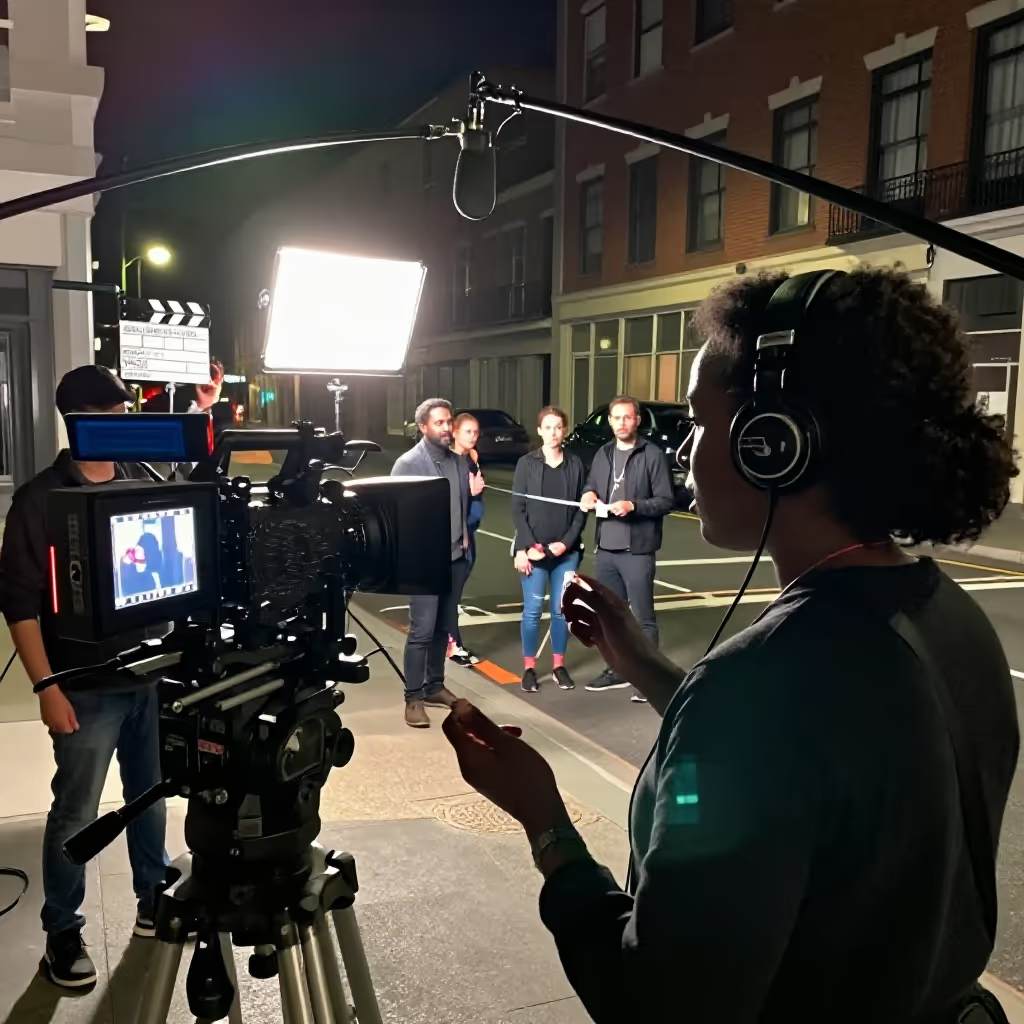
Ein langsamer Schwenk nach rechts zeigt im Film den ganzen Park.
A slow pan to the right shows the entire park in the film.
Der Dreh für die neue Szene beginnt morgen früh im Park.
The shoot for the new scene begins in the park tomorrow morning.