

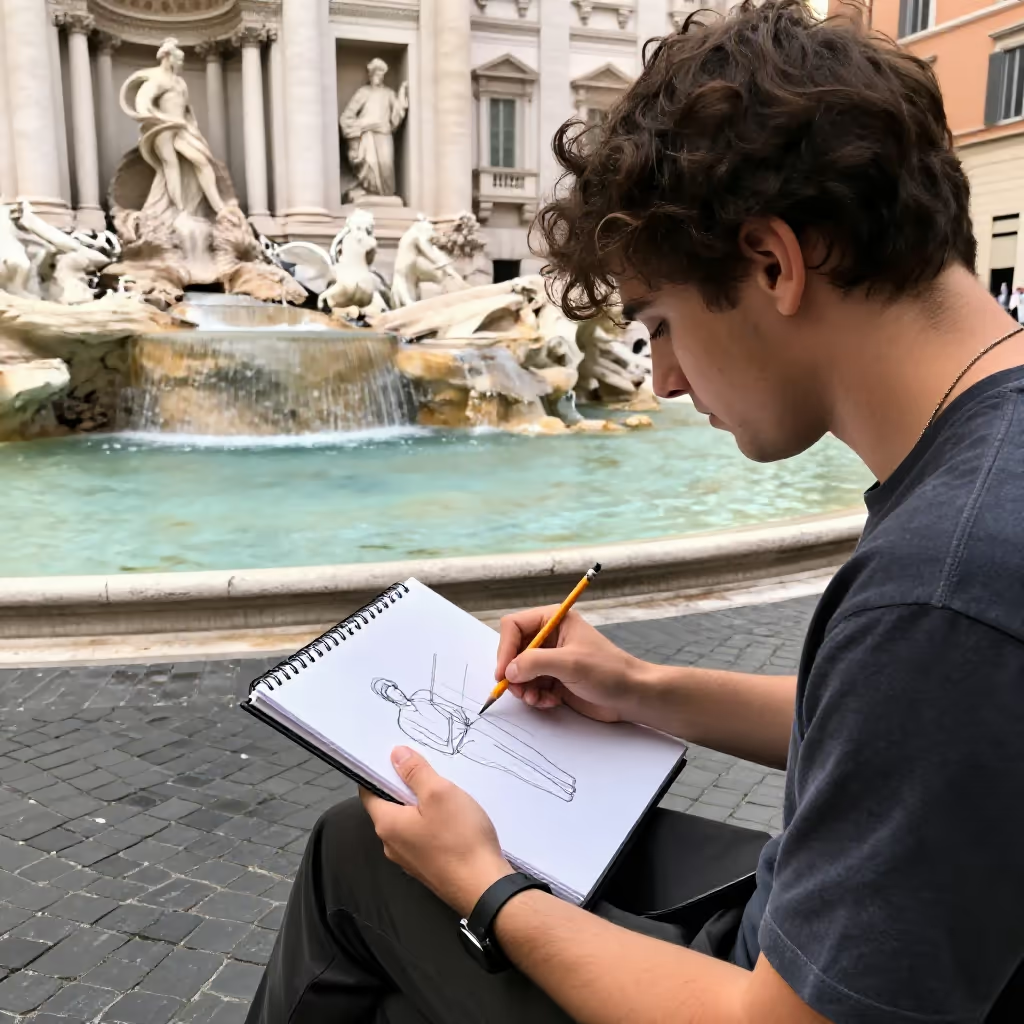
skizzieren
to sketch
To make a quick, simple drawing or draft of something that shows the essential features.
EXAMPLE
Der Künstler saß im Park und skizzierte die spielenden Kinder.
The artist sat in the park and sketched the children playing.
to sketch
Loading your saved state.
to sketch
To make a quick, simple drawing or draft of something that shows the essential features.
Der Künstler saß im Park und skizzierte die spielenden Kinder.
The artist sat in the park and sketched the children playing.

to outline
To present a plan, an idea, or a situation in broad strokes and without details, either orally or in writing.
Können Sie uns kurz die nächsten Schritte des Projekts skizzieren?
Could you briefly outline the next steps of the project for us?
The verb 'skizzieren' (to sketch/outline) belongs to the noun 'die Skizze' (sketch). The ending '-ieren' is typical of many verbs that come from other languages (here, Italian). The basic meaning is always to present something only in broad strokes.
Ich habe eine Skizze von unserem neuen Garten gemacht.
I made a sketch of our new garden.
'Skizzieren' is a transitive verb. That means it almost always needs an accusative object, i.e. an answer to the question 'Wen oder was skizzieren?' (Whom or what to sketch/outline?).
Der Architekt skizzierte schnell einen ersten Entwurf für das Haus.
The architect quickly sketched an initial draft for the house.
In the literal meaning of drawing, 'skizzieren' (to sketch) is used with visual objects. Typical objects are 'ein Porträt' (a portrait), 'eine Landschaft' (a landscape), 'eine Figur' (a figure), or 'eine Szene' (a scene).
Sie saß am Strand und skizzierte den Sonnenuntergang in ihr Notizbuch.
She sat on the beach and sketched the sunset in her notebook.
In the figurative meaning of explaining, 'skizzieren' (to outline) is combined with abstract concepts. Typical objects are 'eine Idee' (an idea), 'ein Plan' (a plan), 'ein Problem' (a problem), or 'die nächsten Schritte' (the next steps).
Der Manager skizzierte kurz die neue Strategie für das kommende Jahr.
The manager briefly outlined the new strategy for the coming year.
to summarize / group
When dealing with a fully developed plan, zusammenfassen gives a shortened account of its most important existing content. Skizzieren, by contrast, presents only the plan’s broad outlines and deliberately leaves details open. Zusammenfassen is suitable for a brief summary of the content, while skizzieren is suitable for a rough overview.
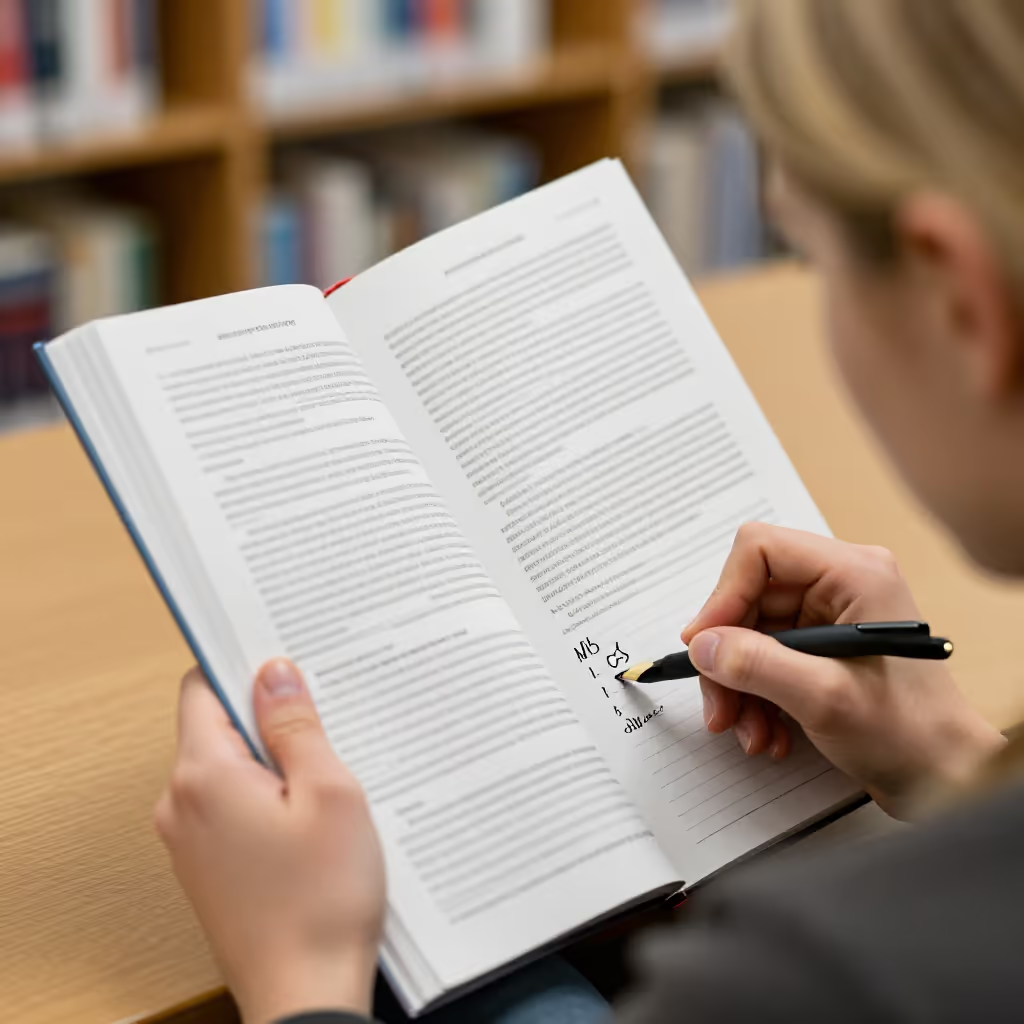
Lea skizziert den ausgearbeiteten Projektplan nur in groben Zügen.
Lea only outlines the fully developed project plan in broad strokes.
Lea fasst den ausgearbeiteten Projektplan mit seinen wichtigsten Punkten zusammen.
Lea summarizes the fully developed project plan, including its most important points.