


A competition in which artists, such as poets, authors, or musicians, perform their own works live on a stage and are judged by the audience. The best-known form is the poetry slam.
example
Er hat mit seinem Gedicht den Poetry-Slam in der vollen Kneipe gewonnen.
He won the poetry slam in the packed pub with his poem.
Usage tips
Typical compounds
'Slam' is often the second part of a compound noun. The first word then describes the type of competition, for example 'Poetry-Slam' (poetry slam), 'Science-Slam' (science slam), or 'Song-Slam' (song slam).
EXAMPLE
Beim Science-Slam erklären junge Forscher ihre Arbeit auf unterhaltsame Weise.
At a science slam, young researchers explain their work in an entertaining way.
Typical verbs
In connection with a competition, verbs such as 'an einem Slam teilnehmen' (to participate in a slam), 'einen Slam veranstalten' (to organize a slam), or 'einen Slam gewinnen' (to win a slam) are often used.
EXAMPLE
Nächsten Monat nehme ich zum ersten Mal an einem Slam teil.
Next month I'll take part in a slam for the first time.
Context clue: sports
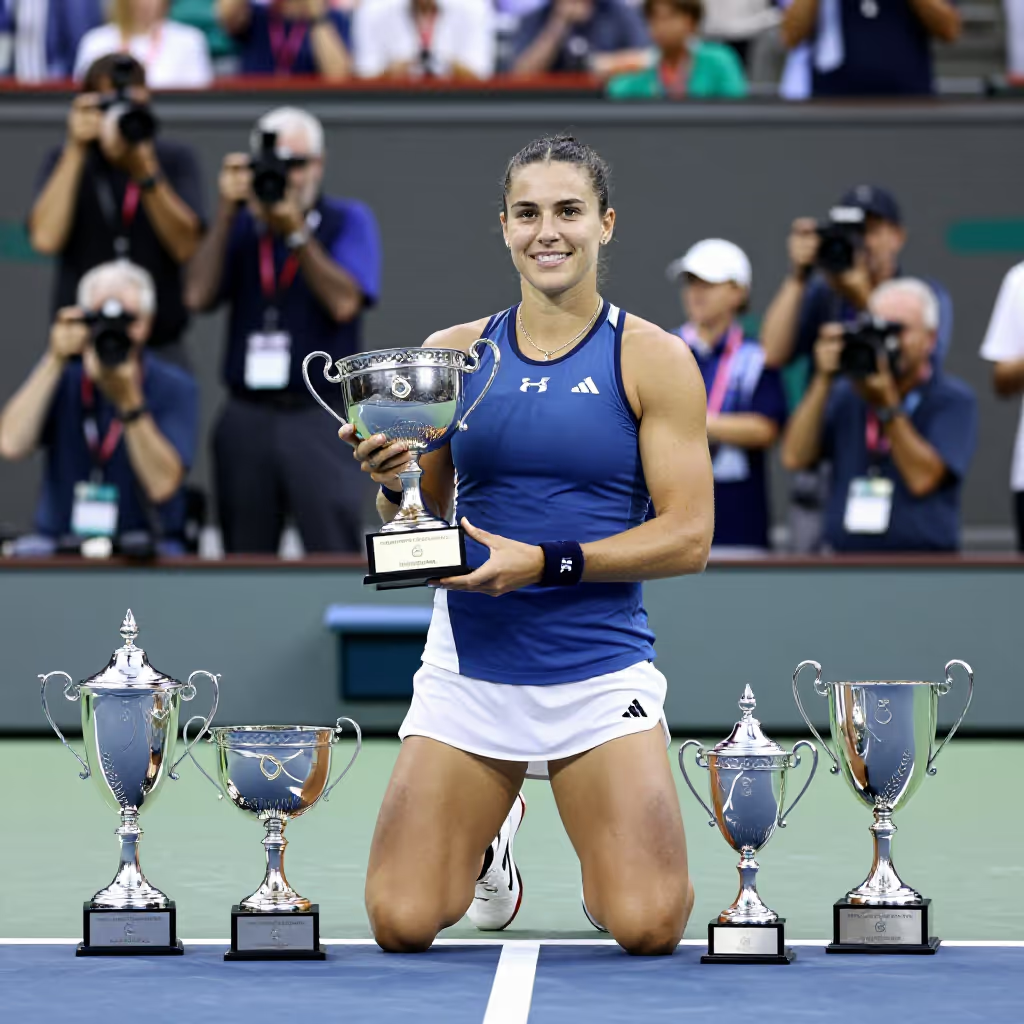
In sports reporting, especially in tennis or golf, 'Slam' is the short form of 'Grand Slam'. The context makes the meaning clear here.
EXAMPLE
Kein männlicher Tennisspieler hat seit 1969 den Slam gewonnen.
No male tennis player has won the Slam since 1969.