

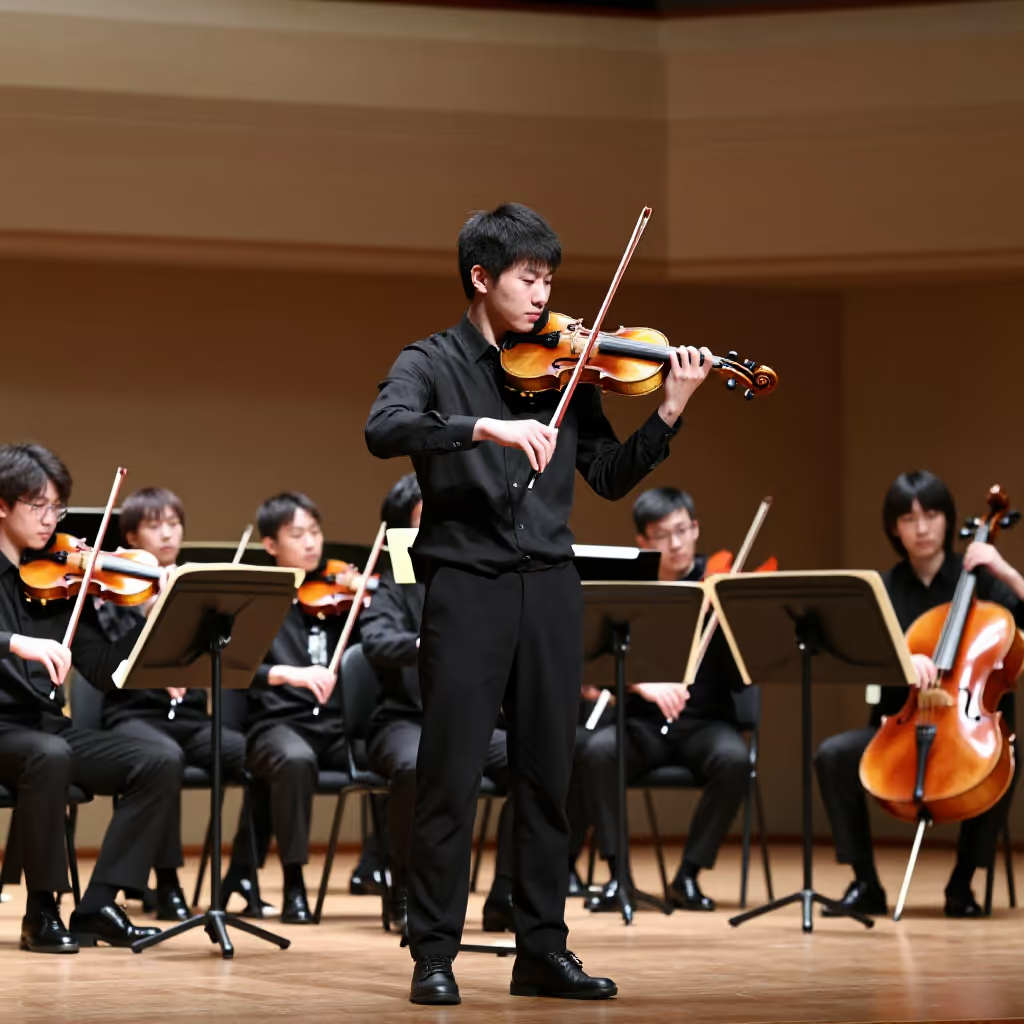
An artist, especially a musician or dancer, who performs a part alone or performs the leading solo part of a piece.
example
Der Solist an der Geige erhielt nach dem Violinkonzert tosenden Applaus.
The violin soloist received thunderous applause after the violin concerto.
Usage tips
Word family
'Der Solist' (the soloist) is the person who plays or dances a 'Solo' (solo). The word 'Solo' comes from Italian and means 'alone'. The related adjective is 'solistisch' (solo / soloistic).
EXAMPLE
Der Pianist spielte ein beeindruckendes Solo.
The pianist played an impressive solo.
Specifying the instrument
To name the soloist's instrument, you use the preposition 'an' followed by the dative. For example: 'der Solist am Klavier' (the soloist at the piano / the piano soloist) or 'die Solistin an der Violine' (the violin soloist).
EXAMPLE
Der Solist am Cello war erst 19 Jahre alt.
The cello soloist was only 19 years old.
Typical collocations
A soloist can 'auftreten' (perform) or 'spielen' (play). They are often described with adjectives such as 'berühmt' (famous), 'gefeiert' (celebrated), 'hervorragend' (outstanding), or 'jung' (young).
EXAMPLE
Als Solist trat an diesem Abend ein weltberühmter Geiger auf.
A world-famous violinist performed as the soloist that evening.
Compare with
near_synonym · confusable
Solist vs Sänger
singer
'der Sänger' and 'der Solist' can both refer to a person on stage, especially in music. 'der Sänger' mainly says that the person sings. This can be alone, in a band, or in a choir. 'der Solist', on the other hand, says that a person performs a part alone or in a leading role. A soloist can sing, but can also play an instrument or dance. Learners may confuse the words when talking about a concert. As a practical rule: if it is about the voice, 'Sänger' fits; if it is about a part performed alone, 'Solist' fits.
Solist
Im Konzert spielte der Solist ein langes Stück am Klavier.
In the concert, the soloist played a long piece on the piano.