

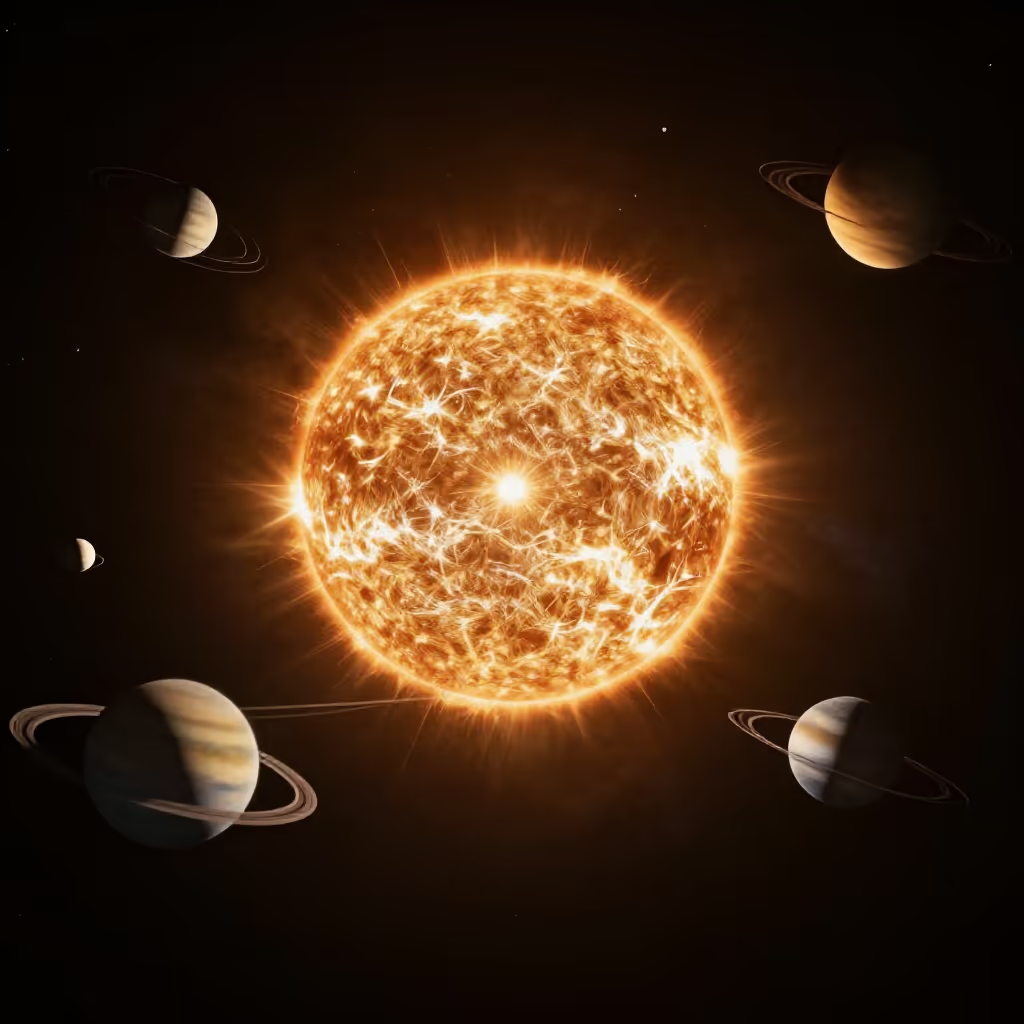
die Sonne
sun
The star at the center of our solar system that gives the Earth light and warmth.
EXAMPLE
Heute scheint die Sonne den ganzen Tag.
The sun is shining all day today.
sun
Loading your saved state.
sun
The star at the center of our solar system that gives the Earth light and warmth.
Heute scheint die Sonne den ganzen Tag.
The sun is shining all day today.
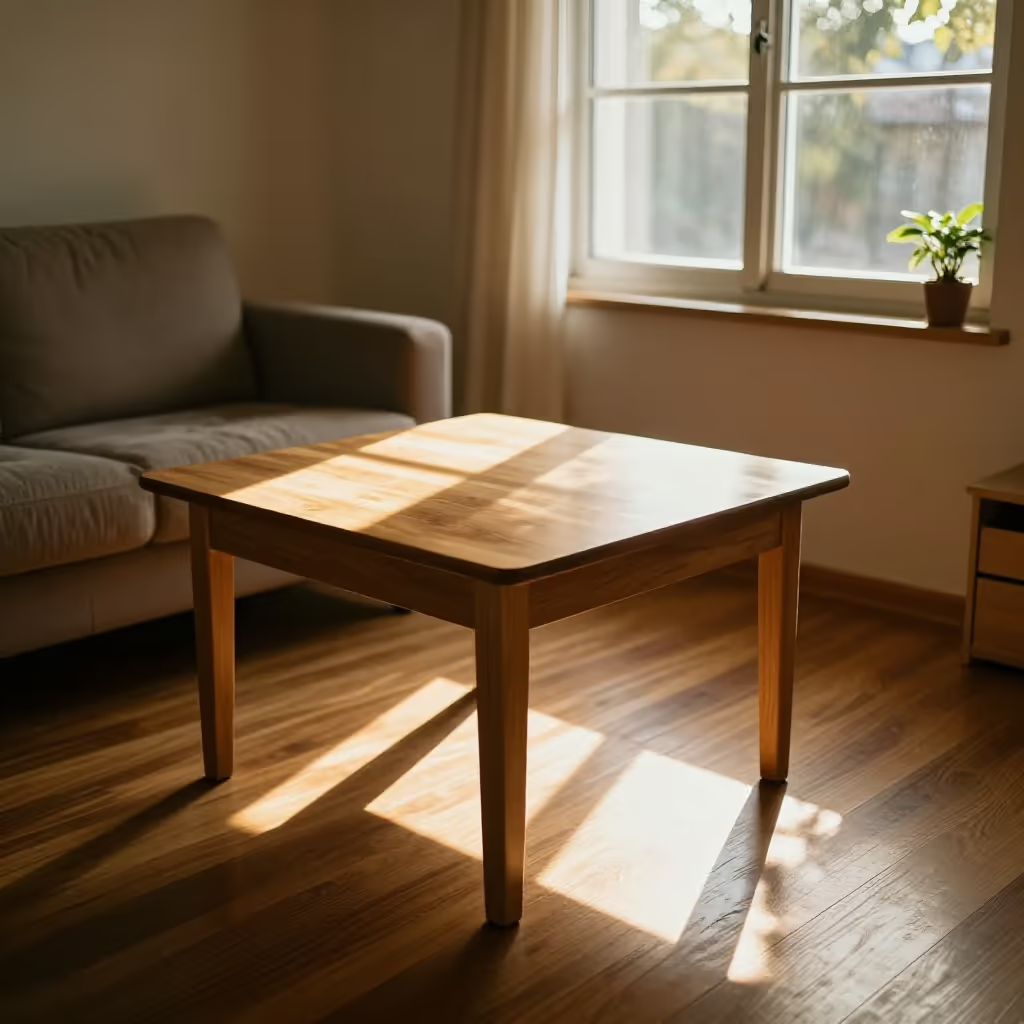
sunshine
The light and warmth emitted by the sun.
Setz dich doch ein bisschen in die Sonne, aber vergiss die Sonnencreme nicht.
Why don't you sit in the sun for a bit, but don't forget the sunscreen.
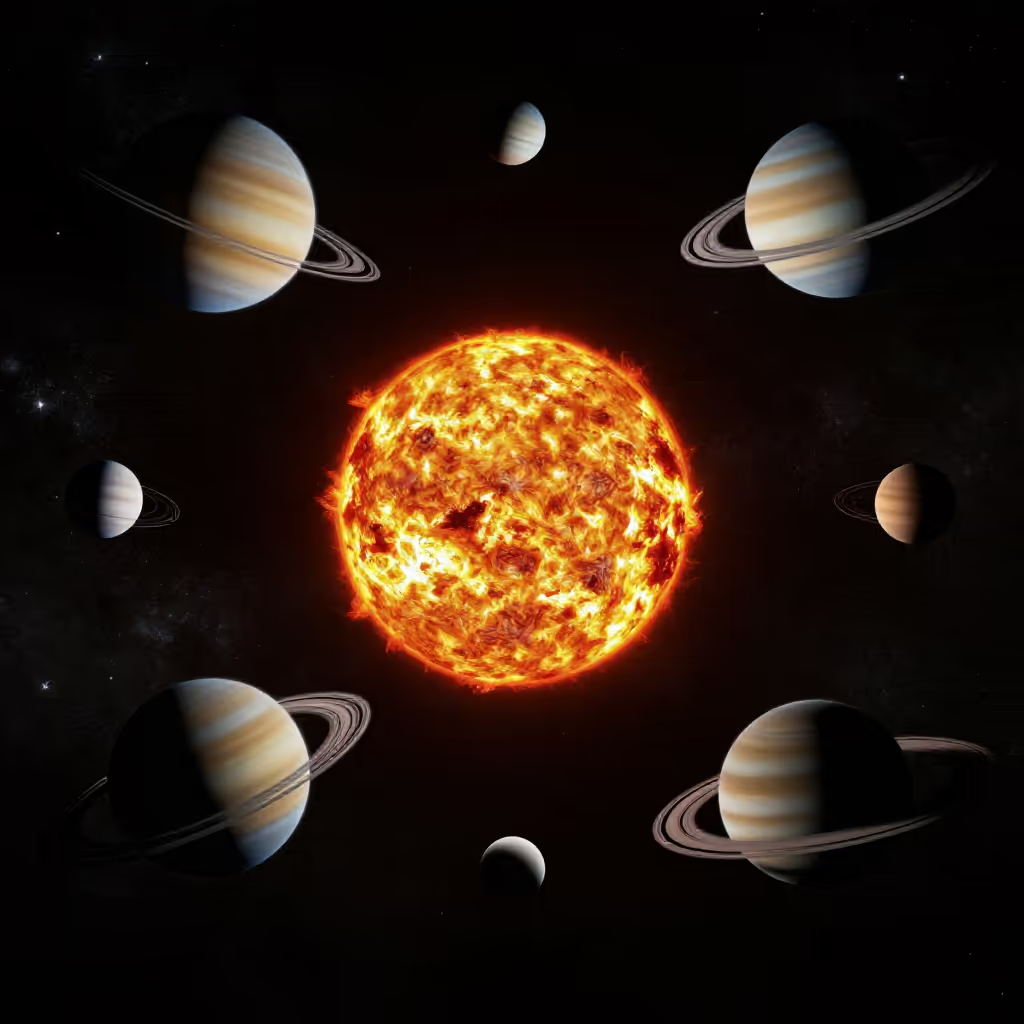
sun
In astronomy, the term for any star that is the center of a planetary system.
Astronomen haben einen Planeten entdeckt, der um eine ferne Sonne kreist.
Astronomers have discovered a planet that orbits a distant sun.

ray of sunshine
Figuratively, a person or thing perceived as a source of great joy, happiness, or brilliance.
Für ihre Großeltern war das Enkelkind die reinste Sonne.
For her grandparents, the grandchild was a true ray of sunshine.
The prepositions used with 'Sonne' (sun) show an important difference: 'in die Sonne' (into the sun, accusative) describes movement, while 'in der Sonne' (in the sun, dative) describes a place or state.
Lass uns unsere Stühle in die Sonne stellen.
Let's put our chairs in the sun.
The word 'Sonne' (sun) is a very productive component of many compound nouns related to sunlight or warmth. When you see 'Sonnen-' (sun-), it is usually about the sun.
Vergiss deine Sonnenbrille nicht, es ist sehr hell draußen.
Don't forget your sunglasses; it's very bright outside.
In the astronomical meaning, 'Sonne' (sun) is often combined with three basic verbs of the daily cycle: Die Sonne geht auf (the sun rises), sie scheint (it shines), and sie geht unter (it sets).
Wir müssen früh aufstehen, wenn wir sehen wollen, wie die Sonne aufgeht.
We have to get up early if we want to see the sun rise.
When talking about sunlight, 'Sonne' (sun) is often connected with relaxing activities. Typical phrases are 'in der Sonne liegen' (to lie in the sun), 'in der Sonne sitzen' (to sit in the sun), or 'sich sonnen' (to sunbathe).
Im Urlaub möchte ich am liebsten den ganzen Tag in der Sonne liegen und lesen.
On vacation, what I'd like most is to lie in the sun all day and read.
The meaning 'star' is almost exclusively limited to astronomical or science-fiction contexts. Words like 'Planet' (planet), 'Galaxie' (galaxy), or 'entdecken' (to discover) point to this usage.
Der neu entdeckte Planet umkreist eine Sonne, die viel größer ist als unsere.
The newly discovered planet orbits a sun that is much larger than ours.
star
Sonne and Stern can refer to the same celestial body. Stern classifies it generally as a self-luminous celestial body. Sonne is what it is called from the perspective of a planetary system when it is at the system's center.
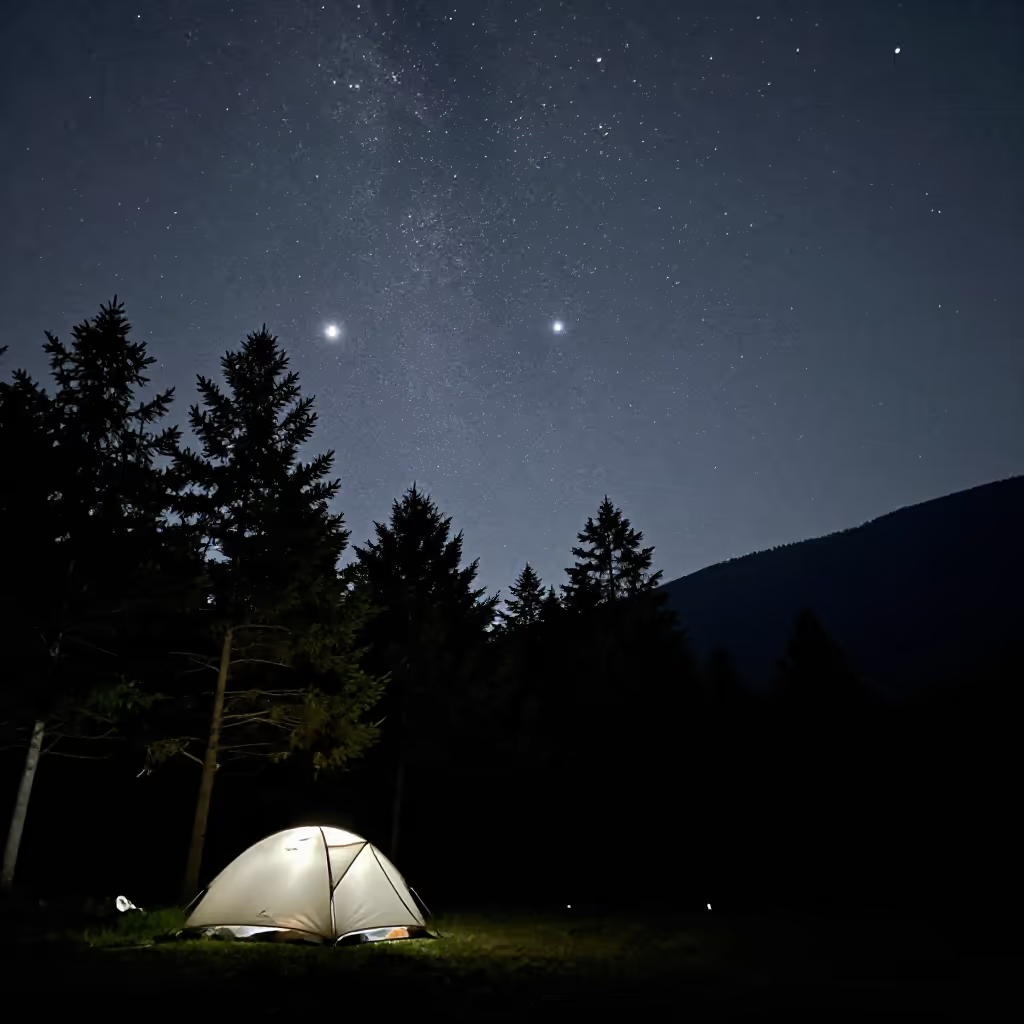
Für die Planeten dieses fernen Systems ist der helle Himmelskörper ihre Sonne.
For the planets of this distant system, the bright celestial body is their sun.
Aus astronomischer Sicht ist derselbe helle Himmelskörper ein Stern.
From an astronomical perspective, the same bright celestial body is a star.