
A style of music that emerged in the United States in the 1950s and 1960s from elements of rhythm and blues and gospel music, and is characterized by its emotional singing.
example
Aretha Franklin wird oft als die „Queen of Soul“ bezeichnet.
Aretha Franklin is often referred to as the 'Queen of Soul'.
Usage tips
Origin of the word
'Soul' is an English word and means 'Seele' (soul). This original meaning helps you understand both uses in German: the soulful music and the emotional depth in a performance.
EXAMPLE
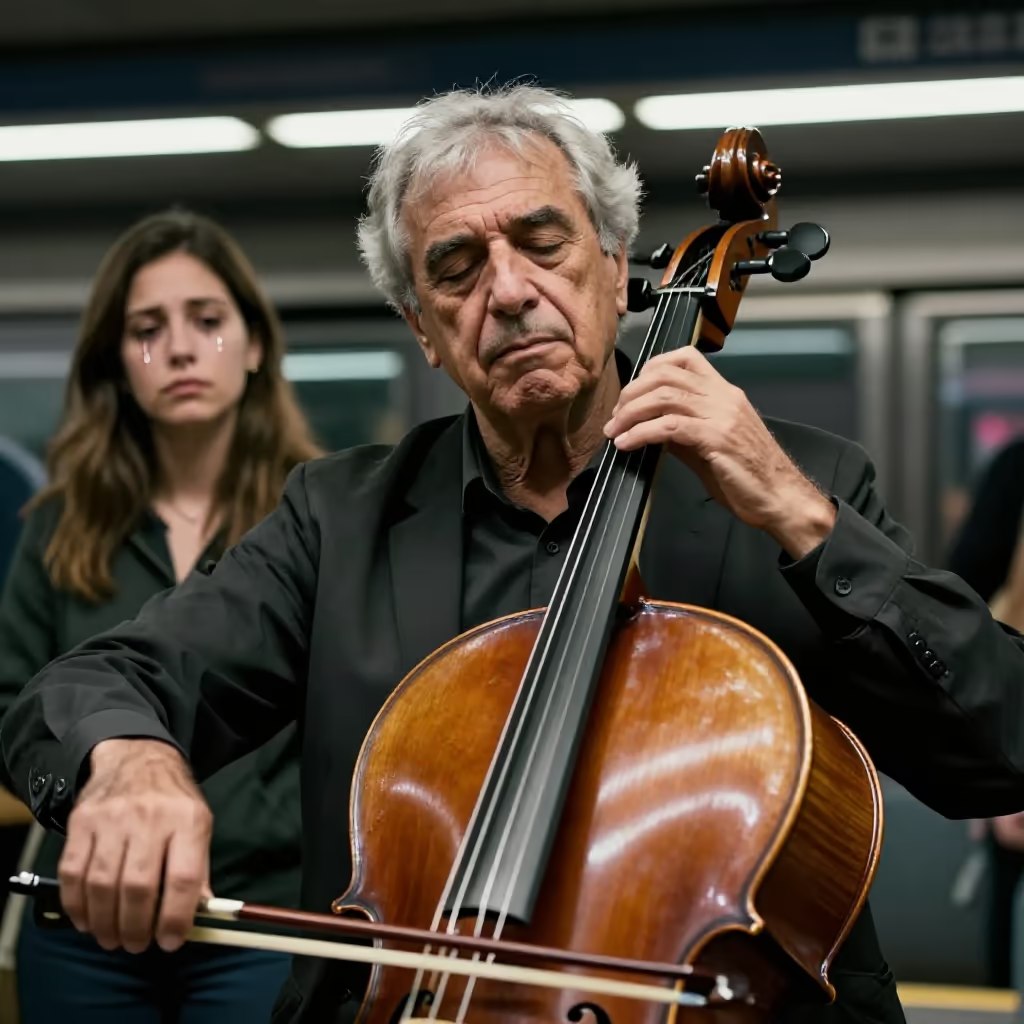
Man spürt den Soul in ihrer Stimme.
You can feel the soul in her voice.
Context clue: music style
When 'Soul' is meant as a style of music, it often appears with verbs like 'hören' (to listen to) or 'spielen' (to play), or in compounds like 'Soulmusik' (soul music) or 'Soul-Album' (soul album).
EXAMPLE
Am Abend hören wir am liebsten alten Soul.
In the evening, we like listening to old soul best.
Typical collocations
In the figurative meaning, 'Soul' is often used to describe a quality. Typical phrases are 'viel Soul haben' (to have a lot of soul), 'der Soul fehlt' (the soul is missing), or something 'mit Soul machen' (to do something with soul).
EXAMPLE
Seiner Interpretation des Liedes fehlte einfach der nötige Soul.
His interpretation of the song simply lacked the necessary soul.
Compare with
near_synonym
Soul vs Gefühl
feeling / sense
'das Gefühl' and 'der Soul' can both have to do with emotional expression. 'das Gefühl' is a very general German word for an inner feeling, for example joy, sadness, or fear. In this context, 'der Soul' refers more to the emotional depth or soul in music, singing, or an artistic performance. It sounds more strongly connected to art and expression. So you would say: a person has a feeling. But a song or a voice has soul when it feels especially lively and emotional.