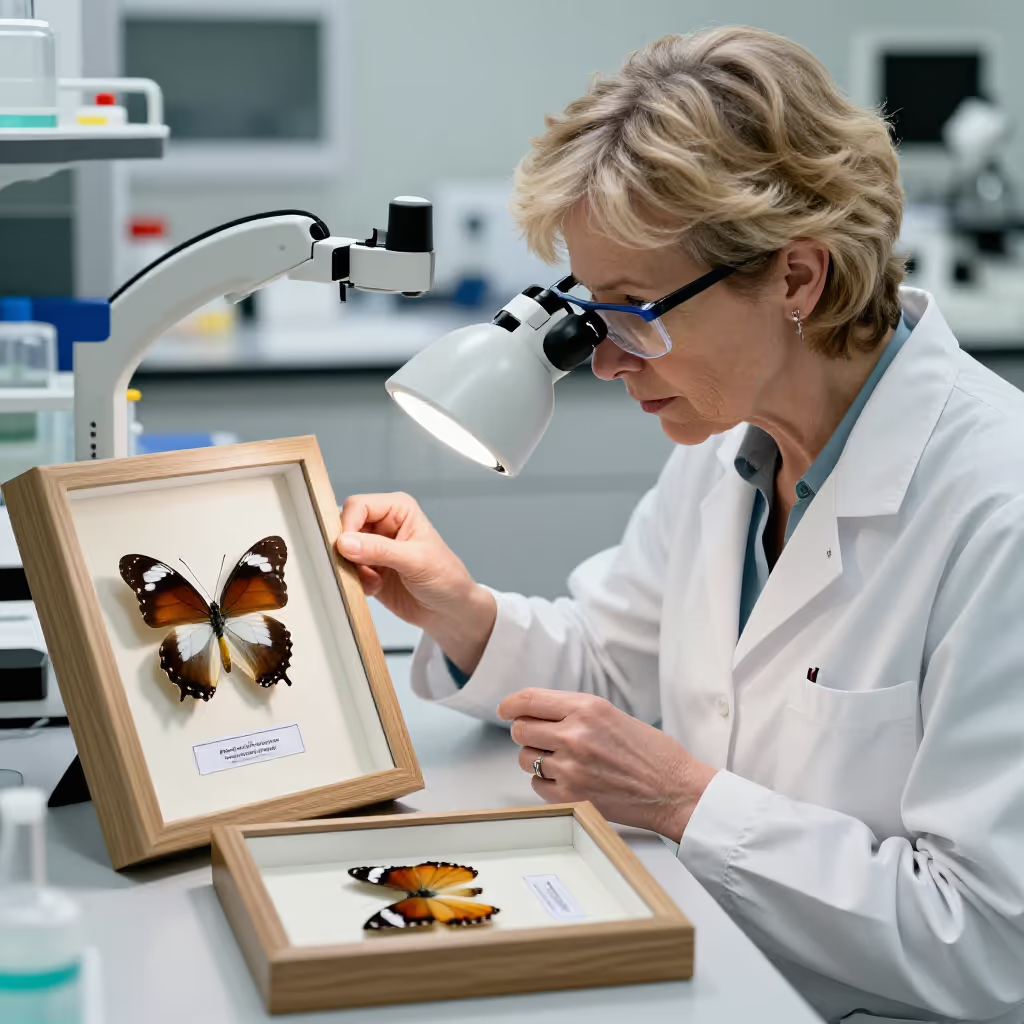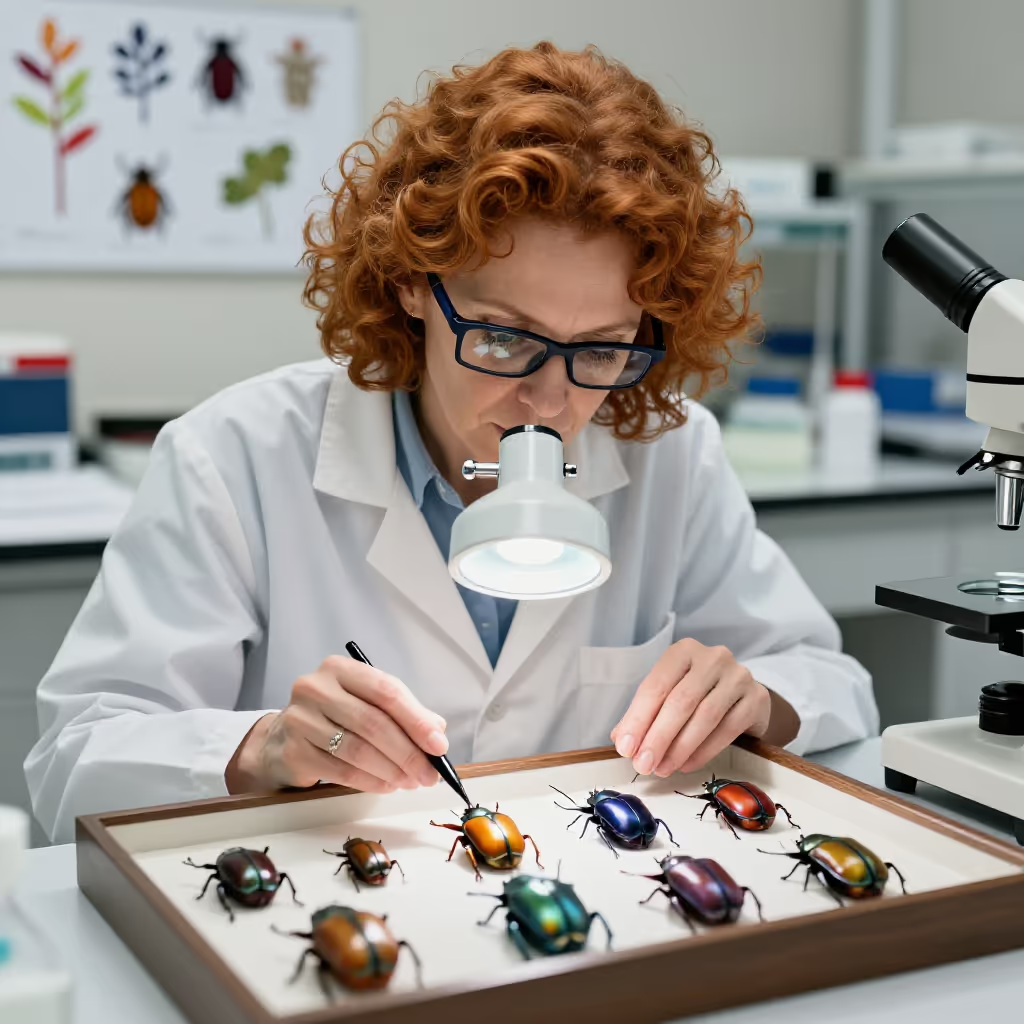
A group of living organisms that can reproduce with one another and produce fertile offspring. In biology, this is the basic unit of classification.
example
Der Mensch gehört zur Spezies Homo sapiens.
Humans belong to the species Homo sapiens.

Usage tips
Singular and plural
The word 'Spezies' (species) has a special feature: the form is identical in the singular and plural. Whether one or several species are meant can only be recognized from the article or the context of the sentence.
EXAMPLE
Diese Spezies ist vom Aussterben bedroht.
This species is threatened with extinction.
Context clue
The biological meaning can be recognized from the scientific context, when the topic is animals or plants. The figurative, often ironic meaning refers to people or things and describes a particular type or kind.
EXAMPLE
Forscher haben eine neue Spezies von Tiefseefischen entdeckt.
Researchers have discovered a new species of deep-sea fish.
Scientific term
In its biological meaning, 'Spezies' (species) is a technical term. It is used mainly in scientific, biological, or academic texts and discussions.
EXAMPLE
Die genaue Abgrenzung zwischen den beiden Spezies ist unter Biologen umstritten.
The exact distinction between the two species is disputed among biologists.
Compare with
synonym · confusable
Spezies vs Art
kind / way
'die Art' and 'die Spezies' can mean the same thing in biology: a group of living beings that belong together and can reproduce. 'die Art' is the normal German word and is also very common outside biology. 'die Spezies' sounds more technical and is used especially in scientific texts. Learners may confuse the words because they are often interchangeable in biological contexts. In everyday language, 'Art' is usually more natural; in a biology project or specialist text, 'Spezies' can sound more precise.
Spezies
Für das Projekt hat Finn eine seltene Spezies in einem Fachbuch beschrieben.
For the project, Finn described a rare species in a specialist book.
Art
Diese Art von Vogel lebt vor allem in warmen Ländern.
This species of bird lives mainly in warm countries.