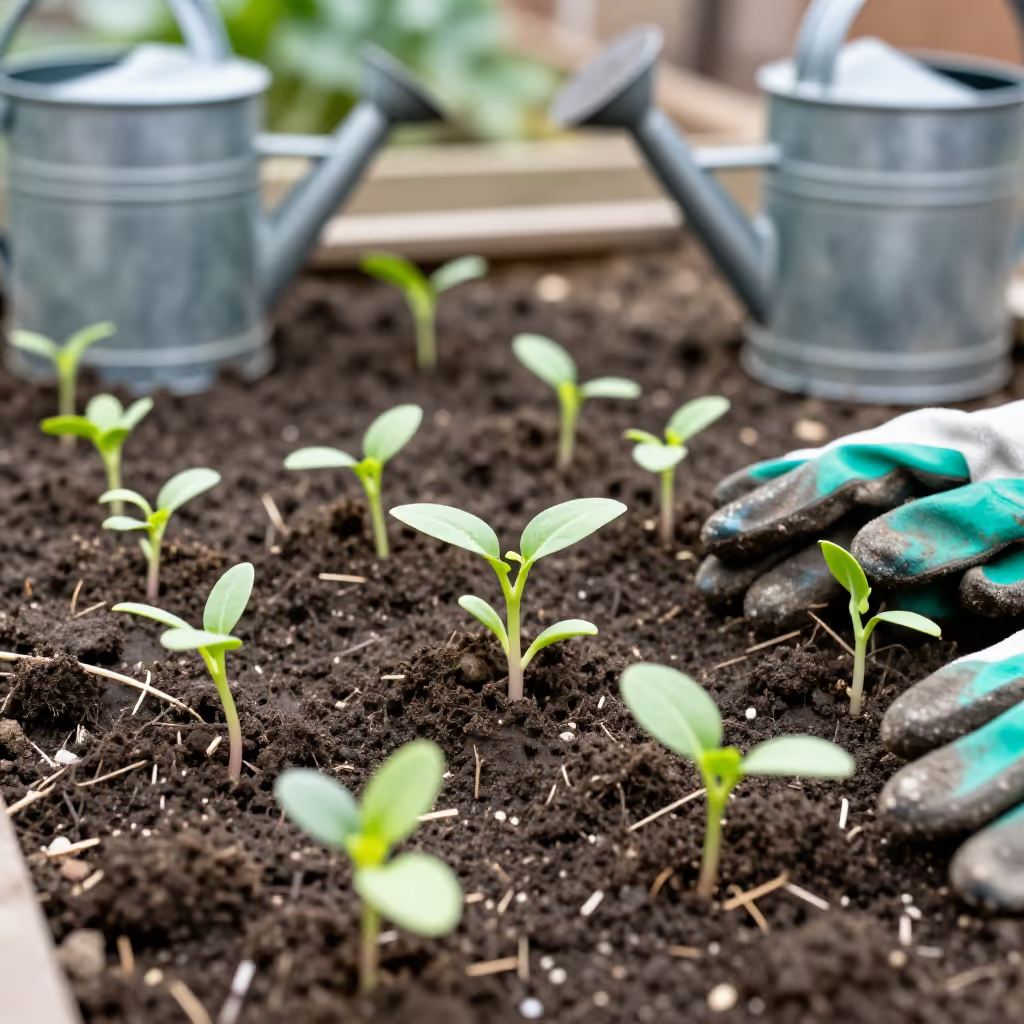
The beginning growth of plants, in which new shoots, leaves, or buds emerge from the ground or from a seed.
example
Nach dem Regen sprießen die ersten Grashalme auf der Wiese.
After the rain, the first blades of grass sprout in the meadow.

Usage tips
Spelling
The spelling 'spriessen' with 'ss' is common in Switzerland. In Germany and Austria, the word is written 'sprießen' with 'ß'. Both forms have the same meaning.
EXAMPLE
Im Frühling sprießen die Krokusse aus der Erde.
In spring, the crocuses sprout from the ground.
Perfect tense with 'sein'
'Spriessen' (to sprout) is a strong verb (sprießen, spross, ist gesprossen) and always forms the perfect tense with the auxiliary verb 'sein' (to be). This is because it describes a change or a kind of movement.
EXAMPLE
Überall sind neue Ideen für das Projekt gesprossen.
New ideas for the project have sprung up everywhere.
Typical collocations
In a botanical context, 'spriessen' (to sprout) is often used with subjects like 'Knospen' (buds), 'Blätter' (leaves), 'Samen' (seeds), or 'Pflanzen' (plants). It describes the first visible growth.
EXAMPLE
Die ersten Blätter spriessen schon an den Bäumen.
The first leaves are already sprouting on the trees.
Fixed expression
In the figurative meaning, the expression 'aus dem Boden spriessen' (to spring up out of the ground) is very common. It describes something appearing suddenly and in large numbers, similar to mushrooms.
EXAMPLE
Nach dem Erfolg des ersten Ladens sind neue Filialen wie Pilze aus dem Boden gesprossen.
After the success of the first store, new branches sprang up like mushrooms.
Context: beard growth
This meaning is used almost exclusively for the first growth of facial hair in adolescents. A typical phrasing is 'der erste Bart spriesst' (the first beard is sprouting).
EXAMPLE
Er ist stolz, weil ihm endlich der erste Flaum am Kinn spriesst.
He is proud because the first fuzz is finally sprouting on his chin.
Compare with
near_synonym
spriessen vs entstehen
to arise
'entstehen' and 'spriessen' can both describe something new appearing or beginning to grow. 'entstehen' is neutral and very general. 'spriessen' is used literally for plants or hair that are visibly growing. Figuratively, it often describes many new things suddenly appearing, such as shops, ideas, or projects. 'spriessen' sounds more vivid and more figurative than 'entstehen'.
spriessen
Nach dem Regen spriessen im Garten überall frische Kräuter.
After the rain, fresh herbs are sprouting everywhere in the garden.
entstehen
Aus einer kleinen Frage entstand eine lange Diskussion.