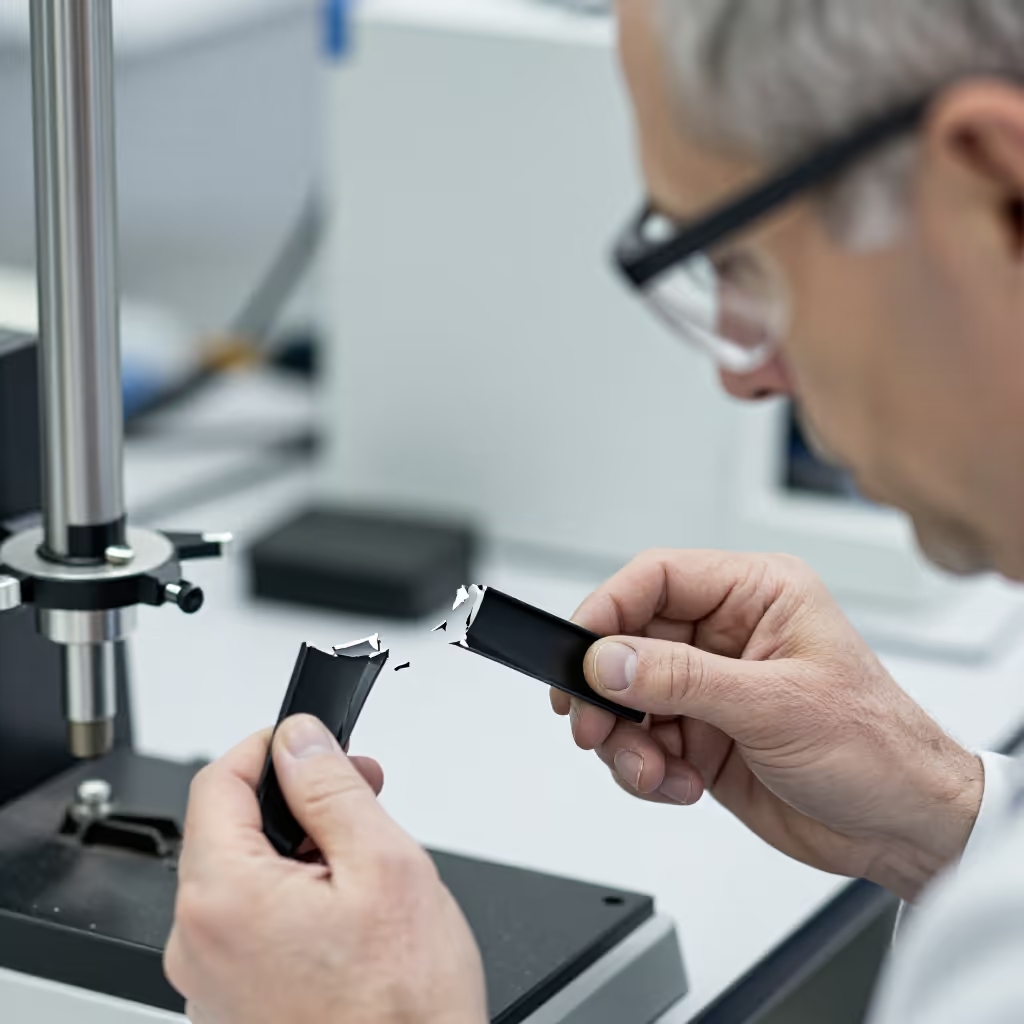
Hard, but inelastic and easily breaking or splintering. Refers to materials that break under stress instead of deforming.
example
Das alte Plastik war spröde geworden und zerbrach bei der kleinsten Berührung.
The old plastic had become brittle and broke at the slightest touch.
Usage tips
Shared basic idea
All meanings of 'spröde' (brittle/chapped/aloof) share the idea of dryness, hardness, and lack of flexibility. Whether a material breaks, the skin is cracked, or a person seems unapproachable—the cause is a form of inelasticity.
EXAMPLE
Ihre anfänglich spröde Art war nur eine Schutzmauer.
Her initially aloof manner was only a protective wall.
Sentence structure and usage
'Spröde' (brittle/chapped/aloof) can stand before a noun or after verbs like 'sein' (to be), 'werden' (to become), or 'wirken' (to seem). It can also describe behavior as an adverb.
EXAMPLE
Das spröde Material bricht leicht.
The brittle material breaks easily.
Typical collocations
In the context of materials, 'spröde' (brittle) is often used to describe the properties of old plastic, dry wood, certain metals, or even old paint.
EXAMPLE
Der alte Lack am Fensterrahmen ist spröde und blättert ab.
The old paint on the window frame is brittle and is flaking off.
Typical collocations
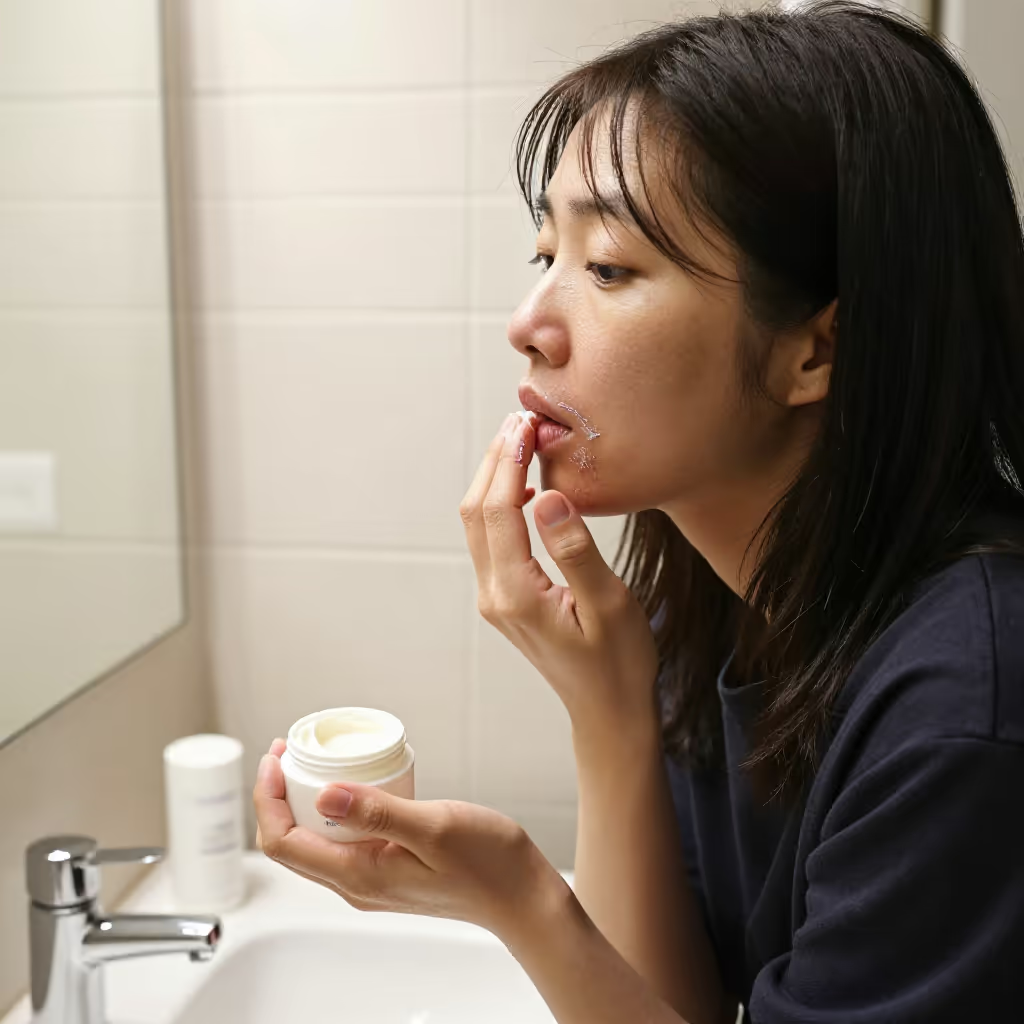
When talking about the body, 'spröde' (chapped/brittle) is almost always used together with 'Haut' (skin), 'Lippen' (lips), or 'Haar' (hair).
EXAMPLE
Diese Handcreme hilft gegen spröde Haut.
This hand cream helps with chapped skin.
Use for people
When a person is described as 'spröde' (aloof), it refers to their behavior, not their appearance. Typical verbs in this context are 'wirken' (to seem), 'sein' (to be), or 'erscheinen' (to appear).
EXAMPLE
Sie hat einen eher spröden Charme, ist aber sehr loyal.
She has a rather aloof charm, but is very loyal.
Compare with
near_synonym · confusable
spröde vs müde
tired
'müde' and 'spröde' can both occur with materials that are no longer stable or able to withstand stress. Here, 'müde' is a more technical word: a material has lost strength through long or repeated stress. 'spröde' describes more precisely that a material is hard, inelastic, and easily broken. The words can be confused because a fatigued material can eventually also seem brittle. In everyday language, however, you are more likely to say 'spröde' for skin, lips, or an object; 'müde' fits with people or, in technical contexts, with material fatigue.
spröde
Die Gummidichtung ist spröde und reißt schon beim Anfassen.
The rubber seal is brittle and tears as soon as you touch it.
müde
Nach vielen Jahren ist das Metall an der alten Brücke müde geworden.
After many years, the metal on the old bridge has become fatigued.