


spucken
to spit
To deliberately expel saliva or other liquids from the mouth.
EXAMPLE
Es ist unhöflich, auf den Boden zu spucken.
It is impolite to spit on the ground.
to spit
Loading your saved state.
to spit
To deliberately expel saliva or other liquids from the mouth.
Es ist unhöflich, auf den Boden zu spucken.
It is impolite to spit on the ground.

to spit out
To remove something that is in your mouth, such as a pit or inedible food, by expelling it.
Er musste den Kirschkern auf den Tellerrand spucken.
He had to spit the cherry pit onto the edge of the plate.
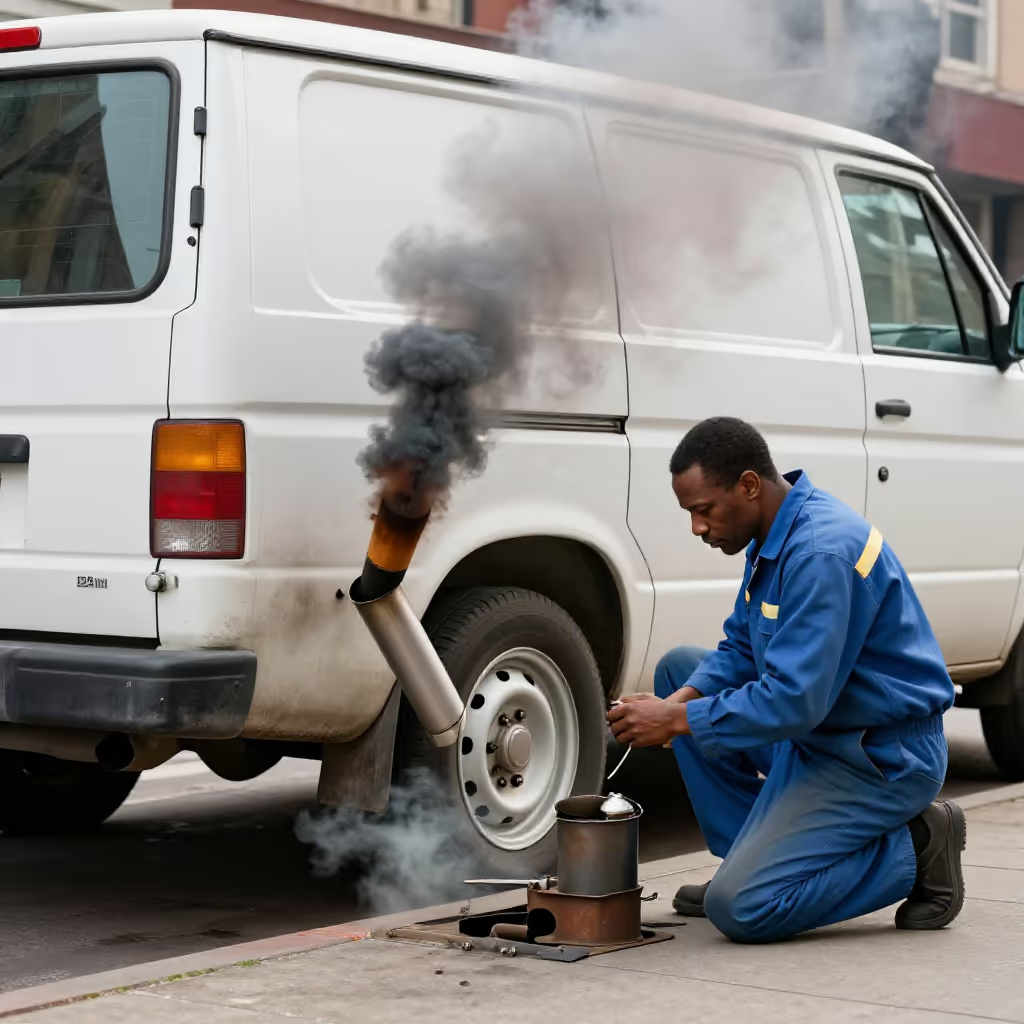
to spew
In a figurative sense, to emit or give off something in bursts or irregularly.
Der alte Motor spuckt Öl und Qualm.
The old engine is spewing oil and smoke.

to spit venom
A fixed expression meaning to be extremely angry and express this through harsh, malicious words.
Nach der ungerechten Entscheidung hat der Trainer Gift und Galle gespuckt.
After the unfair decision, the coach was spitting venom.

to roll up one's sleeves
A fixed expression meaning to get down to work energetically and with determination.
So, genug geredet, jetzt wird in die Hände gespuckt!
Right, enough talking, now let's roll up our sleeves!
Spitting itself is considered very impolite or disrespectful in many situations. Therefore, the word 'spucken' often has a negative or coarse connotation, even though it is a neutral verb in itself.
Der Fußballspieler wurde bestraft, weil er auf das Spielfeld gespuckt hatte.
The soccer player was punished because he had spat on the field.
In its basic meaning, 'spucken' can stand without an object. The direction is then often indicated by a preposition such as 'auf' (on/onto) or 'in' (in/into).
Bitte nicht auf den Teppich spucken!
Please don't spit on the carpet!
When removing something from the mouth, 'spucken' needs an accusative object. This object is the thing you spit out.
Das Kind hat das bittere Medikament sofort wieder gespuckt.
The child immediately spat the bitter medicine back out.
When the subject of the sentence is a machine, a volcano, or another non-human thing, 'spucken' means something like 'to emit something in bursts'.
Der Vulkan begann, Asche und Lava zu spucken.
The volcano began to spew ash and lava.
The idiom 'Gift und Galle spucken' (to spit poison and bile) is a fixed unit. It means that someone is extremely angry and expresses this anger with nasty words.
Als er die Rechnung sah, spuckte er Gift und Galle.
When he saw the bill, he spat venom.
'In die Hände spucken' (to spit into one's hands) is a figurative idiom. It means that you begin a task with determination and energy.
Die Pause ist vorbei, lasst uns in die Hände spucken und weitermachen!
The break is over, let's roll up our sleeves and carry on!
to vomit / to force open
Both verbs can describe something coming out of the mouth. Erbrechen usually means involuntarily expelling the contents of the stomach because of illness or nausea, while spucken refers to deliberately expelling saliva or liquid. Use “erbrechen” when someone feels nauseated and “spucken” for an intentional action.

Das Kind musste den bitteren Saft sofort wieder ausspucken.
The child had to spit the bitter juice right back out.
Wegen der starken Übelkeit musste der Patient am Morgen erbrechen.
Because of his severe nausea, the patient had to vomit in the morning.