

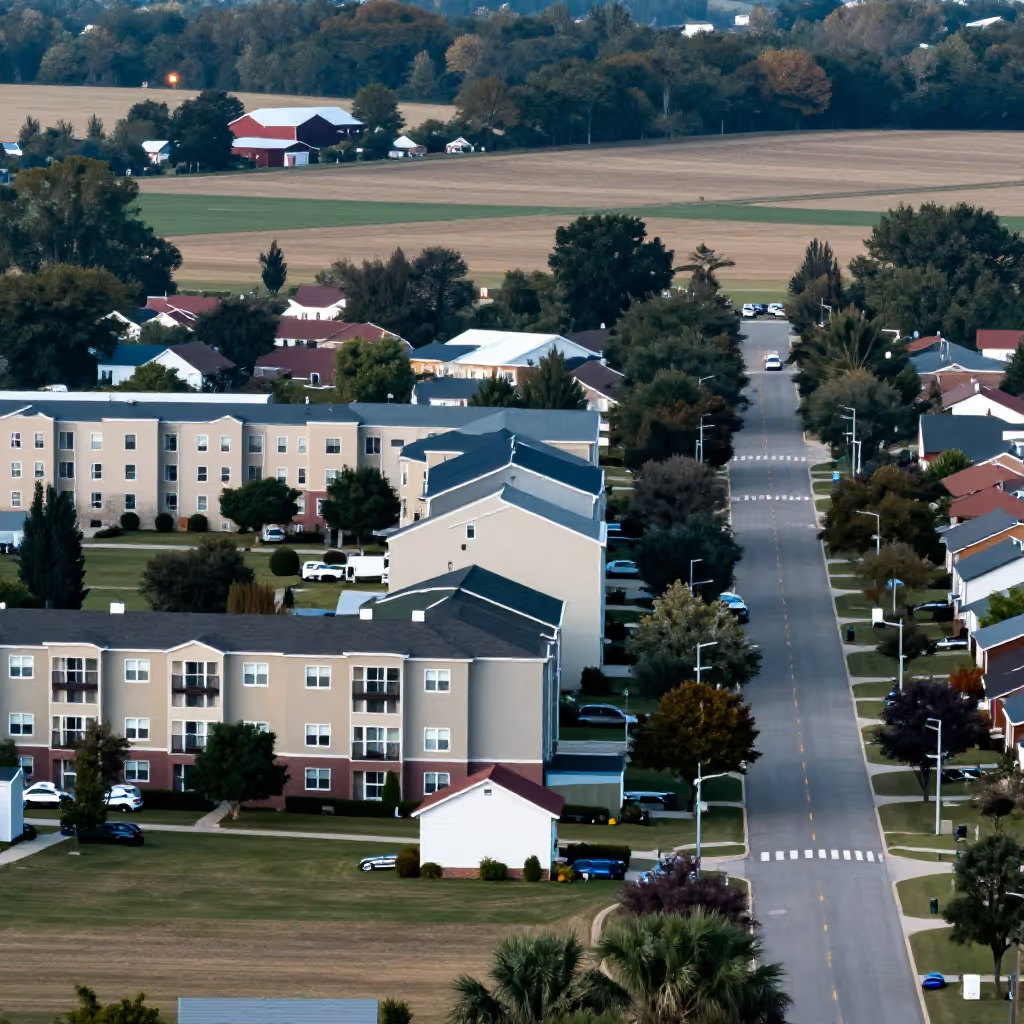
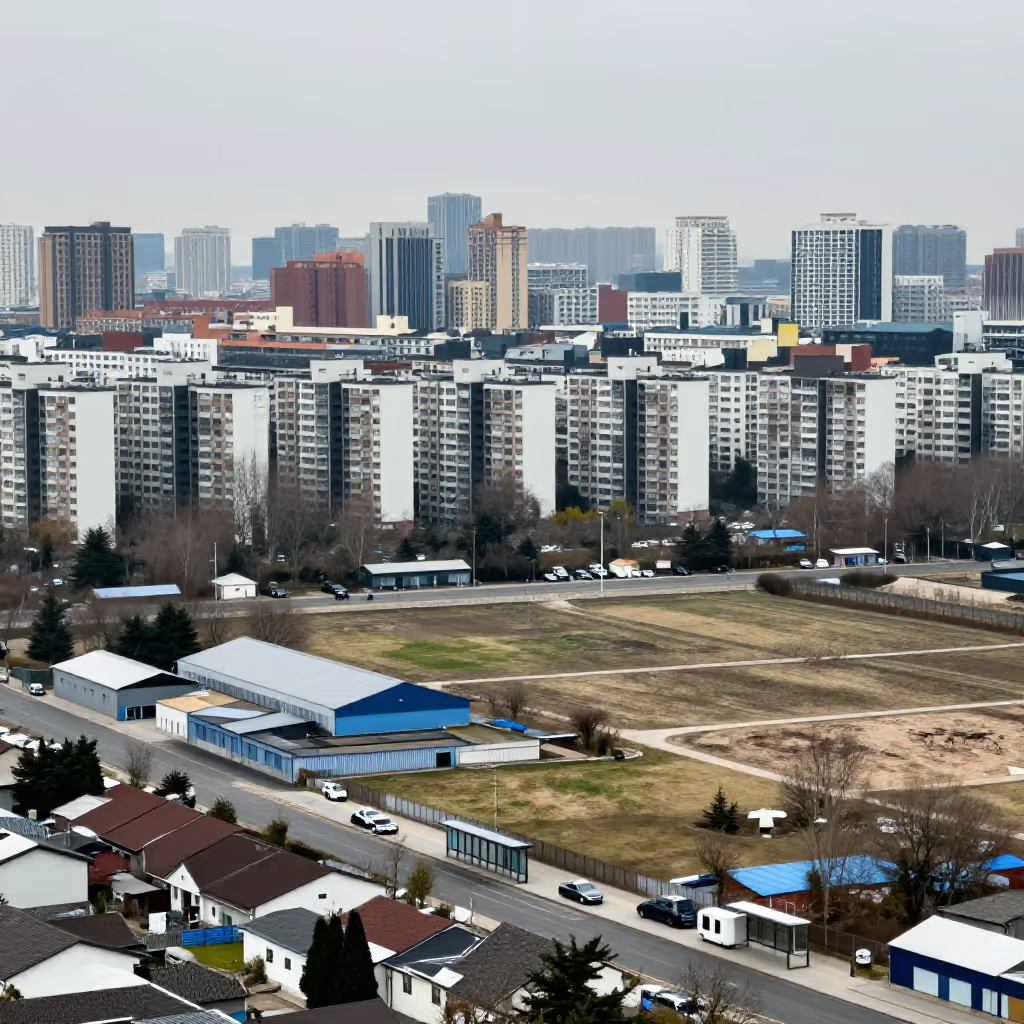
The area on the outer edge of a city, where the built-up area ends and the rural surroundings begin.
example
Sie wohnen in einem ruhigen Haus am Stadtrand mit großem Garten.
They live in a quiet house on the outskirts of town with a large garden.
Usage tips
Compound word
This word is a simple compound made up of 'die Stadt' (the city) and 'der Rand' (the edge). So it literally describes the edge or border of a city.
EXAMPLE
Am Stadtrand beginnen die Felder und Wälder.
The fields and forests begin on the outskirts of town.
Correct preposition
Pay attention to the difference in prepositions: 'am Stadtrand' (on the outskirts) describes a location (dative), while 'an den Stadtrand' (to the outskirts) describes a direction (accusative).
EXAMPLE
Wir wohnen in einem schönen Haus am Stadtrand.
We live in a beautiful house on the outskirts of town.
Typical collocations
'Stadtrand' (outskirts) is often combined with the verbs 'wohnen' (to live) and 'leben' (to live), or with the noun 'Haus' (house). It is typically associated with a quiet residential area.
EXAMPLE
Viele Familien mit Kindern leben lieber am Stadtrand.
Many families with children prefer to live on the outskirts of town.
Compare with
antonym
Stadtrand vs Innenstadt
city center
'die Innenstadt' and 'der Stadtrand' describe opposite areas of a city. The city center is central, and there are usually many shops, offices, and cultural places there. The outskirts are on the outside; there, the city often becomes quieter and gradually turns into the surrounding area or countryside. When it is about shopping, public offices, or central meeting points, 'Innenstadt' is more likely to fit. When it is about quieter living, less traffic, or being close to nature, 'Stadtrand' is more likely to fit.
Stadtrand
Wir sind an den Stadtrand gezogen, weil es dort ruhiger ist.
We moved to the outskirts because it is quieter there.
Innenstadt
Die Straßen der Innenstadt werden am Samstag sehr voll sein.
The streets in the city center will be very crowded on Saturday.