

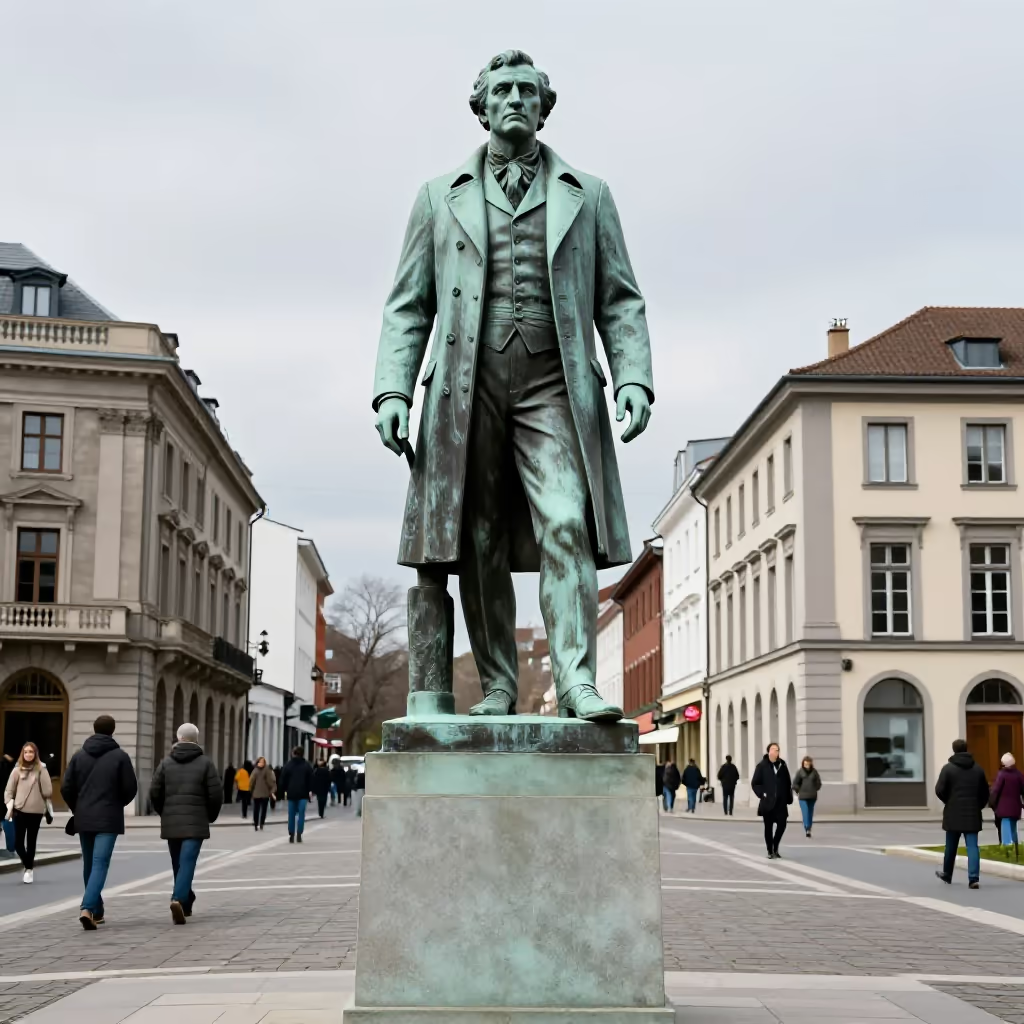
das Standbild
statue
A sculpture that depicts a standing person or animal, usually life-size or larger.
EXAMPLE
Auf dem Marktplatz wurde ein Standbild des Stadtgründers errichtet.
A statue of the city's founder was erected in the marketplace.
statue / still image
Loading your saved state.
statue
A sculpture that depicts a standing person or animal, usually life-size or larger.
Auf dem Marktplatz wurde ein Standbild des Stadtgründers errichtet.
A statue of the city's founder was erected in the marketplace.

still image
A single, unmoving image from a film or video recording; a freeze-frame.
Die Überwachungskamera lieferte nur ein unscharfes Standbild des Täters.
The surveillance camera provided only a blurry still image of the perpetrator.

statue
A person who stands completely motionless, as if frozen.
Er erstarrte vor Schreck zu einem Standbild.
He froze in fright like a statue.
'Standbild' is composed of 'Stand' (from 'stehen', to stand) and 'Bild' (image/picture). So it is literally a 'standing image'. This basic idea helps you understand all the meanings: the standing sculpture, the still image from a film, and the person standing still.
Das Video hielt an und zeigte nur noch ein Standbild.
The video stopped and showed only a still image.
The context tells you which meaning is intended. If it is about art or a public square, a statue is meant. In the context of film, video, or cameras, it refers to a frozen image. If someone is talking about a person and their reaction, the person has frozen.
Vor dem Museum steht ein beeindruckendes Standbild aus Bronze.
In front of the museum stands an impressive bronze statue.
In connection with statues, typical verbs are 'errichten' (to erect), 'aufstellen' (to put up), and 'enthüllen' (to unveil). The material is also often mentioned, e.g. 'ein Standbild aus Bronze' (a bronze statue) or 'aus Marmor' (made of marble).
Die Stadt ließ ein Standbild zu Ehren der berühmten Wissenschaftlerin errichten.
The city had a statue erected in honor of the famous scientist.
In the meaning 'freeze-frame', 'Standbild' (still image) often occurs together with words like 'Video' (video), 'Film' (film), 'Kamera' (camera), or 'Aufnahme' (recording). It refers to the result when motion is stopped.
Die Polizei analysiert das Standbild der Überwachungskamera.
The police are analyzing the still image from the surveillance camera.
When a person is meant, the fixed expression 'zum Standbild erstarren' (to freeze like a statue) is almost always used. This expresses that someone suddenly becomes completely motionless out of fear, surprise, or amazement.
Als sie die Gestalt im Dunkeln sah, erstarrte sie zum Standbild.
When she saw the figure in the dark, she froze like a statue.
statue
Statue is the more general term for a solid, three-dimensional figure. A Standbild is more specifically a statue depicting a standing person or animal. When the standing position is important, Standbild is appropriate; otherwise, Statue is sufficient.
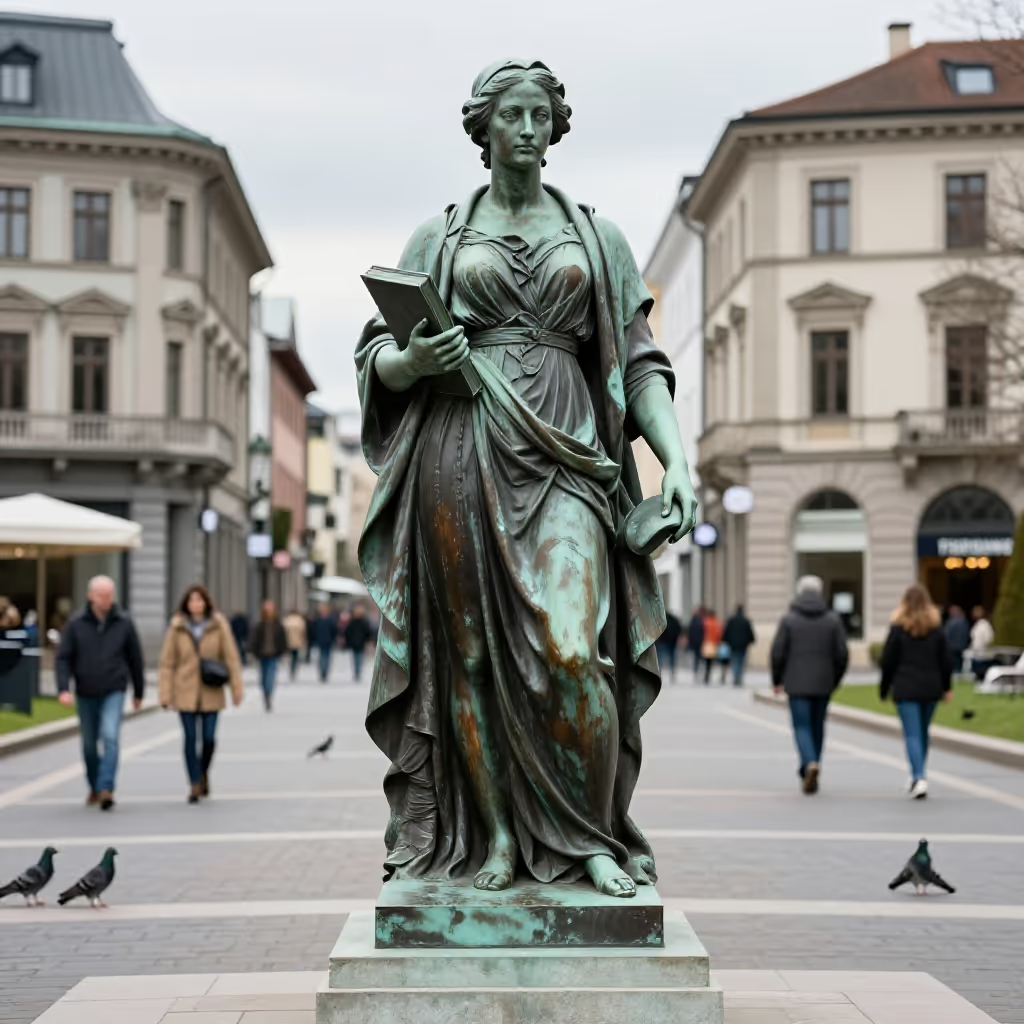
Vor dem Rathaus steht ein lebensgroßes Standbild des aufrecht stehenden Dichters.
A life-size statue of the poet standing upright stands in front of the town hall.
Vor dem Rathaus steht eine Statue des sitzenden Dichters.
A statue of the seated poet stands in front of the town hall.