

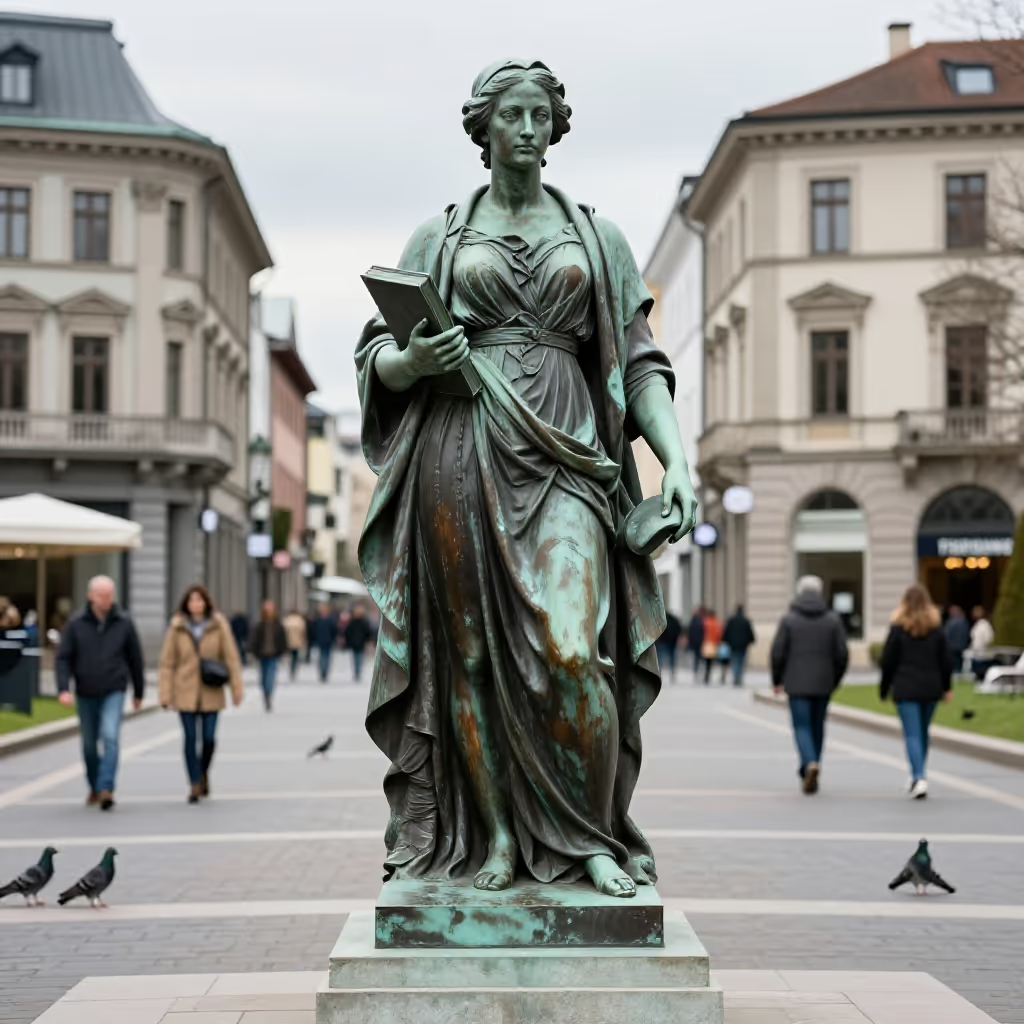
A three-dimensional, often life-sized or larger-than-life figure made of a solid material such as stone, metal, or wood, representing a person, an animal, or an abstract concept.
example
Vor dem Museum steht eine beeindruckende Statue aus Bronze.
In front of the museum stands an impressive bronze statue.
Usage tips
Typical collocations
In connection with statues, the verbs 'errichten' (to erect), 'enthüllen' (to unveil), or 'darstellen' (to represent) are often used.
EXAMPLE
Die Stadt hat zu Ehren des Dichters eine Statue errichtet.
The city erected a statue in honor of the poet.
Important prepositions
To describe the material a statue is made of, you use the preposition 'aus' (made of/from). To name the artist or the person depicted, you use 'von' (by/of).
EXAMPLE
Die berühmte Statue ist aus reinem Marmor.
The famous statue is made of pure marble.
Use in compounds
'Statue' is often used as the second part of compound words to describe the type or material of the statue more precisely.
EXAMPLE
Die Reiterstatue auf dem Platz ist ein beliebtes Fotomotiv.
The equestrian statue in the square is a popular photo subject.
Compare with
near_synonym · confusable
Statue vs Figur
figure
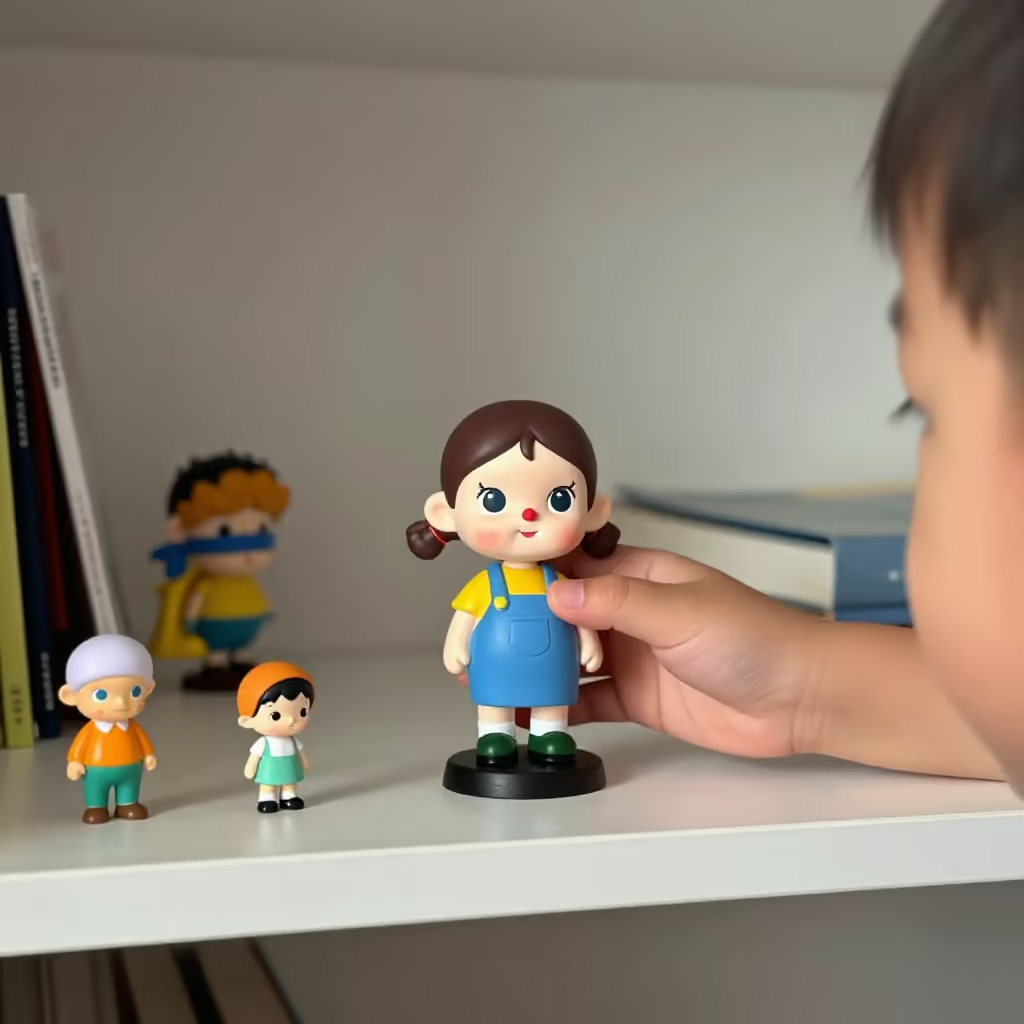
'Figur' and 'Statue' can both mean a three-dimensional object that represents a person, an animal, or something else. 'Figur' is much more general and often smaller: a game piece, a collectible figure, or a small decoration. 'Statue' is used more for a larger, solid work of art made of stone, metal, or wood, often in a museum, in a park, or in a square. So a statue can be understood as a kind of figure, but not every figure is a statue. The words can be confused especially with objects that look like people or animals.
Statue
Im Urlaub haben wir eine alte Statue vor dem Rathaus fotografiert.
On vacation, we photographed an old statue in front of the town hall.
Figur
Auf dem Schreibtisch steht eine kleine Figur aus Holz.