

der Steig
trail
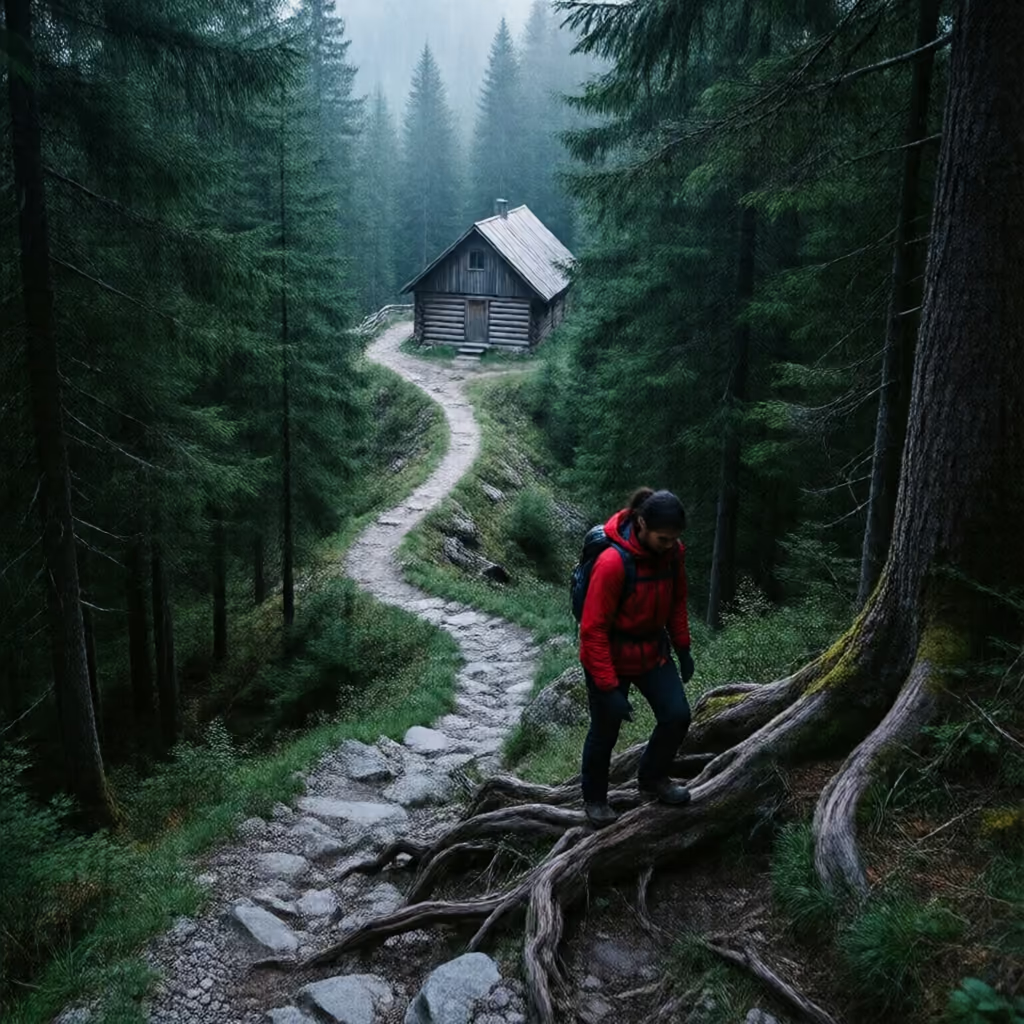
A narrow, usually steep path, especially in the mountains or difficult terrain.
EXAMPLE
Der Steig führt steil durch den Wald zur Berghütte hinauf.
The trail climbs steeply through the forest to the mountain hut.
trail
der Steig, die Steige
Loading your saved state.
trail
A narrow, usually steep path, especially in the mountains or difficult terrain.
Der Steig führt steil durch den Wald zur Berghütte hinauf.
The trail climbs steeply through the forest to the mountain hut.
| gender | masculine der |
|---|---|
| plural | die Steige |
| genitive | des Steigs |
| singular | plural | |
|---|---|---|
| nominative | der Steig | die Steige |
| accusative | den Steig | die Steige |
| dative | dem Steig | den Steigen |
| genitive | des Steigs des Steiges | der Steige |
The article changes with the case; it is shown in colour.
'Steig' (trail) belongs to the word family of 'steigen' (to climb). This connection helps you imagine a Steig as a path on which you climb up or down.
Der Steig steigt hinter der Alm steil an.
The trail climbs steeply behind the alpine pasture.
'Steig' (trail) is often used with adjectives such as 'schmal' (narrow), 'steil' (steep), or 'felsig' (rocky). Compounds such as 'alpiner Steig' (alpine trail) and 'bergauf führender Steig' (uphill trail) are also typical.
Der schmale Steig führt über felsiges Gelände zum Gipfel.
The narrow trail leads across rocky terrain to the summit.
When describing location or movement with 'Steig' (trail), 'auf' (onto/on), 'über' (across), or 'entlang' (along) are often used. After 'auf' (onto/on), the accusative is usually used for movement, while the dative is used for a fixed position.
Wir bogen auf den Steig ab und folgten ihm bis zur Hütte.
We turned onto the trail and followed it to the hut.