
A highly simplified and generalized idea or fixed image of a particular group of people or thing, often based on prejudice.
example
Die Annahme, dass alle Professoren zerstreut sind, ist ein bekanntes Stereotyp.
The assumption that all professors are absent-minded is a well-known stereotype.
Usage tips
Word origin
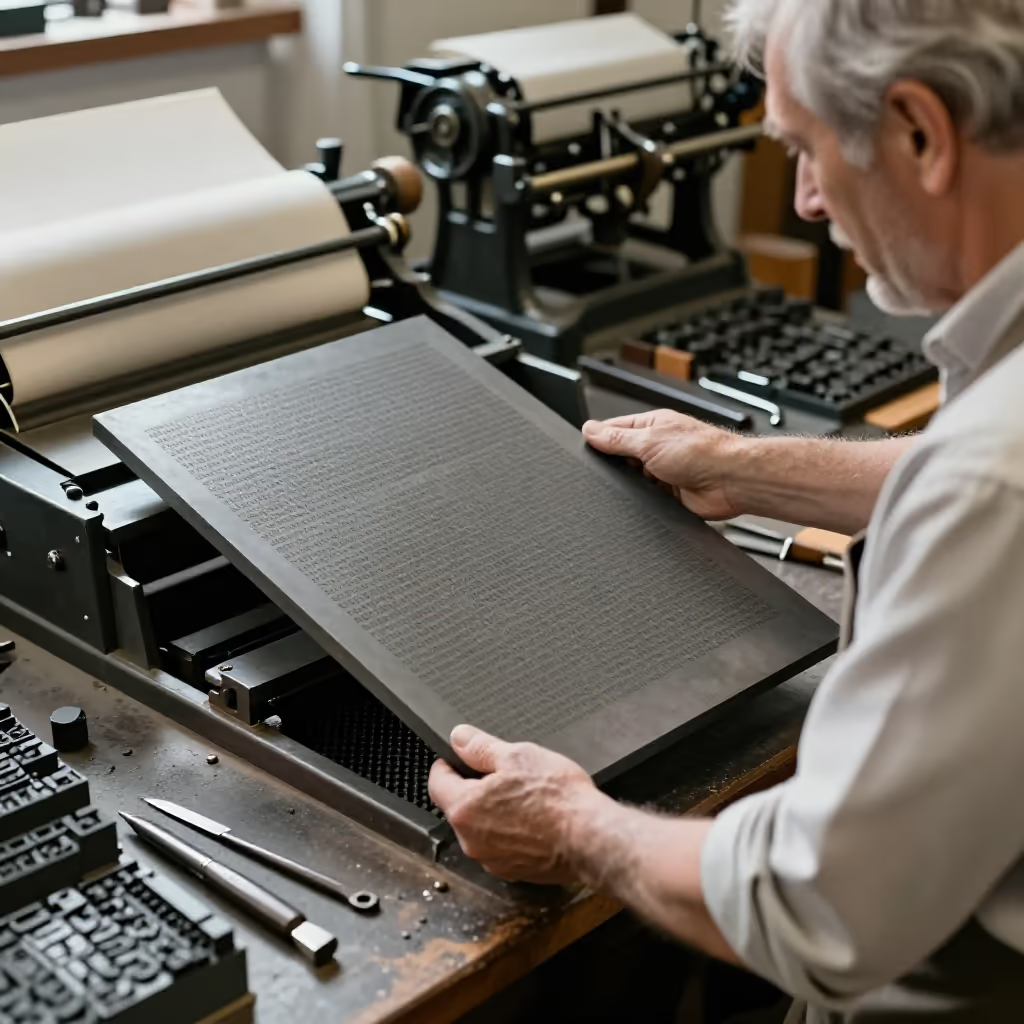
The word comes from Greek: 'stereos' means 'solid' and 'typos' means 'impression' or 'print'. This origin explains both meanings: the fixed printing plate (historical) and the fixed, unchanging image in one's mind (modern).
EXAMPLE
Die Vorstellung von Nationalcharakteren basiert oft auf alten Stereotypen.
The idea of national characters is often based on old stereotypes.
Typical collocations
In social contexts, 'Stereotyp' (stereotype) is often used with verbs like 'bedienen' (to play into), 'bestätigen' (to confirm), 'widerlegen' (to refute), or 'abbauen' (to break down). People also say 'in Stereotypen denken' (to think in stereotypes).
EXAMPLE
Der Film versucht bewusst, gängige Stereotype zu widerlegen.
The film deliberately tries to refute common stereotypes.
Sentence structure with 'über'
To say what a stereotype is about, German usually uses the preposition 'über' (about) followed by the accusative.
EXAMPLE
Es gibt viele Stereotype über das Leben auf dem Land.
There are many stereotypes about life in the countryside.
Context clue
The meaning of the printing plate is very rare today and occurs only in specialist texts about the history of printing technology. In almost all modern contexts, the social stereotype is meant.
EXAMPLE
Das Museum zeigte alte Druckmaschinen und die dazugehörigen Stereotype.
The museum displayed old printing presses and the corresponding stereotype plates.
Compare with
near_synonym · confusable
Stereotyp vs Schublade
drawer
'die Schublade' and 'das Stereotyp' are close in their figurative meanings. A 'Stereotyp' is a highly simplified image of a group or thing. When you 'jemanden in eine Schublade stecken' (to pigeonhole someone), you often use this kind of simplified image to classify the person quickly. Learners may confuse the words because both have to do with fixed ideas. 'Stereotyp' names the idea itself; 'in eine Schublade stecken' describes judging a person according to that idea.
Stereotyp
Der Film spielt mit dem Stereotyp vom stillen Computerexperten.
The film plays with the stereotype of the quiet computer expert.
Schublade
Nach einem kurzen Gespräch wollte sie den neuen Kollegen nicht sofort in eine Schublade stecken.
After a short conversation, she did not want to immediately pigeonhole the new colleague.