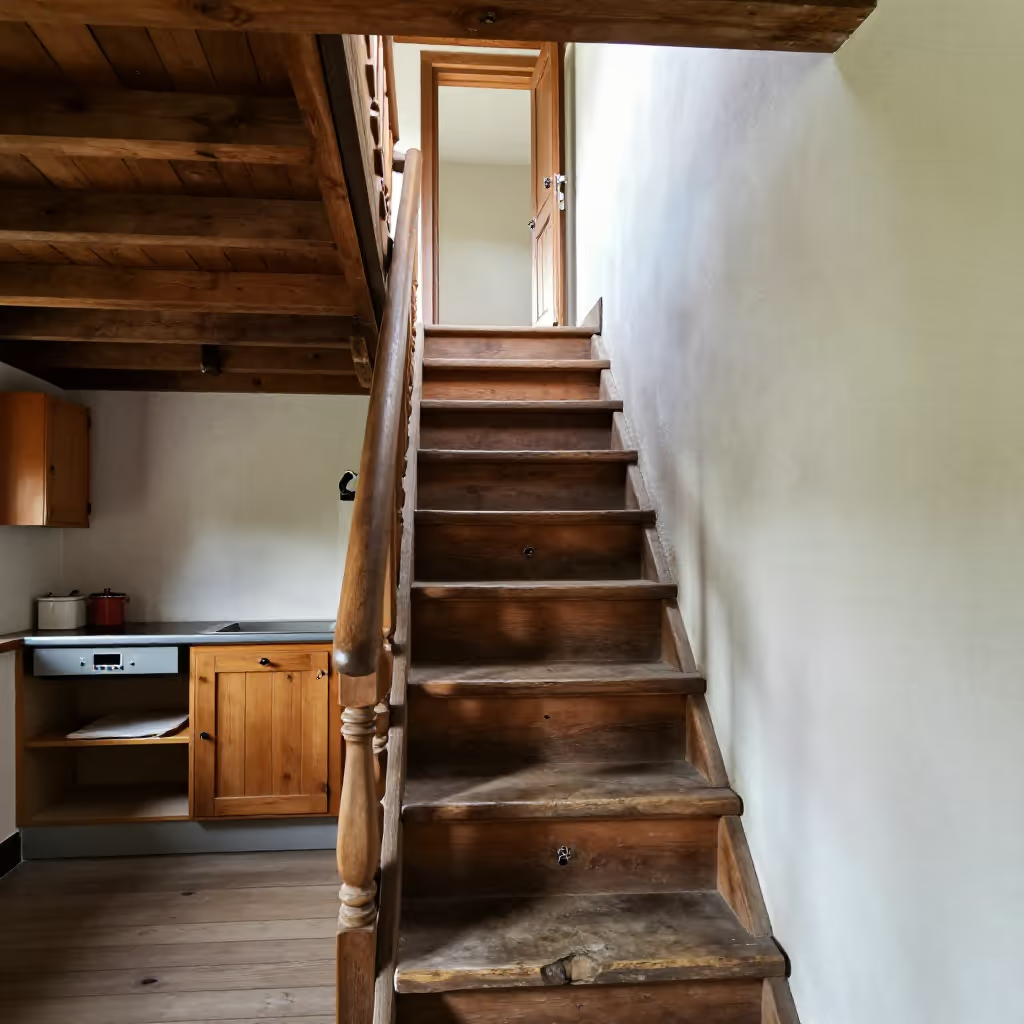
A set of stairs, often a narrow, steep, or simple structure used to overcome differences in height. The term is used mainly in Austria and southern Germany.
example
Vorsicht, die Stiege zum Dachboden ist sehr steil und hat kein Geländer.
Careful, the staircase to the attic is very steep and has no railing.
Usage tips
Regional use
The word 'Stiege' (staircase) for a set of stairs is used mainly in Austria and southern Germany. In other parts of Germany, 'Treppe' (stairs/staircase) is the usual term.
EXAMPLE
In Wien führen viele alte Stiegen zu versteckten Innenhöfen.
In Vienna, many old staircases lead to hidden courtyards.
Typical collocations
'Stiege' (staircase) is often combined with adjectives that describe its shape or form, such as 'steil' (steep), 'eng' (narrow), or 'hölzern' (wooden). Typical verbs are 'die Stiege hinaufgehen' (to go up the stairs) or 'die Stiege hinuntersteigen' (to go down the stairs).
EXAMPLE
Er ging langsam die enge Stiege zum Keller hinunter.
He slowly went down the narrow staircase to the basement.
Outdated meaning
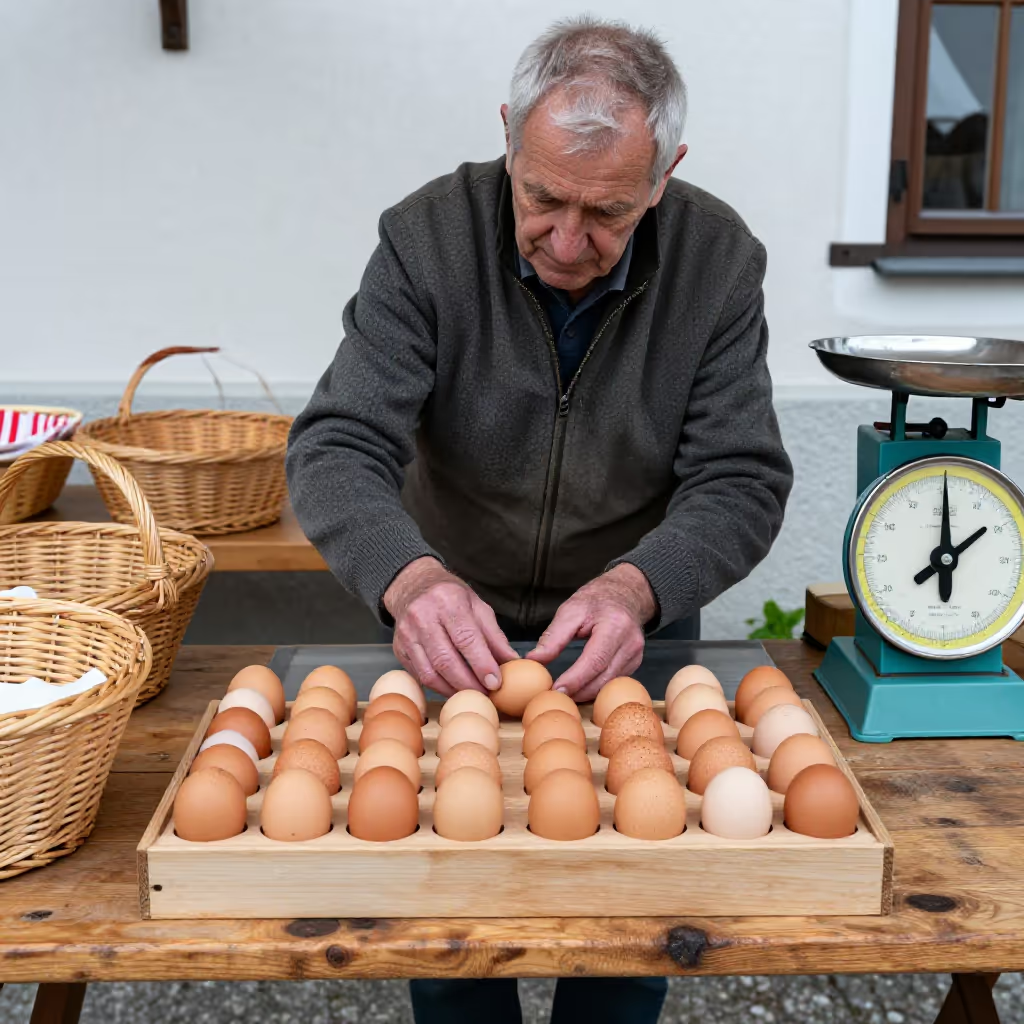
The meaning as a unit of measure for 20 items is very rare today and is used almost only in historical or very regional contexts. In modern German, you will hardly ever encounter this meaning.
EXAMPLE
Die Bäuerin verkaufte die Eier früher nach Stiegen.
In the past, the farmer’s wife sold the eggs by the score.
Compare with
confusable
Stiege vs Stufe
step / level
'die Stufe' and 'die Stiege' can both have to do with stairs, but they do not mean the same thing. A 'Stufe' is a single step of a staircase. A 'Stiege' is the whole staircase, or a simple, often narrow set of stairs. Also, 'Stiege' is common mainly in Austria and southern Germany. Learners may confuse the words because they sound similar and both occur when going up or down. Memory tip: you put your foot on a 'Stufe', but you go up via a 'Stiege'.
Stiege
Im alten Haus führt eine schmale Stiege in den Keller.
In the old house, a narrow staircase leads down to the basement.
Stufe
Pass auf, die letzte Stufe ist höher als die anderen.
Watch out, the last step is higher than the others.