


die Treppe
stairs
A structure made of steps that makes it possible to move on foot between different levels of a building or area.
EXAMPLE
Vorsicht, die letzte Stufe der Treppe ist kaputt.
Careful, the last step of the stairs is broken.
stairs
Loading your saved state.
stairs
A structure made of steps that makes it possible to move on foot between different levels of a building or area.
Vorsicht, die letzte Stufe der Treppe ist kaputt.
Careful, the last step of the stairs is broken.
The noun 'die Treppe' (stairs) is closely related to the verb 'treten' (to step). So a staircase is a device that you step on in order to get up or down.
Er trat vorsichtig auf die nasse Treppe.
He stepped carefully onto the wet stairs.
Verbs of movement are often used with 'Treppe' (stairs). Typical phrases are 'die Treppe nehmen' (to take the stairs), 'eine Treppe hinaufgehen' (to go up a staircase), or 'eine Treppe hinuntersteigen' (to go down a staircase).
Wir nehmen die Treppe, weil der Aufzug besetzt ist.
We're taking the stairs because the elevator is occupied.
To indicate direction on stairs, a verb is often combined with adverbs like 'hinauf' (up), 'hinunter' (down), 'hoch' (up), or 'runter' (down).
Die Kinder rannten die Treppe hinauf.
The children ran up the stairs.
stairway / rising
A Treppe is specifically made up of steps and allows people to move between levels. An Aufgang is a more general term for the route or part of a building leading upward and can also include a ramp. Use “Treppe” for the stepped structure and “Aufgang” when the access route upward is understood more broadly.
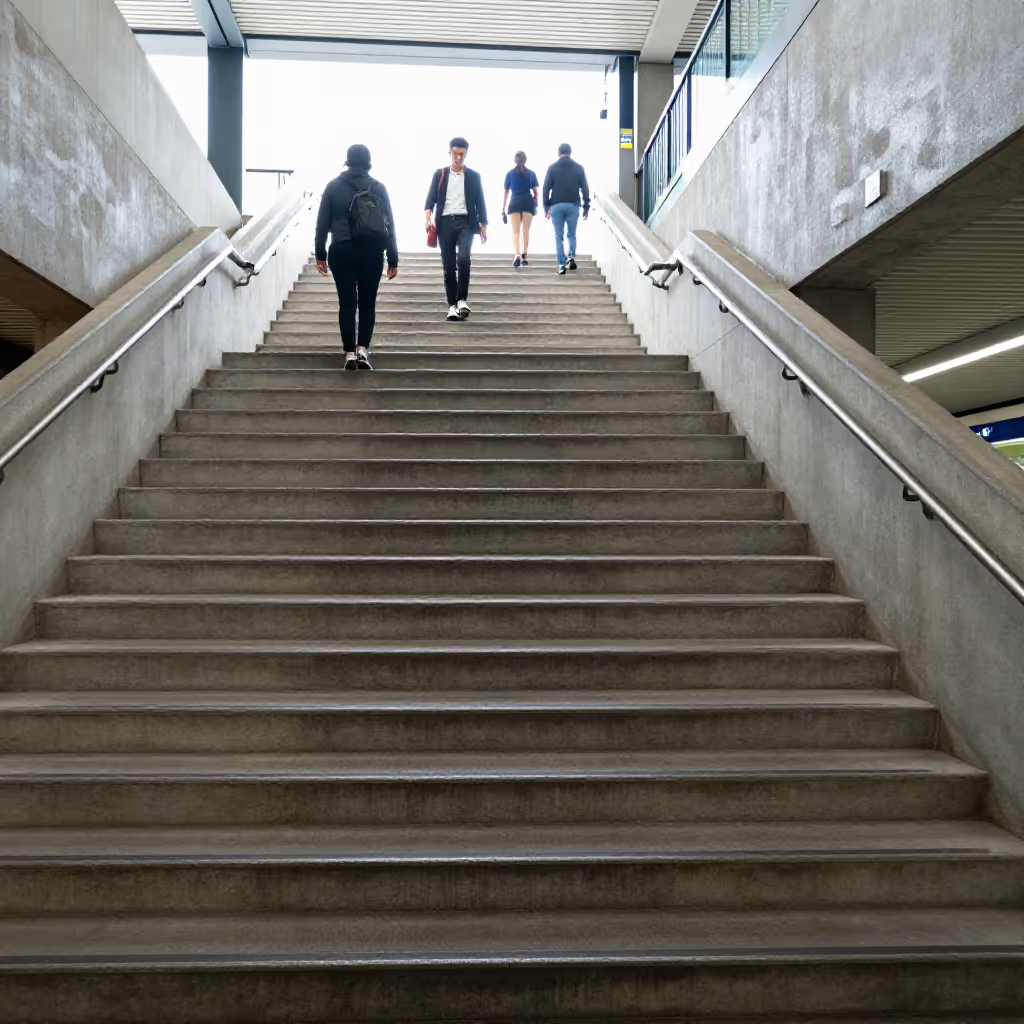
Für den Weg in den ersten Stock nahm ich die schmale Treppe.
To get to the first floor, I took the narrow staircase.
Der Aufgang zum Bahnsteig besteht aus einer Treppe und einer Rampe.
The access route to the platform consists of a staircase and a ramp.