

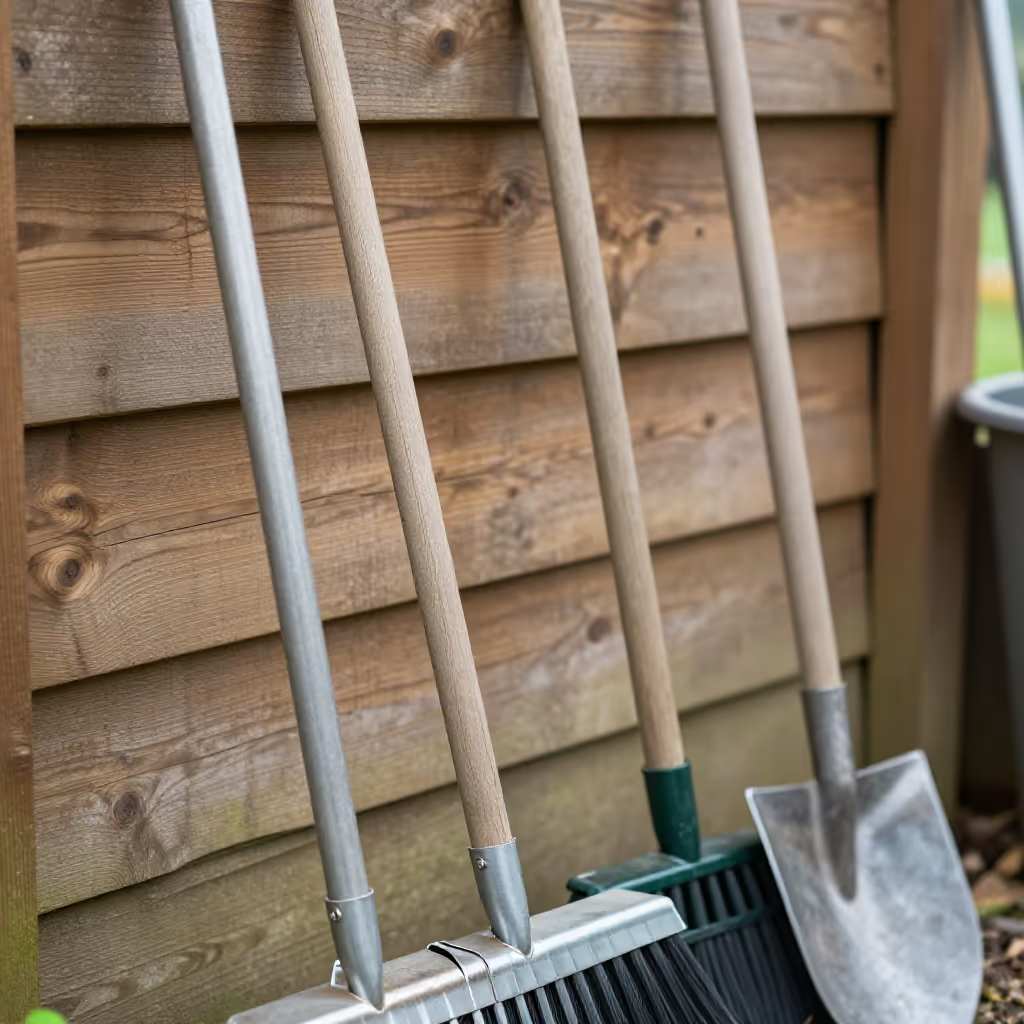
A non-standard adjectival use describing something as being provided with a stem (a long, thin handle or stalk). This usage is very rare and is not considered correct Standard German.
example
Für den Cocktail brauchen wir die Gläser, die stiel sind, nicht die normalen Becher.
For the cocktail, we need the glasses that are stemmed, not the regular cups.
Usage tips
Word family
The adjective 'stiel' (stemmed) is derived directly from the noun 'der Stiel' (the stem, e.g., on a glass, a flower, or a tool). It describes that something has such a stem.
EXAMPLE
Der Apfel hatte noch einen kleinen Stiel.
The apple still had a small stem.
Register and style
The adjectival use of 'stiel' (stemmed) is very colloquial and not part of Standard German. You may hear it sometimes, but you should avoid it in written language or formal contexts.
EXAMPLE
Gib mir mal die Weingläser, die stiel sind.
Hand me the wine glasses that are stemmed.
Sentence structure and use
When 'stiel' (stemmed) is used as an adjective, it almost always comes after the noun in a predicative function. Using it before the noun, e.g. 'ein stieles Glas', is unusual and sounds unnatural.
EXAMPLE
Ich suche die Sektgläser, die besonders hoch und stiel sind.
I'm looking for the champagne glasses that are especially tall and stemmed.