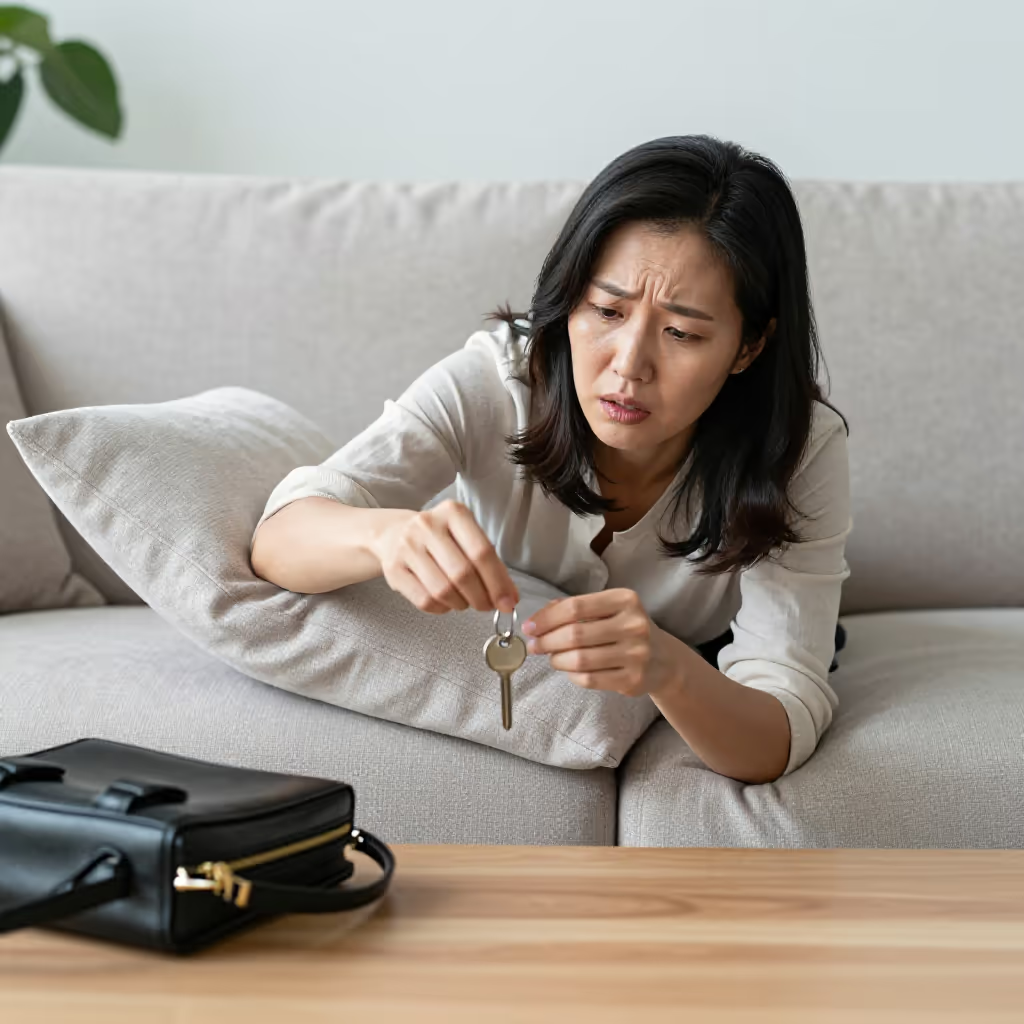
To search through something curiously and without a fixed goal, for example in books, boxes, or on a website.
example
Am Wochenende liebe ich es, auf dem Flohmarkt in alten Kisten zu stöbern.
On weekends, I love rummaging through old boxes at the flea market.

Usage tips
Use with 'in'
'Stöbern' (to browse/rummage) is almost always used with the preposition 'in' followed by the dative. It describes a curious, aimless search in a particular area or place.
EXAMPLE
Ich habe den ganzen Nachmittag in alten Fotoalben gestöbert.
I spent the whole afternoon browsing through old photo albums.
Typical contexts
You can 'stöbern' (browse/rummage) in many places: at a flea market, in an antiquarian bookshop, in a library, or also online on a website. The action has a positive, cozy connotation.
EXAMPLE
Sie stöbert gerne in kleinen Buchläden nach besonderen Ausgaben.
She likes browsing in small bookstores for special editions.
Register: hunting language
The meaning 'Wild aufscheuchen' (to flush out game) is purely technical hunting language. In normal usage, you should use 'stöbern' (to browse/rummage) only for curious searching.
EXAMPLE
Der Hund hat die Aufgabe, im Wald zu stöbern und die Tiere aufzuscheuchen.
The dog's task is to flush out game in the forest and drive the animals out.
Compare with
near_synonym · confusable
stöbern vs suchen
to search / look for
'suchen' and 'stöbern' both have to do with wanting to find something or looking at things. You use 'suchen' when you have a clear goal: you are looking for your key, an apartment, or an answer. 'stöbern' means that you look curiously through books, boxes, shops, or websites without knowing exactly what you want to find. Learners may confuse the words because both describe a kind of looking through things. If the goal is clear, 'suchen' fits; if you are looking openly and curiously, 'stöbern' is better.
stöbern
Am Sonntag stöbern wir auf dem Flohmarkt nach alten Büchern.
On Sunday, we browse the flea market for old books.
suchen
Nach der Pause sucht Lisa ihren Ausweis in der Tasche.
After the break, Lisa looks for her ID in her bag.