

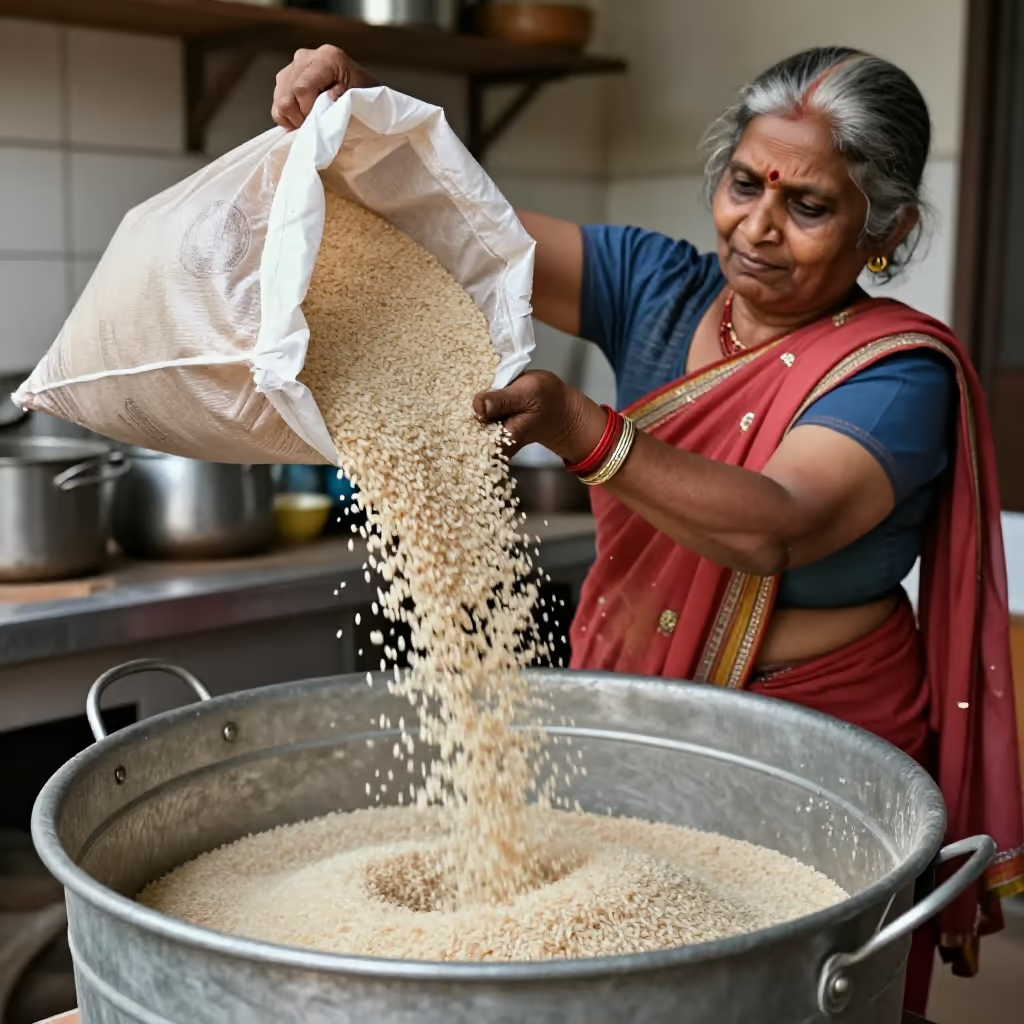
schütten
to pour
To quickly tip or pour a liquid or a loose substance such as sand, sugar, or flour out of a container, often in a large amount.
Sie schüttete den restlichen Kaffee in den Ausguss.
She poured the remaining coffee down the drain.

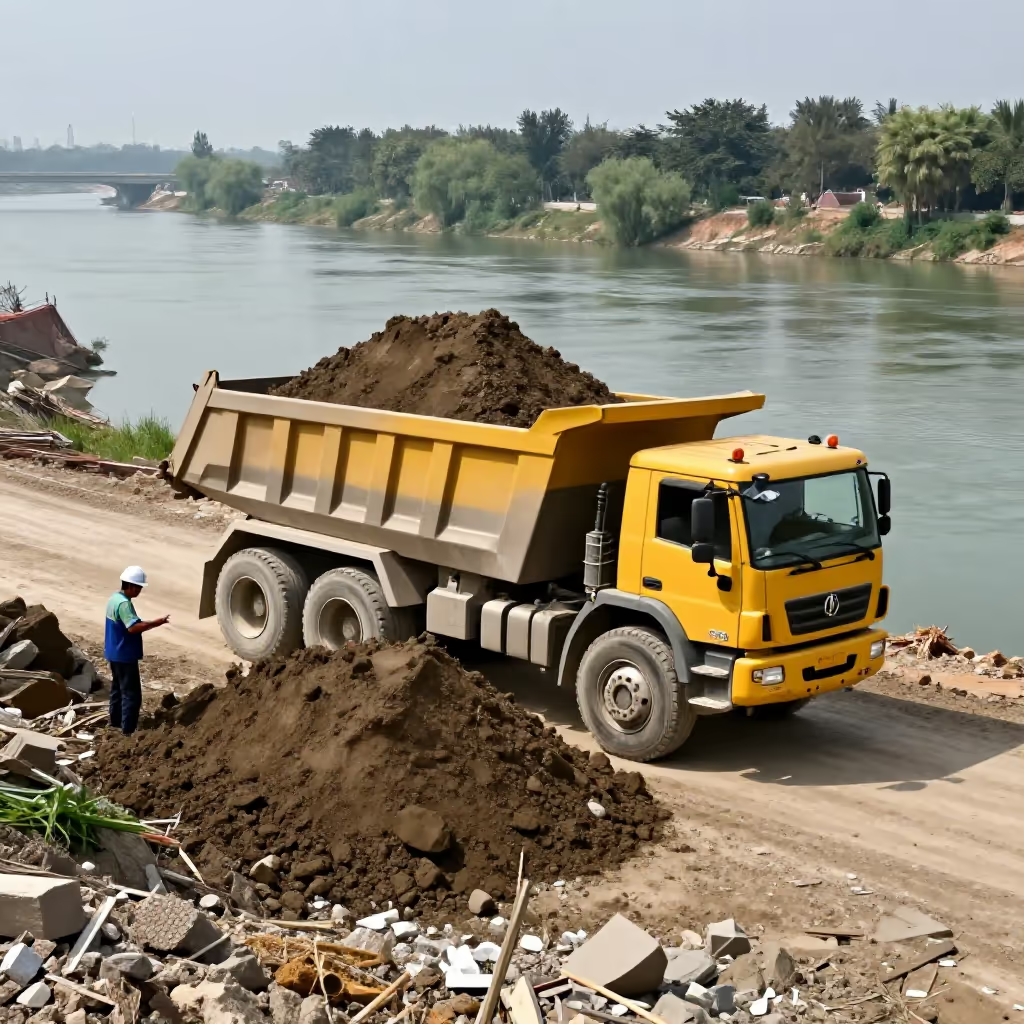
to pour
Loading your saved state.
to pour
To quickly tip or pour a liquid or a loose substance such as sand, sugar, or flour out of a container, often in a large amount.
Sie schüttete den restlichen Kaffee in den Ausguss.
She poured the remaining coffee down the drain.

The verb 'schütten' (to pour) describes movement. It is therefore often combined with prepositions that indicate a direction and require the accusative, for example 'in etwas schütten' (to pour into something) or 'auf etwas schütten' (to pour onto something).
Vorsicht, du hast den Zucker neben die Tasse geschüttet!
Careful, you poured the sugar next to the cup!
In the meaning 'stark regnen' (to rain heavily), 'schütten' is almost always used impersonally with 'es' (it) as the subject. A very common idiom in this context is 'es schüttet wie aus Eimern' (it's pouring buckets / it's raining cats and dogs).
Wir können jetzt nicht losfahren, es schüttet draußen.
We can't leave now; it's pouring outside.
Typically, loose, uncounted things are poured. These include liquids such as water or juice, but also solid substances such as powder, grains, or sand, for example sugar, salt, or rice.
Er schüttete sich eine große Portion Müsli in die Schale.
He poured himself a large portion of muesli into the bowl.
to water / pour
'giessen' and 'schütten' can both mean that a liquid comes out of a container. 'giessen' usually sounds more controlled and calmer, for example when watering flowers or pouring water into a glass. 'schütten' tends to emphasize a quick movement or a larger amount; it also fits loose substances like sand, sugar, or flour. With rain, both words can express heavy rainfall: 'Es giesst' and 'Es schüttet' mean much the same thing. Learners often confuse the words because both have to do with liquids. As a simple guide: you use 'giessen' for plants, while you are more likely to use 'schütten' for emptying out a bucket of water or sand.

Nach dem Einkauf schüttet Lisa den Zucker in eine große Dose.
After shopping, Lisa pours the sugar into a large container.
Herr Neumann giesst morgens die Pflanzen im Büro.
Mr. Neumann waters the plants in the office in the morning.