

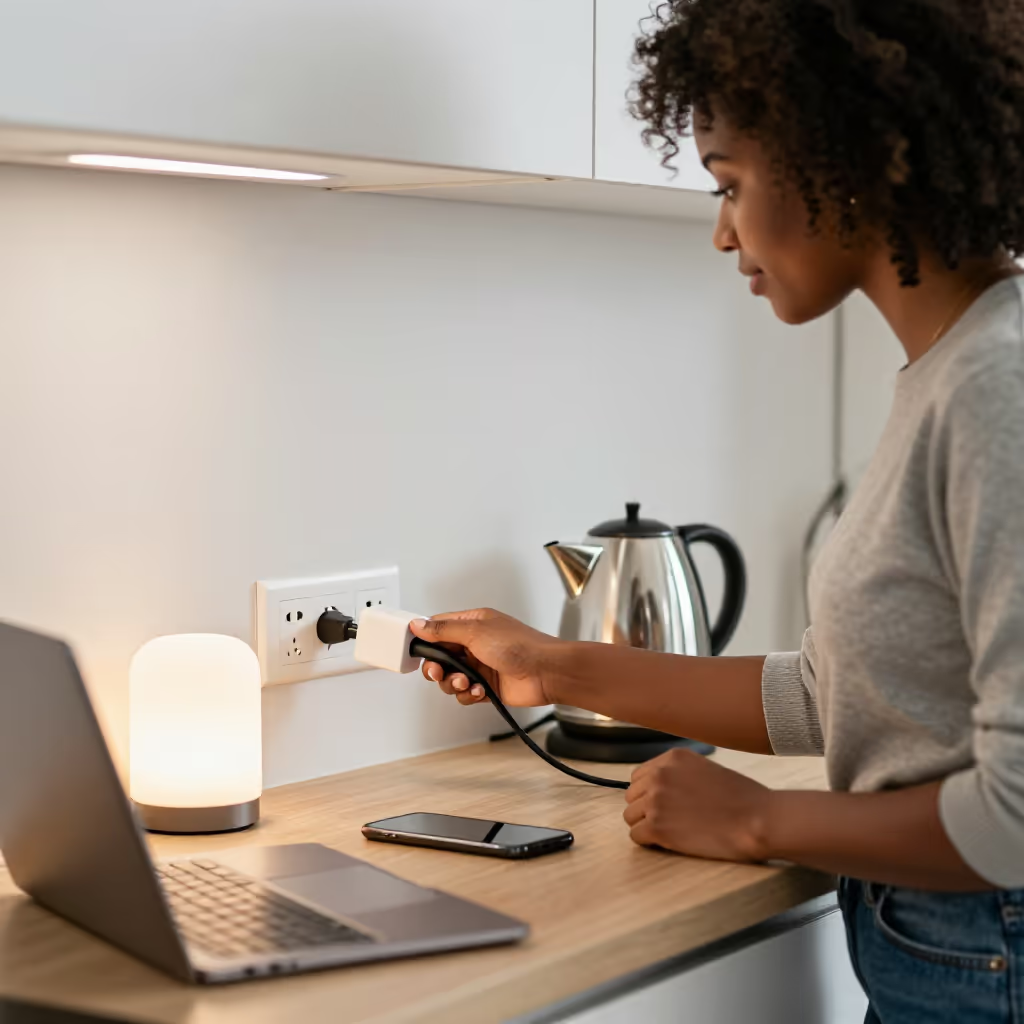
der Strom
electricity
The electrical energy that comes from the outlet and is used to operate devices.
EXAMPLE
Vergiss nicht, den Stecker zu ziehen, das spart Strom.
Don't forget to unplug it; that saves electricity.
electricity / river
Loading your saved state.
electricity
The electrical energy that comes from the outlet and is used to operate devices.
Vergiss nicht, den Stecker zu ziehen, das spart Strom.
Don't forget to unplug it; that saves electricity.
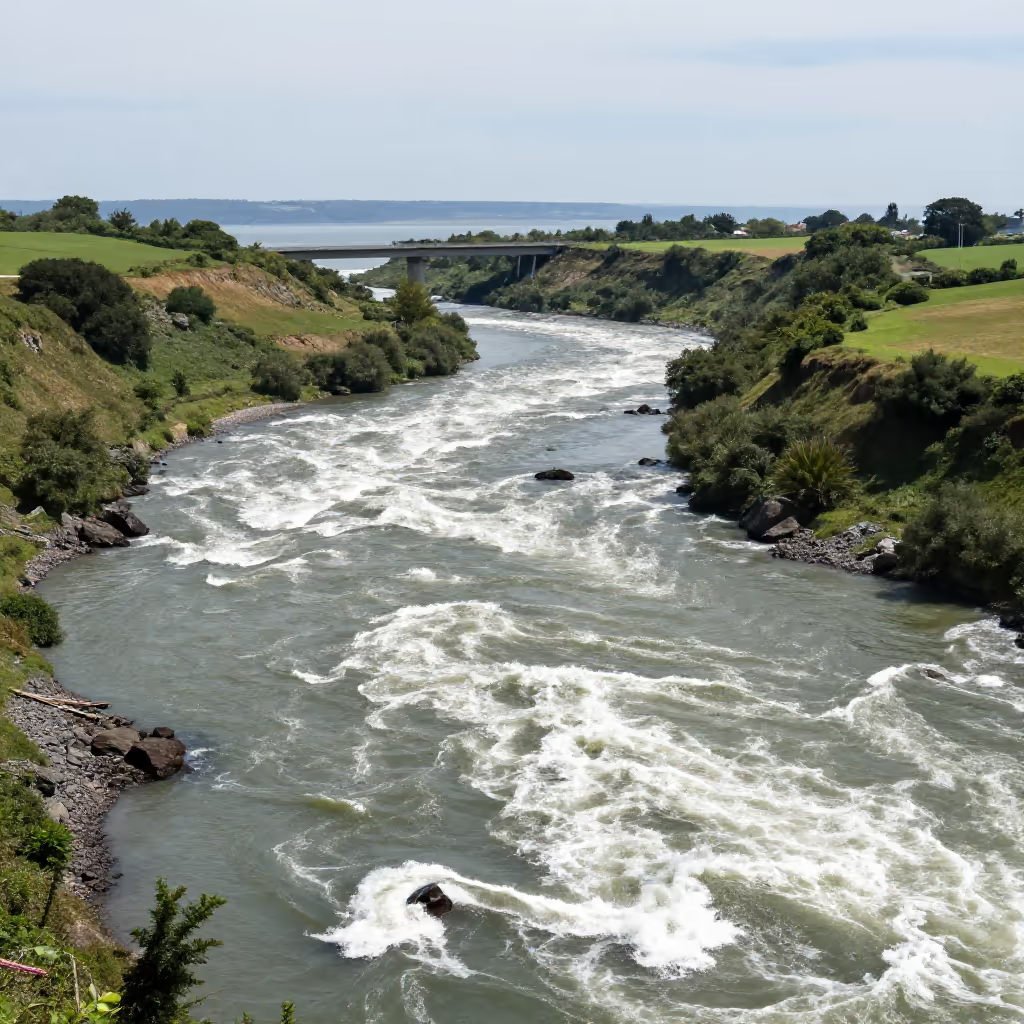
river
A large, natural river that flows into the sea.
Der Rhein ist ein bedeutender Strom in Mitteleuropa.
The Rhine is an important river in Central Europe.
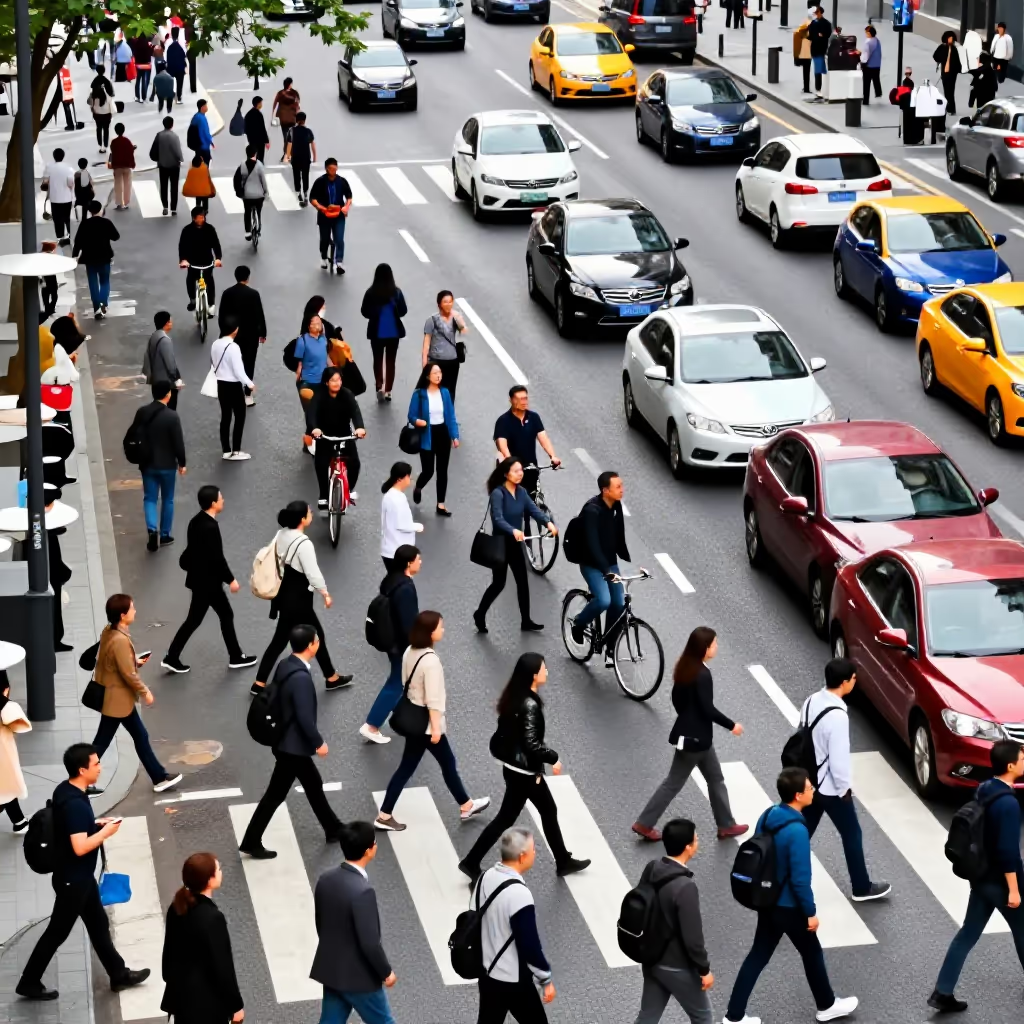
stream / flow
A large amount of people, vehicles, data, or liquids moving in one direction.
Ein Strom von Flüchtlingen überquerte die Grenze.
A stream of refugees crossed the border.
The noun 'der Strom' (electricity/river/stream) is closely related to the verb 'strömen' (to stream/flow). Both words describe a flowing movement, whether of water, people, or energy.
Das Wasser strömt den Berg hinab.
The water flows down the mountain.
You can easily recognize the meaning of 'Strom' (electricity/river/stream) from the context. If it is about outlets, lamps, or bills, electricity is meant. With geographic names like 'Rhein' (Rhine) or 'Donau' (Danube), it is a river. In connection with people or cars, it means a large quantity.
Wir müssen diesen Monat für den Strom mehr bezahlen.
We have to pay more for electricity this month.
When 'Strom' (electricity) means electricity, it is often combined with the verbs 'sparen' (to save), 'verbrauchen' (to consume), or 'produzieren' (to produce). A common phrase is also 'der Strom ist ausgefallen' (the power has gone out).
Mit neuen Geräten kann man viel Strom sparen.
With new devices, you can save a lot of electricity.
In the meaning 'elektrische Energie' (electrical energy), 'Strom' (electricity) is used as an uncountable noun. In this context, it has no plural form.
Für die Beleuchtung brauchen wir Strom.
We need electricity for the lighting.
In the figurative meaning, 'Strom' (stream/flow) is often used in the construction 'ein Strom von + [plural noun]' (a stream of + [plural noun]). Examples are 'ein Strom von Touristen' (a stream of tourists) or 'ein Strom von Informationen' (a stream of information).
Ein Strom von Autos bewegte sich langsam durch die Innenstadt.
A stream of cars moved slowly through the city center.
energy
Energie is the broader term and can refer in everyday language to various usable forms, such as electricity, heat, or fuel. Strom here specifically means the electricity supplied through a wall outlet. For a device that is plugged in, Strom is more precise; for the general resource needed, Energie is the better fit.
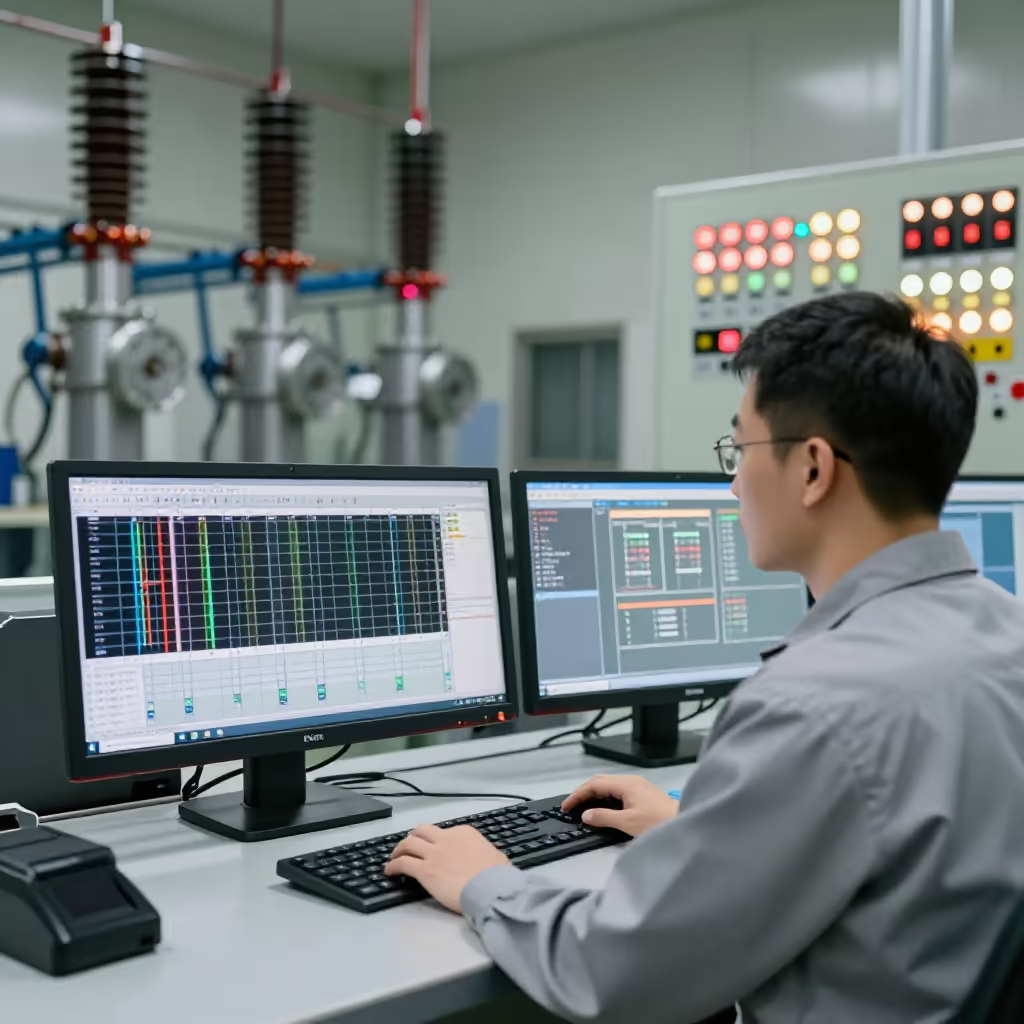
Die neue Maschine bekommt ihren Strom aus der Steckdose.
The new machine gets its electricity from the wall outlet.
Die neue Maschine benötigt deutlich weniger Energie als die alte.
The new machine requires significantly less energy than the old one.