

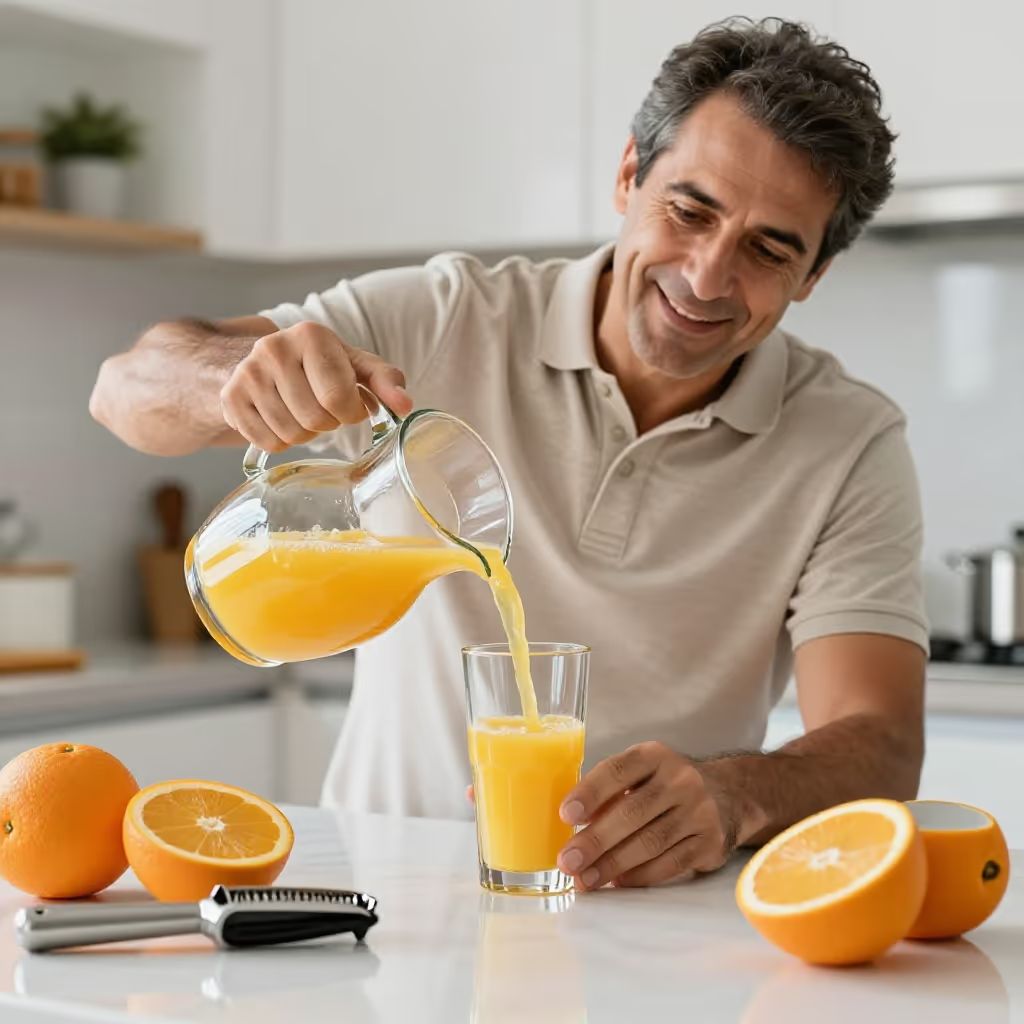
der Saft
juice
The drinkable liquid that is pressed from fruit or vegetables.
EXAMPLE
Möchtest du ein Glas frisch gepressten Orangensaft?
Would you like a glass of freshly squeezed orange juice?
juice / power
Loading your saved state.
juice
The drinkable liquid that is pressed from fruit or vegetables.
Möchtest du ein Glas frisch gepressten Orangensaft?
Would you like a glass of freshly squeezed orange juice?

power
Colloquial for electrical energy or electricity.
Mein Handy-Akku ist leer, ich brauche dringend Saft.
My phone battery is dead; I urgently need power.
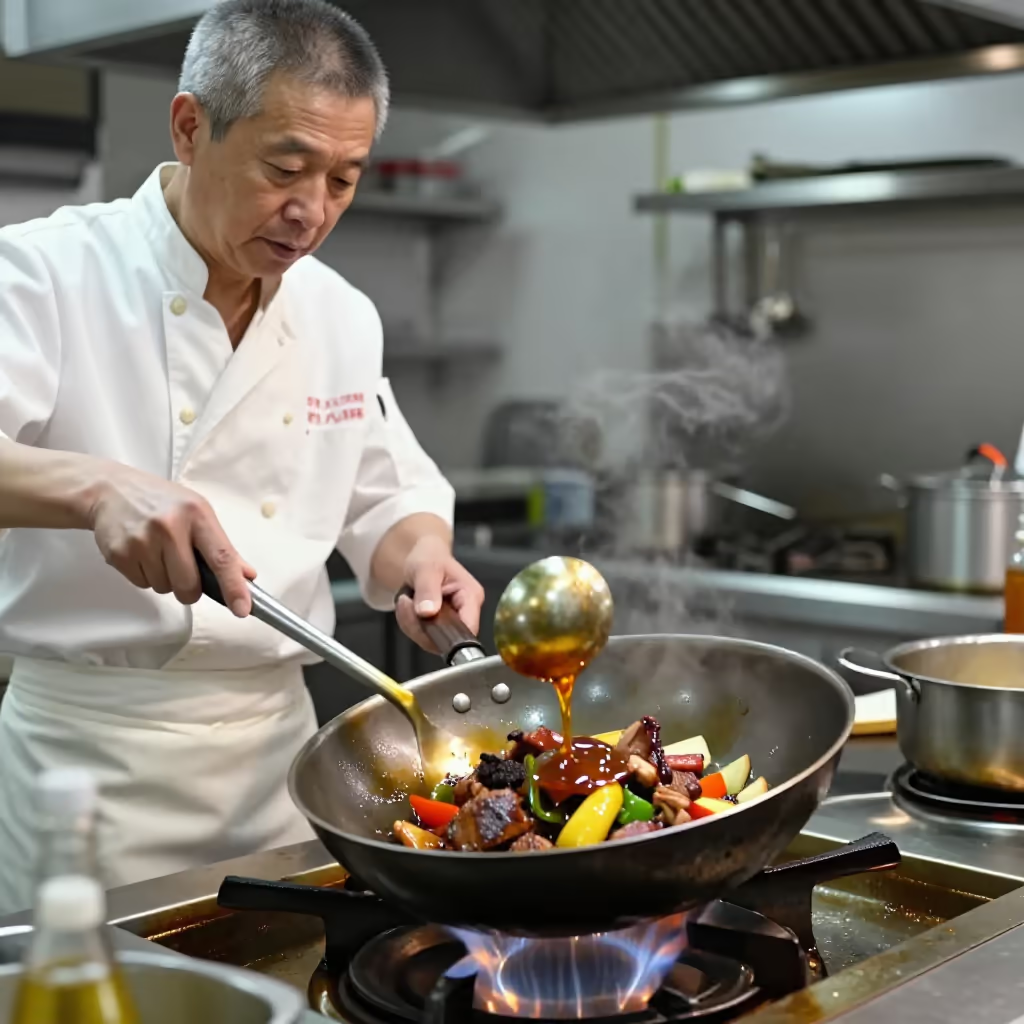
juice
The liquid that comes out of meat, fish, or vegetables during cooking or roasting.
Der Braten war ausgezeichnet und schmeckte im eigenen Saft am besten.
The roast was excellent and tasted best in its own juices.
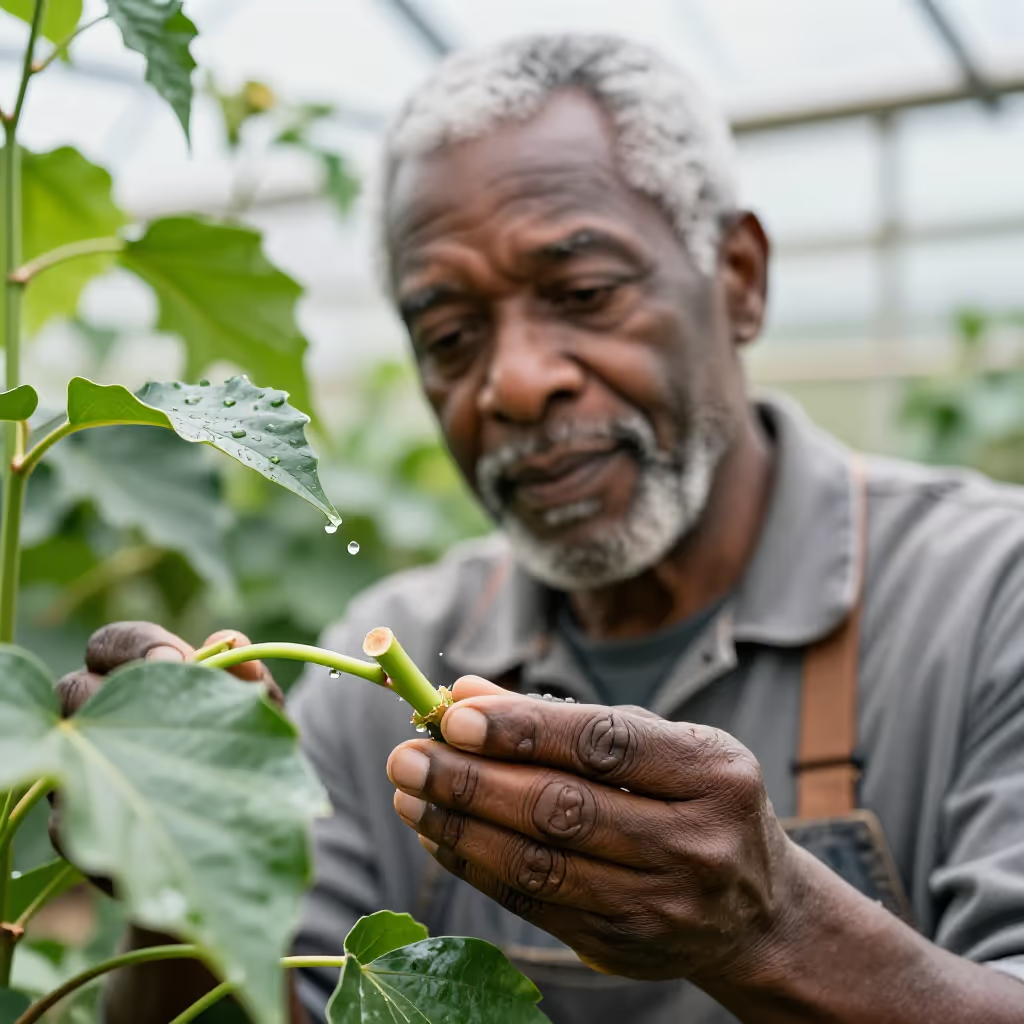
sap
The liquid circulating in plants that transports nutrients.
Im Frühling steigt der Saft wieder in die Bäume.
In spring, the sap rises in the trees again.
The meaning of 'Saft' (juice/power) is immediately clear from context. Words like 'trinken' (to drink) or types of fruit point to a beverage, while 'Akku' (battery) or 'leer' (empty/dead) refer to electricity.
Ich trinke morgens gerne ein Glas Apfelsaft.
I like drinking a glass of apple juice in the morning.
To specify the type of drink, 'Saft' (juice) is very often used as the second part of a compound word. The first part is usually a type of fruit or vegetable.
Im Supermarkt gibt es Organgensaft, Apfelsaft und Karottensaft.
At the supermarket there is orange juice, apple juice, and carrot juice.
The use of 'Saft' (power/juice) for electrical energy is very colloquial. You often hear and read it in informal conversations, but not in formal texts.
Gib mir mal kurz Saft, mein Handy ist gleich aus.
Give me some power for a second; my phone is about to die.
The idiom 'jemanden im eigenen Saft schmoren lassen' literally means to let someone stew in their own juices and figuratively means to leave someone alone with their problems without helping them. It comes from cooking.
Nach dem Streit hat sie ihn einfach im eigenen Saft schmoren lassen.
After the argument, she simply left him to stew in his own juices.
For the colloquial meaning 'Strom' (electricity/power), there are typical formulations such as 'der Saft ist alle' (the power is gone) or 'keinen Saft mehr haben' (to have no power left).
Ohne Strom hat die ganze Wohnung keinen Saft.
Without electricity, the whole apartment has no power.
electricity / river
Strom is the neutral term for electrical energy and works in practically all relevant situations. Saft can mean the same thing colloquially, but it sounds casual and is not appropriate in every context. In factual statements, Strom is therefore the better choice.
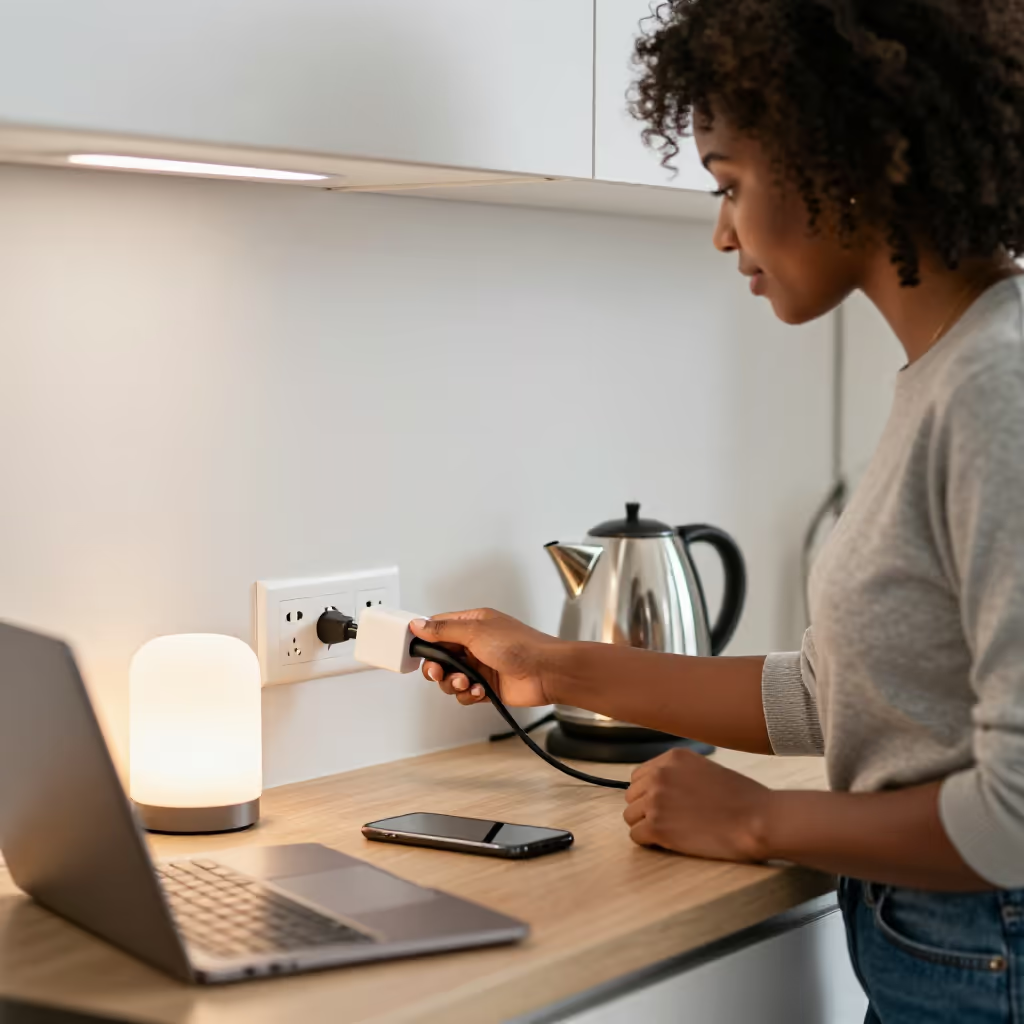
Sein Freund sagt locker: „Der Fernseher bekommt keinen Saft.“
His friend says casually: “The TV isn’t getting any power.”
Der Techniker stellt fest: „Der Fernseher bekommt keinen Strom.“
The technician determines: “The TV isn’t getting any electricity.”