

tagen
to convene
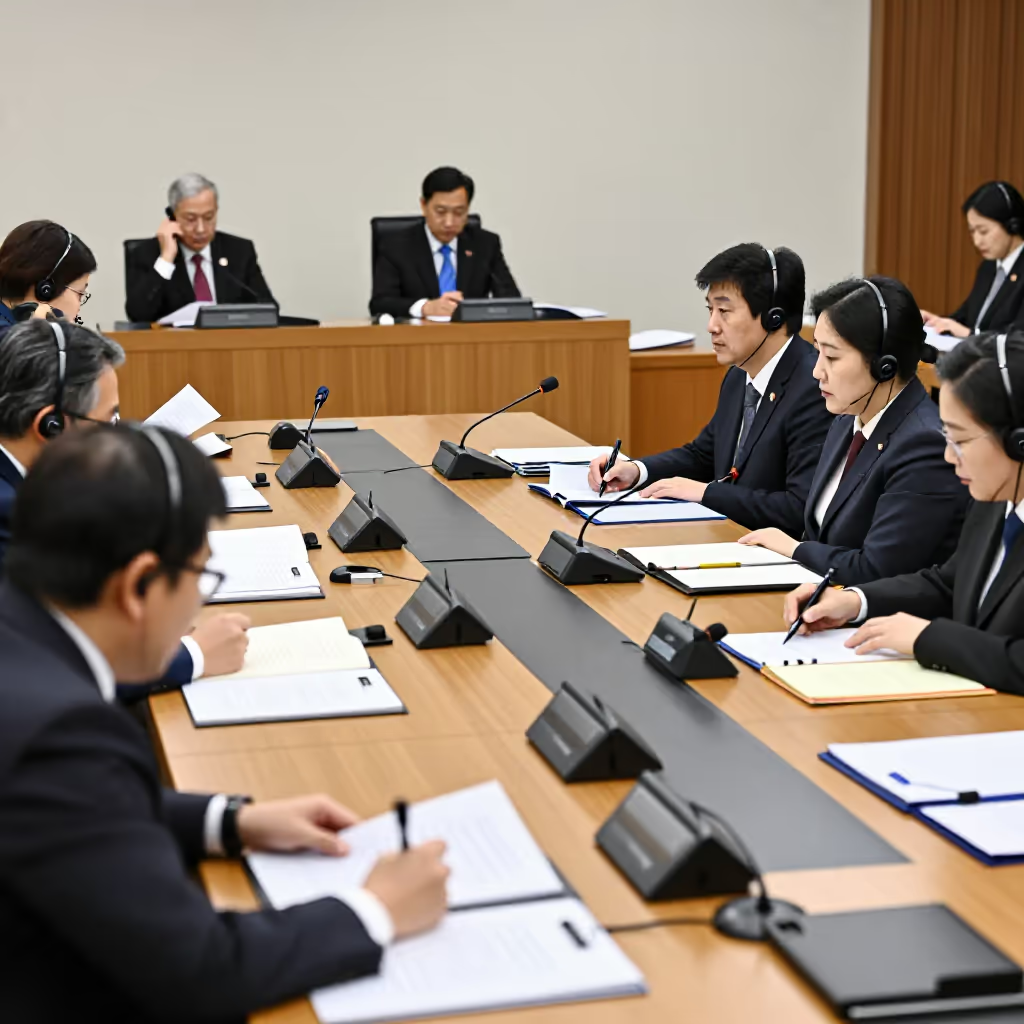
To hold a formal meeting, conference, or congress. Typically used for bodies, parliaments, or organizations.
Der Bundestag tagt heute bis in die späten Abendstunden.
The Bundestag is convening today until late in the evening.

to convene / to dawn
Loading your saved state.
to convene
To hold a formal meeting, conference, or congress. Typically used for bodies, parliaments, or organizations.
Der Bundestag tagt heute bis in die späten Abendstunden.
The Bundestag is convening today until late in the evening.

The verb 'tagen' (to convene / to dawn) is derived directly from the noun 'der Tag' (the day). This explains both meanings: holding a meeting (a 'Tagung' = conference/session), which often lasts one or more days, and the breaking of day.
Der Aufsichtsrat tagt morgen, um über die Zukunft der Firma zu entscheiden.
The supervisory board is convening tomorrow to decide on the future of the company.
The two meanings can easily be distinguished by the subject of the sentence. If it is a group of people, e.g. 'der Ausschuss' (the committee) or 'das Parlament' (the parliament), it means a meeting/session. If the subject is 'es' (it), it refers to daybreak.
Der Vorstand tagte hinter verschlossenen Türen.
The board met behind closed doors.
In the meaning 'eine Sitzung abhalten' (to hold a meeting), 'tagen' (to convene) is used without an object. It describes the activity of a formal group such as a committee, a board, or a court.
Das Gericht wird nächste Woche in dieser Angelegenheit tagen.
The court will convene next week on this matter.
The meaning 'dämmern' (to dawn) or 'Tag werden' (to become day) is poetic and old-fashioned. It is now used almost only in literature or in very elevated language.
Sie wanderten durch die Nacht, bis es über den Bergen zu tagen begann.
They wandered through the night until it began to dawn over the mountains.
to advise
'sich beraten' and 'tagen' both have to do with a conversation in a group, often before a decision is made. 'Sich beraten' means that people talk about something together and look for a solution. This can happen privately, in a team, or in a small group. 'Tagen' is used more for formal meetings, for example of a parliament, board, or organization. Learners may confuse the words because in both cases several people come together and talk. In practical terms: people 'beraten sich' about a topic; a committee, body, or organization 'tagt'.

Am Montag tagt der Stadtrat im Rathaus.
On Monday, the city council is meeting at city hall.
Vor dem Umzug beraten sich die Eltern mit ihren Kindern.
Before the move, the parents consult with their children.