

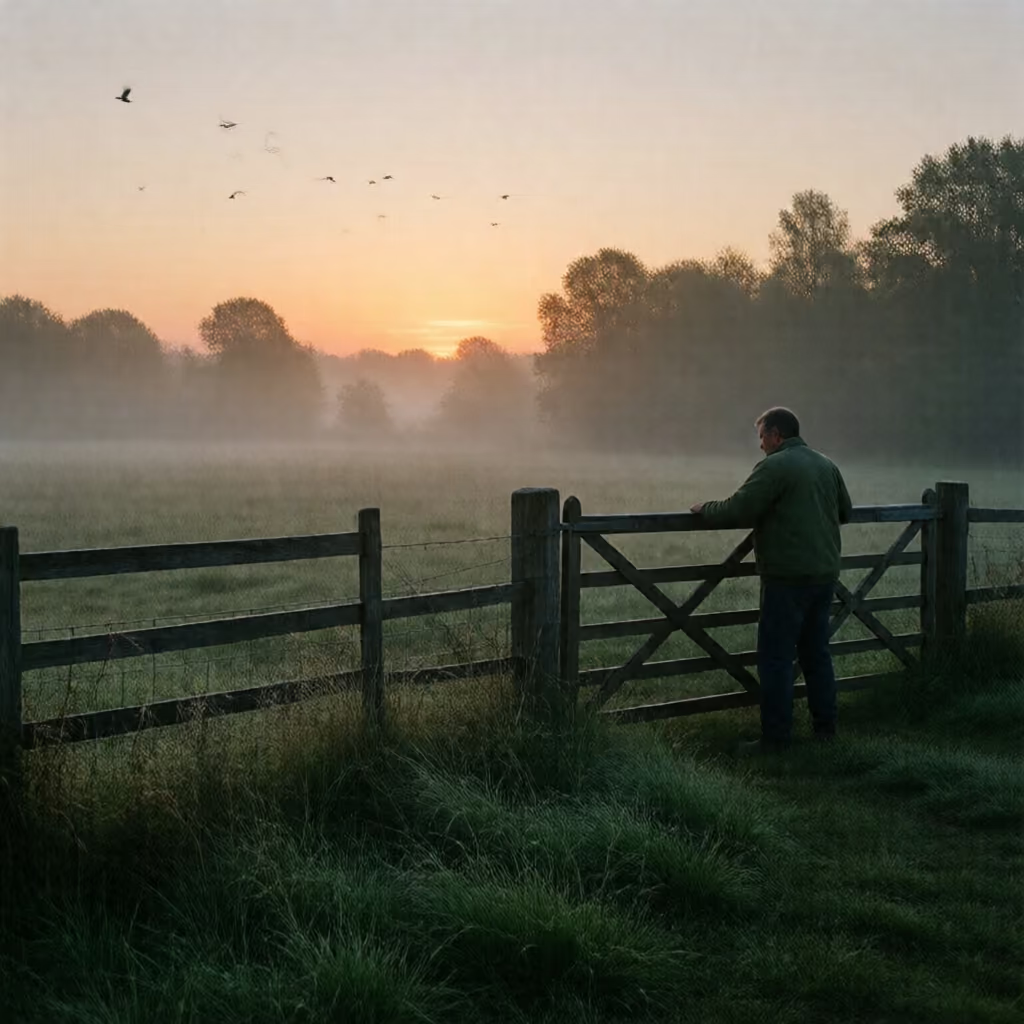
der Tagesanbruch
daybreak
The time in the early morning when it becomes light and the day begins.
EXAMPLE
Kurz nach Tagesanbruch lag noch dichter Nebel über den Feldern.
Shortly after daybreak, dense fog still lay over the fields.
daybreak
der Tagesanbruch, die Tagesanbrüche
Loading your saved state.
daybreak
The time in the early morning when it becomes light and the day begins.
Kurz nach Tagesanbruch lag noch dichter Nebel über den Feldern.
Shortly after daybreak, dense fog still lay over the fields.
| gender | masculine der |
|---|---|
| plural | die Tagesanbrüche |
| genitive | des Tagesanbruches |
| singular | plural | |
|---|---|---|
| nominative | der Tagesanbruch | die Tagesanbrüche |
| accusative | den Tagesanbruch | die Tagesanbrüche |
| dative | dem Tagesanbruch | den Tagesanbrüchen |
| genitive | des Tagesanbruches des Tagesanbruchs | der Tagesanbrüche |
The article changes with the case; it is shown in colour.
'Tagesanbruch' (daybreak) consists of 'Tag' (day) and 'Anbruch' (beginning), connected by '-es-'. The component 'Anbruch' (beginning) refers here to the start; the whole word therefore describes the beginning of the day.
Wir warteten im Zelt auf den Tagesanbruch.
We waited in the tent for daybreak.
In time expressions, 'Tagesanbruch' (daybreak) often appears without an article: 'bei Tagesanbruch' (at daybreak) refers to the point in time, 'vor Tagesanbruch' (before daybreak) to an earlier time, and 'bis Tagesanbruch' (until daybreak) to a time limit.
Bei Tagesanbruch erreichten wir das Dorf.
At daybreak, we reached the village.
Die Bäckerin beginnt ihre Arbeit lange vor Tagesanbruch.
The baker starts work long before daybreak.
Die Helfer suchten bis Tagesanbruch nach dem vermissten Kind.
The helpers searched for the missing child until daybreak.
'Tagesanbruch' (daybreak) often sounds elevated or literary. It is especially well suited to descriptions of nature, travel reports, and stories.
Mit dem Tagesanbruch erwachte das Leben im Wald.
At daybreak, life awoke in the forest.